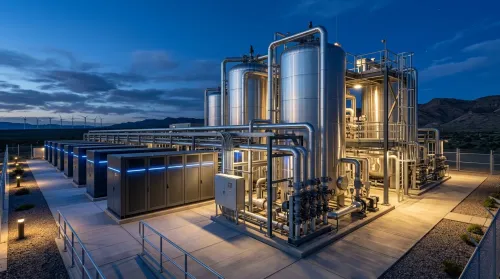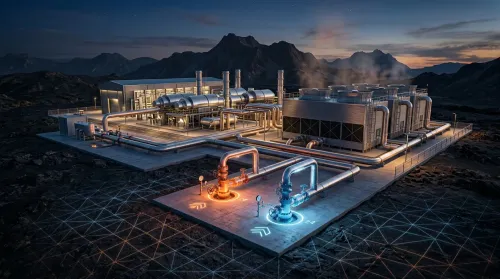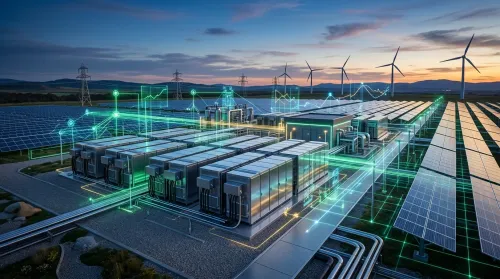
TRADITIONAL GRID
Centralized, predictable, thermal generation.
MODERN GRID
Decentralized, variable, and digitally managed.
Introduction: The Shifting Paradigm of Grid Reliability and Peaking Power
The fundamental architecture of the electric grid is undergoing a seismic transformation, driven by the dual imperatives of decarbonization and resilience. Historically, grid reliability was predicated on a centralized model of large, dispatchable thermal power plants meeting predictable load growth. In this paradigm, “peaking power”—the generation needed to meet demand during a few critical hours of the year—was the exclusive domain of combustion turbines. These assets could be fired up quickly to prevent blackouts during heatwaves or extreme cold snaps. However, the proliferation of variable renewable energy (VRE) sources like wind and solar has shattered this legacy model. The new challenge is not just meeting a predictable peak but managing steep ramps in net load (the “duck curve”), frequency deviations, and intraday volatility. This new operational reality demands assets that offer not just raw megawatts, but also speed, precision, and flexibility. Consequently, the incumbent gas peaker plant finds itself in direct competition with technologically advanced, data-driven alternatives: utility-scale Battery Energy Storage Systems (BESS) and aggregated Demand Response (DR), fundamentally altering the calculus of ensuring a reliable and cost-effective power supply.
The Incumbent: A Deep Dive into Traditional Gas Peaker Plant Economics
CAPEX
$900 – $1,300 / kW
Variable OPEX
High & Volatile (Fuel)
Capacity Factor
Typically < 10%
Traditional gas peaker plants, typically Open Cycle Gas Turbines (OCGT), have long been the backbone of peak load management. Their economic proposition is built on a relatively moderate capital expenditure (CAPEX), ranging from $900-$1,300/kW, and the ability to provide long-duration energy when called upon. However, their profitability is precarious and heavily exposed to commodity market volatility. The primary driver of their variable operating expenditure (OPEX) is the cost of natural gas, which can fluctuate dramatically based on geopolitical events, weather patterns, and pipeline constraints. Furthermore, these plants operate at very low capacity factors, often less than 10%, meaning their substantial fixed O&M and capital costs must be recovered over very few operating hours. This economic model relies heavily on capacity market payments, which compensate them for being available, and scarcity pricing events, where they can capture high energy market revenues. However, their operational characteristics, such as minimum run times, start-up costs, and slower ramp rates compared to modern alternatives, make them less adept at capturing value from the fast-response ancillary services markets that are becoming increasingly lucrative. (Source: eia.gov)
Technoeconomic Profile of the Primary Challenger: Battery Energy Storage Systems (BESS)
BESS Cost Trajectory
CAPEX ($/kWh) has fallen over 70% in less than a decade.
Battery Energy Storage Systems (BESS) represent a paradigm shift in grid asset economics, functioning as both load and generation. While their installed CAPEX, currently in the range of $1,400-$1,800/kW for a 4-hour system, remains higher than gas peakers, these costs have been on a steep downward trajectory for a decade. The U.S. National Renewable Energy Laboratory (NREL) projects continued cost reductions driven by manufacturing scale and technology improvements. The key economic advantage of BESS lies in its operational profile. Its variable OPEX is near zero, as it has no fuel costs, emissions, or start-up penalties. The primary operational cost is tied to battery degradation (cycle life and calendar life), which is increasingly predictable and manageable through sophisticated control software. This cost structure, combined with near-instantaneous ramp rates and high round-trip efficiency (~85-90%), makes BESS exceptionally well-suited for high-value ancillary services like frequency regulation and spinning reserves. Unlike a gas peaker, which earns revenue primarily when generating, a BESS can stack multiple revenue streams simultaneously—capacity payments, energy arbitrage, and a full suite of ancillary services—dramatically improving its asset utilization and overall project IRR. (Source: nrel.gov)
The Distributed Alternative: Unpacking the Economics of Demand Response (DR)
Grid Signal (Peak Event)
DR Aggregator Dispatches
C&I Customers Curtail Load
Grid Stabilized & Customers Paid
Demand Response treats electricity consumption not as a passive demand to be met, but as an active, flexible grid resource. It is the “virtual” peaker plant, aggregating commitments from commercial, industrial, and residential customers to curtail their energy use upon request. The technoeconomics of DR are fundamentally different from generation assets. Its CAPEX is exceptionally low, primarily consisting of software, metering, and customer acquisition costs for the DR aggregator. There are no large physical assets to build or permit. The OPEX is composed of performance-based incentive payments to participants and the aggregator’s administrative overhead. This makes DR a highly scalable and capital-efficient resource for meeting peak demand. However, its value proposition is nuanced. While effective for predictable, seasonal peaks (e.g., summer afternoons), its reliability can be perceived as lower than a physical asset due to its dependence on customer behavior and communication systems. The process of measurement and verification (M&V) to accurately quantify the load reduction is also a critical and complex component. Despite these challenges, as a non-wires alternative that avoids new generation build-out and empowers customers, DR is an increasingly favored tool for utilities and grid operators looking for the lowest-cost peaking capacity.
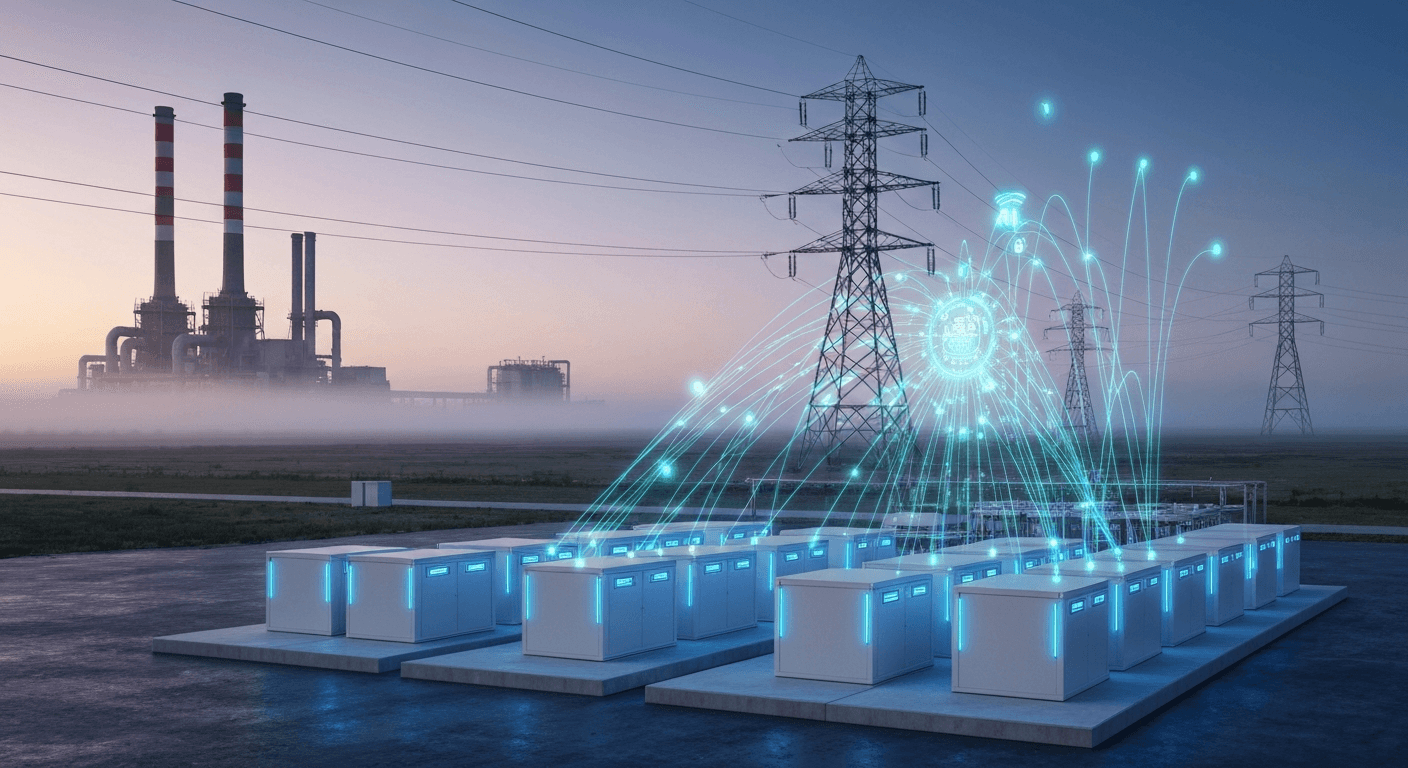
The AI Catalyst: How Artificial Intelligence is Revolutionizing Asset Optimization and Market Participation
AI OPTIMIZATION ENGINE
Forecasts Market Prices & Grid Needs
Optimizes BESS Charge/Discharge & Degradation
Automates DR Dispatch & M&V
Executes Autonomous Bidding Strategies
The full economic potential of BESS and DR cannot be unlocked without a sophisticated layer of artificial intelligence and machine learning. These technologies are no longer just physical assets; they are digitally native, data-driven resources. For BESS, AI algorithms are critical for maximizing revenue. They continuously analyze real-time market data, weather forecasts, and grid conditions to make optimal charge/discharge decisions, co-optimizing for energy arbitrage, ancillary service provision, and long-term battery health management. An AI-powered bidding engine can autonomously participate in multiple markets, capturing fleeting high-price opportunities that would be impossible for a human trader to execute. For Demand Response, AI transforms the aggregation and dispatch process. It can predict participant availability, identify the most cost-effective resources to call upon, and automate the complex M&V reporting required by grid operators. Advanced platforms, which users can explore after creating an account at https://jisenergy.com/sign-up-login/, provide the interface for this complex orchestration. This AI-driven optimization closes the profitability gap with traditional peakers by ensuring every potential revenue stream is captured and operational costs are minimized, turning flexible assets into highly efficient, intelligent grid participants.
Head-to-Head Financial and Technical Analysis: A Multi-Criteria Decision Matrix
CAPEX Breakdown ($/kW) and Installation Hurdles
A direct CAPEX comparison shows Demand Response as the undisputed leader in capital efficiency, requiring minimal physical investment. Gas peakers hold the middle ground at $900-$1,300/kW, while BESS currently has the highest upfront cost at $1,400-$1,800/kW for a 4-hour system. However, this simple metric is misleading. Gas peakers and BESS face significant installation hurdles, including lengthy interconnection studies, supply chain constraints for transformers and switchgear, and complex civil engineering. BESS projects, while physically smaller than gas plants, can face battery supply bottlenecks. DR’s primary hurdle is not physical but contractual: the time and cost associated with customer acquisition and integration into the aggregator’s software platform.
Variable OPEX Analysis: Fuel Volatility vs. Degradation and Performance Fees
Variable OPEX reveals the starkest operational differences. A gas peaker is a slave to the volatile natural gas market, making its dispatch costs unpredictable and often high. BESS boasts a near-zero marginal cost for dispatch, with its primary variable OPEX being the quantifiable, long-term cost of battery cell degradation, which is managed as a planned maintenance expense. Demand Response’s variable OPEX consists of the incentive payments made to participating customers for their curtailment performance. This cost is predictable and contractually defined, shielding the grid operator from commodity risk but creating a direct link between performance and expenditure.
Performance Benchmarking: Ramp Rates, Duration, and Ancillary Service Suitability
Technically, BESS is the clear performance leader for a modern grid. Its ability to respond to dispatch signals in milliseconds and to both inject and absorb power makes it ideal for high-value ancillary services like frequency regulation. Gas peakers, while reliable for multi-hour energy delivery, have ramp rates measured in minutes, making them unsuitable for the fastest grid services. Their duration is limited only by fuel availability. DR’s performance is heterogeneous; while some industrial loads can be curtailed almost instantly, aggregated residential or commercial resources may have a dispatch lag of several minutes. The duration of DR events is also typically limited by contract and customer tolerance, usually to 2-4 hours.
Revenue Stacking Potential: Comparing Value Streams Across Technologies
The ability to “stack” multiple revenue streams is where BESS creates a compelling business case despite its high CAPEX. A single BESS asset can simultaneously bid into the capacity, energy, and multiple ancillary service markets, maximizing its utilization and revenue per megawatt. Gas peakers are largely confined to capacity and energy markets, with limited ability to capture other value streams. Demand Response primarily competes in capacity markets and specific demand-side energy programs. While market rules are evolving (e.g., via FERC Order 2222) to allow DR to participate more broadly, its revenue stacking potential is currently less flexible than that of BESS.
Environmental, Social, and Governance (ESG) Considerations: Permitting, Emissions, and Social License
ESG factors are increasingly critical in investment decisions. Gas peakers face significant headwinds due to their direct GHG and criteria pollutant emissions (NOx, SOx), leading to difficult and often contentious permitting processes, particularly in disadvantaged communities. BESS offers a zero-emissions operating profile, but its ESG considerations include the upstream impacts of mineral extraction for batteries and end-of-life recycling challenges. Demand Response boasts the strongest ESG profile; it is a non-emissive resource that avoids new infrastructure build-out, financially empowers local communities and businesses, and enhances grid efficiency. Securing a “social license to operate” is far simpler for DR and BESS projects than for new fossil fuel generation. (Source: emp.lbl.gov)
Case Study: Modeling a Peaking Capacity Solution for a Commercial & Industrial Microgrid
OPTION A: Gas Genset
- Lower Upfront CAPEX
- High, Volatile Fuel Costs
- Revenue: Demand Charge Savings
- Resilience: High (w/ fuel)
- ESG Impact: Negative
OPTION B: BESS
- Higher Upfront CAPEX
- Negligible “Fuel” Cost
- Revenue: Savings + Grid Services
- Resilience: High (limited duration)
- ESG Impact: Positive
Consider a large manufacturing facility with a critical load of 3 MW and a peak demand of 5 MW that occurs for approximately 100 hours per year, resulting in punitive demand charges. The facility wishes to install a microgrid solution to ensure resilience and manage costs. We can model two scenarios: a 5 MW natural gas generator versus a 5 MW / 20 MWh (4-hour) BESS. The gas generator has a lower initial CAPEX, but its NPV is highly sensitive to long-term gas price forecasts and O&M costs. Its primary value is shaving the 5 MW peak and providing long-duration backup. The BESS has a higher CAPEX, but its economic model is more robust. It not only eliminates the high demand charges by discharging during peak hours but can also generate additional revenue. When not needed for on-site resilience or peak shaving, the AI-controlled BESS can participate in the local utility’s grid services programs (e.g., frequency regulation, demand response), earning income that directly offsets its capital cost. Furthermore, the BESS provides seamless, UPS-quality power during outages and enhances the facility’s corporate sustainability profile. A discounted cash flow (DCF) analysis often shows the BESS achieving a superior IRR over a 10-year horizon due to these stacked benefits, despite the higher initial outlay.
Future Outlook: Navigating Market Reforms, Technology Costs, and the Stranded Asset Risk
Present
Gas Peakers + Emerging BESS/DR
Future
BESS/DR Dominant, High Gas Peaker Stranded Asset Risk
The trajectory for peaking resources is being actively shaped by regulatory reform, technological advancement, and climate policy. Market reforms, such as FERC Order 2222 in the United States, are systematically removing barriers for Distributed Energy Resources (DERs), including BESS and DR, to participate in wholesale markets, further leveling the playing field with traditional generation. Simultaneously, the continued decline in battery costs and the increasing sophistication of AI-driven energy management platforms will further erode the economic case for new gas peakers. For incumbent assets, the most significant threat is stranded asset risk. As carbon pricing mechanisms become more prevalent and emissions regulations tighten, the operating costs and financial liability of gas peakers will escalate. An investor financing a new OCGT plant today, with a typical 20-30 year economic life, faces a plausible scenario where the asset becomes uneconomic or is regulated out of existence long before its costs are recovered. This risk is forcing utilities and investors to price in a “carbon premium,” making capital for new fossil fuel projects more expensive and tilting the scales decisively in favor of flexible, clean, and future-proof assets like BESS and DR.
Conclusion: Redefining “Peaking” and Making the Optimal Investment Decision for the Modern Grid
(Speed & Flexibility)
(Duration & MWh)
(Low CAPEX & Scale)
The technoeconomic landscape for peaking capacity has irrevocably changed. The term “peaking” itself is evolving from simply meeting the highest point of demand to a more sophisticated concept of providing system flexibility. The analysis reveals that there is no longer a single, default technology solution. The traditional gas peaker, while still relevant for long-duration needs in some markets, is a one-dimensional asset facing existential threats from market volatility, regulatory pressure, and superior technology. BESS and DR, amplified by the power of AI, offer a multi-dimensional value proposition that includes not only capacity but also critical ancillary services, operational flexibility, and significant ESG benefits. The optimal investment decision is no longer a simple LCOE comparison. It requires a portfolio-based approach that values speed, precision, and the ability to stack revenues. For grid planners and investors, the choice is clear: clinging to the legacy model of gas peakers invites unacceptable stranded asset risk. The future of grid reliability lies in embracing a diversified, intelligent, and flexible portfolio of assets, with AI-optimized BESS and DR at its core, to build a cleaner, more resilient, and economically efficient power system.