
CogenS™ — CHP Module
The Ultimate Guide to CHP System Design
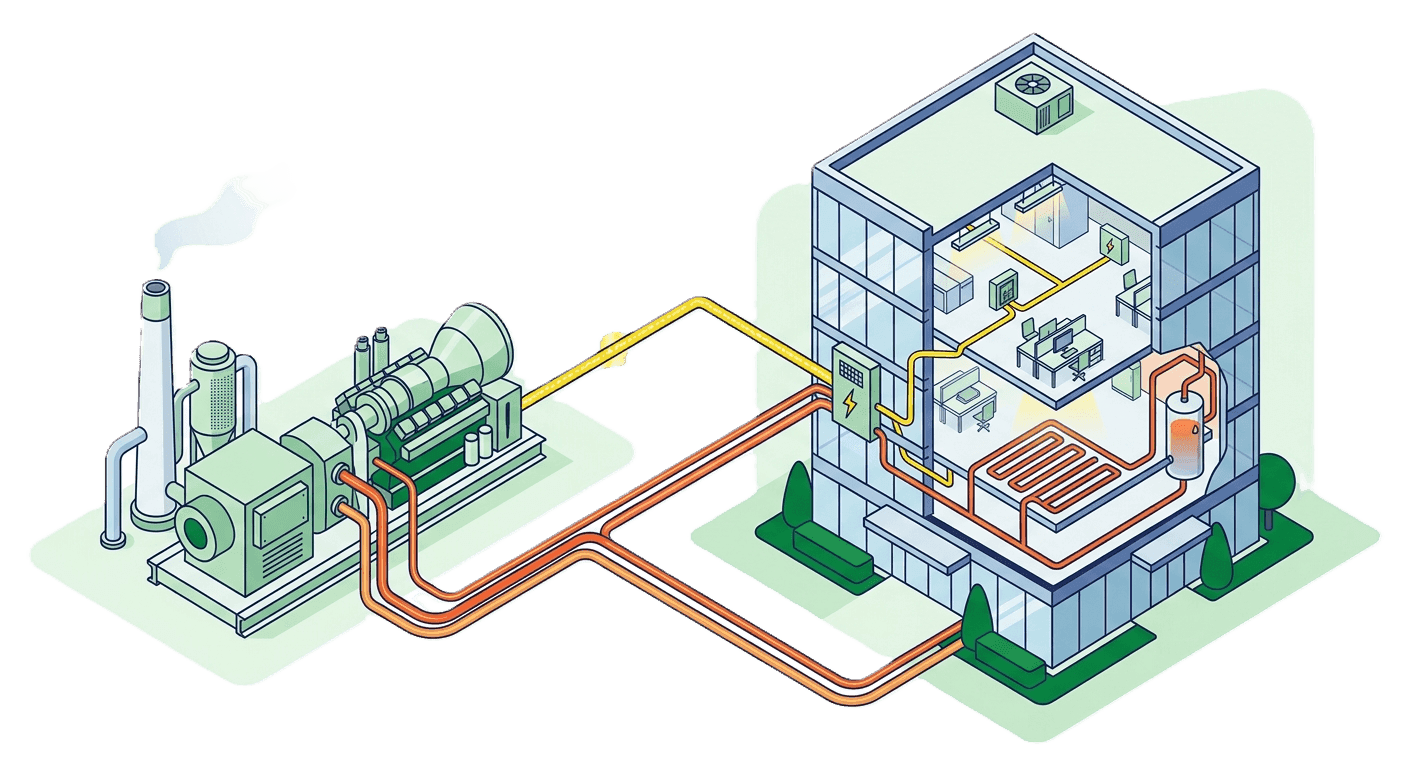
Combined Heat and Power (CHP), also known as cogeneration, is a cornerstone of modern, efficient energy strategy. Producing both electricity and useful thermal energy from a single fuel source, CHP systems can achieve efficiencies exceeding 80%.
Why CogenS™
From Spreadsheets to Engineering-Grade Precision
Historically, CHP feasibility analysis required complex, time-consuming spreadsheet models prone to error. Today, there’s a better way.
CogenS™ Design Tool is a free, powerful software platform that gives engineers, consultants, and facility managers the ability to conduct a comprehensive Combined Heat and Power feasibility analysis. Move beyond basic calculations and model the real-world performance, financial returns, and environmental benefits of your CHP project with engineering-grade precision.
Capabilities
Complete Technoeconomic Analysis for CHP Systems
CogenS™ empowers you to perform a complete technoeconomic analysis of a Combined Heat and Power system.
Model Different Prime Movers
Choose from 118+ CHP models across 24 manufacturers -- reciprocating engines (RICE), gas turbines, microturbines, and three fuel-cell types: phosphoric-acid (PAFC), solid-oxide (SOFC), and molten-carbonate (MCFC). Fuels include natural gas, hydrogen blends, and biogas.
Use Real-World Data
Pre-loaded TMY weather data, multi-tier utility tariffs (electric, gas, oil), and 8,760-hour reference load profiles for 30+ building types across 340+ cities. No external data collection needed.
Simulate Performance
Accurately forecast annual energy production, fuel consumption, and operational hours at sub-hourly timesteps -- 15, 20, 30, or 60 minutes.
Calculate Financial Viability
Generate NPV, IRR, TCO, and payback period with pre-loaded equipment CAPEX/O&M cost data, government incentives, and auto-converted financials in 75+ currencies.
How It Works
The CogenS™ CHP Project Design Process
Guided 8-step workflow from project setup to financial report
Site Information
Location & load profiles
Grid Rates
Energy & demand tariffs
DER Utility Rates
CO2, metering, tariffs
DER Optimization
Sizing & dispatch model
Cogeneration
CHP equipment setup
Boiler
Auxiliary boiler setup
Financials
Economic parameters
Run & Results
Execute & view report
Optional steps for hybrid systems include Hot Water Heater and Chilled Water System configuration, automatically enabled when those technologies are selected on the landing page.
Signature Features
Everything You Need for CHP Feasibility
Technoeconomic Engine
Perform a complete analysis combining technical performance with detailed financial modeling.
Real-World Inputs
Pre-loaded weather, utility tariffs, and building load profiles for 340+ cities, or upload your own data for a fully custom analysis.
Multiple Technologies
118+ CHP models from 24 manufacturers with real performance curves, part-load ratios, and degradation data. Reciprocating engines (RICE), gas turbines, microturbines, and three fuel-cell types: phosphoric-acid (PAFC), solid-oxide (SOFC), and molten-carbonate (MCFC).
Financial KPI Reporting
Automatically generate the key financial metrics (NPV, IRR, TCO) needed to justify your project to stakeholders.
DER Optimization
Tabbed optimization workflow that determines the optimal capacity mix and dispatch strategy for an integrated CHP + BESS + thermal energy storage (TES) + solar PV microgrid. Minimizes lifecycle cost across your specific load profile and tariff structure.
Hydrogen Blending
Specify a hydrogen blend ratio for natural-gas-fired CHP units (RICE, gas turbines, microturbines, fuel cells). The platform auto-maps fuel properties so you can evaluate near-term H2 transition pathways alongside conventional natural gas operation.
Waste-Heat Capture Revenue (EaaS)
Model revenue from selling thermal output (steam, hot water, or chilled water via absorption) to a host facility under an Energy-as-a-Service contract. Revenue flows into the financial TEA report alongside electricity sales and avoided utility costs.
CHP Plant P&ID Diagram
Auto-generated P&ID schematic showing thermal mains, electric paths, absorption chiller branch routing, and multi-unit configurations. The diagram updates as you add or remove units (CHP, supplemental boilers, TES, absorption chillers) and ships with the print-ready TEA report.
Multi-Vendor Comparison
Compare multiple CHP manufacturers side-by-side with standardized technoeconomic metrics. Generate comparison reports showing NPV, IRR, payback, and energy cost differences across vendors.
Emissions Analysis
Quantify the carbon reduction benefits, supporting sustainability goals and regulatory reporting.
100% Free to Use
Access a powerful engineering-grade tool at no cost to support your initial design and feasibility work.
See It In Action
CogenS™ CHP Module Walkthrough
From project setup to final TEA report — see how CogenS™ guides you through every step.
Project Setup
Configure your CHP project with location, study period, and load profile selections.
DER Optimization
Joint sizing and dispatch of CHP + Solar + BESS + thermal energy storage to minimize lifecycle cost.
Cogeneration Spec
Select prime mover technology and configure equipment from real manufacturer databases.
TEA Report
Comprehensive financial analysis with NPV, IRR, payback, and energy cost breakdowns.
Multi-Vendor Comparison
Side-by-side standardized metrics across multiple CHP manufacturers and prime-mover technologies.
Built For You
Designed for Energy Professionals
This tool is designed for any professional involved in the early stages of energy project development.

Mechanical & HVAC Engineers
Move beyond basic sizing. Deliver true value engineering and optimized system designs backed by comprehensive lifecycle cost analysis.

Facility Engineers & Energy Managers
Build a powerful business case for a CHP investment by accurately projecting long-term energy cost savings and sustainability benefits.

Energy Consultants & ESCOs
Provide clients with a robust, data-backed analysis of the potential savings and ROI from a CHP installation.

EaaS Providers & Project Developers
De-risk your projects by validating their financial viability and technical performance before committing significant capital.
Why It Matters
Solving the Hardest Parts of CHP Design
Load Profile Matching
A successful CHP installation depends on accurately matching the system's electrical and thermal output to your facility's actual load profile, hour by hour, throughout the year. CogenS™ simulates this match with precision.
Complex Utility Tariffs & Incentives
Financial viability is intertwined with local utility rate structures — demand charges, time-of-use rates, standby fees — and government incentives. CogenS™ models these variables to give a true picture of economic performance.
Environmental & Resiliency Goals
CHP is a key technology for reducing greenhouse gas emissions and improving energy resiliency. By providing reliable on-site power, a well-designed CHP system can keep critical facilities operational during grid outages.
Ready to Optimize Your Next CHP Project?
Start with our free tool and see the power of standardized technoeconomic analysis. No credit card required.