
CogenS™ — EV Charging Module
EV Charging Feasibility & Lifecycle Cost
Size and dispatch fleet and public charging against real traffic and tariffs. MILP-optimized charging, demand-charge management, utilization analytics -- and a complete business case for both ICE-replacement and session-pricing models.
Why CogenS™
Charging Economics Live in the Utilization.
Whether you electrify a fleet or sell public charging, the numbers turn on how the chargers are actually used -- arrival patterns, dwell times, queueing, and the demand peaks that drive utility charges. Nameplate capacity tells you almost nothing.
CogenS™ optimizes charging with a daily MILP against modeled traffic and your real tariff, then builds the full business case -- ICE-replacement savings for fleets, or session pricing for public sites -- with demand charges, utilization analytics, and lifecycle economics.
Capabilities
Fleet & Public Charging, Fully Modeled
Optimize charging against traffic, tariffs, and grid limits.
Fleet & Public Models
Two business cases in one tool. Fleet models ICE-replacement savings (fuel + maintenance) per vehicle class; Public solves the charging-session price for a target margin or payback against modeled demand.
MILP Charging Optimization
A daily mixed-integer program schedules charging across the fleet or session arrivals -- respecting connector counts, dwell windows, queueing, and grid limits -- to minimize cost and demand-charge exposure.
Traffic & Dwell Modeling
Fleet duty-cycle schedules or public stochastic arrival profiles drive realistic utilization. Model DC fast and Level 2 mixes, dwell times, and connector occupancy across the full year.
Full Financial Analysis
NPV, IRR, payback, TCO, and LCOC with pre-loaded charger CAPEX/O&M, incentives, and depreciation. Demand charges, energy costs, and (Public) session revenue, in 75+ currencies.
How It Works
The CogenS™ EV Charging Workflow
A guided workflow from site traffic to optimized dispatch and a full report
Site Information
Location & charging model
Utility Rates
Energy & demand charges
Charger Specification
DC fast + Level 2
Financials
Fleet or Public model
Run & Results
Dispatch & analytics
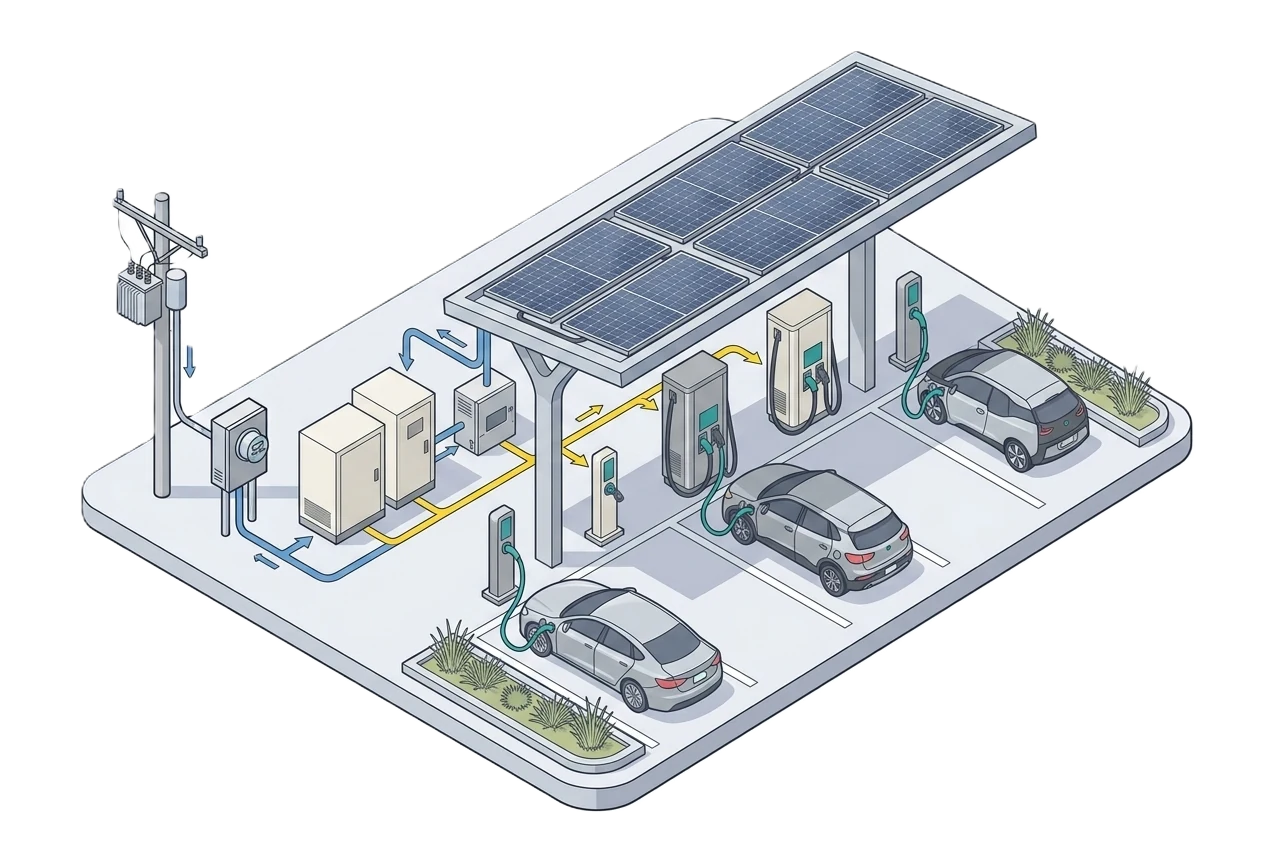
The Charging Model on Site Info sets fleet schedules or public arrival patterns; optional on-site storage and solar manage demand charges and grid limits.
Signature Features
Everything You Need for Charging Feasibility
Technoeconomic Engine
Complete lifecycle cost analysis over study periods up to 50 years, with Fleet (savings) and Public (revenue) business-case branches.
Charger Equipment Database
Real DC fast and Level 2 chargers from major OEMs, with rated power, grid and battery efficiencies, connector counts, and cost data.
MILP Dispatch & Queueing
A daily mixed-integer program schedules charging across connectors and arrivals, respecting dwell windows, queueing, and site grid limits.
Traffic & Dwell Modeling
Fleet duty-cycle schedules or public stochastic arrival profiles drive realistic occupancy, wait times, and queue lengths across the year.
Utilization & Session Analytics
Charger utilization tables and per-session analytics -- min/avg/max session length, energy, wait time, and queue length -- for fleet or public operations.
Professional Reports
Detailed reports with load and dispatch charts, utilization tables, cash-flow analysis, and multi-vendor comparison for stakeholder presentations.
Business Case
Two Ways to Build the Case
CogenS™ branches the financial model to match how the charging is owned and monetized.
Fleet
ICE replacementModel the savings of electrifying a vehicle fleet -- avoided gasoline/diesel fuel and maintenance, per vehicle class, over the study period -- against the charger and infrastructure investment. KPIs: NPV, IRR, payback, and levelized cost of charging (LCOC).
Public
Session pricingModel a public charging business: solve the per-kWh (or per-session) price needed to hit a target margin or payback, against modeled traffic, utilization, energy costs, and demand charges. KPIs: revenue, NPV, IRR, and payback.
Built For You
Designed for Energy Professionals
For any professional planning or investing in EV charging infrastructure.

Fleet Operators
Build the electrification business case per vehicle class -- charger sizing, depot dispatch, demand charges, and avoided fuel and maintenance over the asset life.

Site Hosts & Retail
Evaluate public charging as a revenue line -- session pricing, utilization risk, and demand-charge exposure -- before committing to chargers and grid upgrades.

Energy Consultants & ESCOs
Deliver defensible EV charging feasibility studies with MILP-based utilization, demand-charge modeling, and multi-vendor charger comparison.

Developers & Utilities
De-risk charging infrastructure by validating sizing, utilization, grid limits, and total cost of ownership before capital and interconnection commitments.
Why It Matters
Solving the Hardest Parts of Charging Feasibility
Utilization Risk
A charger only pays off if it is used. CogenS™ models realistic traffic, dwell, and queueing so the business case reflects true utilization -- not nameplate capacity.
Demand Charges
DC fast charging creates sharp demand peaks. CogenS™ uses MILP dispatch against your true demand structure -- and optional on-site storage -- to manage demand-charge exposure.
Grid Capacity Limits
Site interconnection often caps available power. CogenS™ schedules charging within grid import limits and flags when storage or staging is needed to serve the load.
Ready to Plan Your Charging Infrastructure?
Start with our free tool and model fleet or public charging against real traffic, tariffs, and grid limits -- with full lifecycle cost.