Introduction: The Increasing Urgency for a Resilient Grid
The era of predictable weather patterns and centralized, infallible power generation is over. Today’s electrical grid, a marvel of 20th-century engineering, is facing a 21st-century crisis. An escalating frequency of high-impact events—from hurricanes and wildfires to polar vortexes and atmospheric rivers—is exposing the inherent fragility of our aging infrastructure. These events no longer represent statistical outliers but an emerging operational norm, transforming localized blackouts into widespread, prolonged societal disruptions. The economic toll is staggering, with billions lost annually in productivity, spoiled goods, and emergency response costs. Beyond the financial impact, these outages threaten public health and safety, disabling critical facilities like hospitals, water treatment plants, and emergency communication networks when they are needed most. The imperative is clear: we must transition from a reactive posture of post-disaster restoration to a proactive strategy of building inherent a resilient grid. This requires a fundamental paradigm shift, viewing the grid not as a static collection of assets but as a dynamic, adaptable system designed for survival and rapid recovery.
Section 1: Redefining Resilience: Moving from Reliability Metrics to a Holistic Framework
Traditional Reliability
Focuses on preventing small-scale, high-frequency outages. Measured by metrics like SAIDI & SAIFI. Goal is to maintain ‘normal’ operations.
Holistic Resilience
Focuses on withstanding and rapidly recovering from large-scale, low-frequency events. Measured by recovery time & critical load survival. Goal is to ‘bounce back better’.
For decades, resilient grid performance has been benchmarked by reliability metrics such as the System Average Interruption Duration Index (SAIDI) and System Average Interruption Frequency Index (SAIFI). These metrics are invaluable for tracking performance under normal operating conditions, effectively measuring a system’s ability to avoid common, short-duration outages caused by equipment failure or minor incidents. However, they fall short in capturing a system’s capacity to handle high-impact, low-frequency (HILF) events characteristic of extreme weather. A grid can have excellent SAIDI/SAIFI scores yet be completely incapacitated for weeks by a single hurricane. Resilience, therefore, must be defined differently: it is the grid’s ability to prepare for, absorb, recover from, and adapt to disruptive events. A holistic resilience framework moves beyond simple outage statistics to encompass three core pillars:
Technical Robustness
The physical ability of components to withstand stress.
Operational Agility
The capacity of operators and automated systems to anticipate, reconfigure, and restore the grid dynamically.
Adaptive Capacity
The system’s ability to learn from past events and incorporate new technologies and strategies to improve future performance. This redefinition is crucial for directing investment toward solutions that enhance survivability, not just incremental reliability.
Section 2: Foundational Hardening: The Technoeconomics of Fortifying Grid Infrastructure
Undergrounding Lines
CAPEX: $1M – $5M / mile
Resilience Gain: Very High (Immune to wind/ice)
Drawback: High cost, slow repair times for faults.
Pole Reinforcement
CAPEX: $50k – $200k / mile
Resilience Gain: Moderate (Withstands higher winds)
Drawback: Still vulnerable to extreme events & falling trees.
The first line of defense in building a resilient grid is fortifying its physical backbone. Grid hardening encompasses a range of capital-intensive strategies aimed at increasing the structural robustness of transmission and distribution assets. The most prominent of these is the selective undergrounding of power lines, which virtually eliminates vulnerability to high winds, ice accumulation, and wildfires. However, the technoeconomic analysis reveals a steep trade-off: costs can range from $1 million to over $5 million per mile, making widespread implementation financially prohibitive (Source: Edison Electric Institute, eei.org). A more cost-effective, though less comprehensive, approach involves reinforcing existing overhead infrastructure. This includes replacing wooden poles with steel or composite alternatives, shortening spans between poles, and implementing aggressive vegetation management programs to create wider rights-of-way. The economic calculus here is a classic cost-benefit analysis: the upfront capital expenditure (CAPEX) is weighed against the Net Present Value (NPV) of avoided restoration costs, reduced operational expenditures (O&M), and lower economic losses from outages over the asset’s lifespan. For example, investing $100,000 per mile to reinforce a critical feeder line might be justified if it prevents a multi-million-dollar outage at a key industrial park every 5-10 years.
Section 3: The Decentralization Imperative: Evaluating Microgrids and Distributed Energy Resources (DERs)
Centralized Grid
Single point of failure can cause widespread outages.
Decentralized Grid
Microgrids can ‘island’ from the main grid to maintain power for critical loads.
While hardening strengthens the core grid, a complementary strategy involves reducing dependence on it. Decentralization, through the proliferation of Distributed Energy Resources (DERs) like rooftop solar, combined heat and power (CHP) systems, and local energy storage, fundamentally changes the grid’s architecture. The pinnacle of this approach is the microgrid: a localized group of electricity sources and loads that can disconnect from the traditional grid and operate autonomously. This “islanding” capability is the ultimate resilience feature, allowing critical facilities like hospitals, emergency shelters, and military bases to maintain power even when the surrounding utility grid is down. The technoeconomic analysis of microgrids is complex. It involves stacking multiple value streams: energy arbitrage and demand charge reduction during normal operation, and the immense value of continuity during an outage. For commercial and industrial customers, the ability to avoid business interruption costs often provides the primary justification for investment. As DER portfolios grow, advanced software platforms become essential for managing their complex interactions and maximizing their value, a service that requires detailed energy modeling and a secure data portal; many entities look to solutions like those offered at https://jisenergy.com/sign-up-login/ to manage these assets effectively. The challenge for regulators and utilities is developing tariff structures and interconnection standards that properly compensate these resources for the grid services and resilience they provide.
Section 4: The Critical Role of Energy Storage: A Comparative Analysis of Battery Technologies for Resilience
Duration
Cycle Life
Cost ($/kWh)
Lithium-Ion (Li-ion)
Flow (e.g., Vanadium)
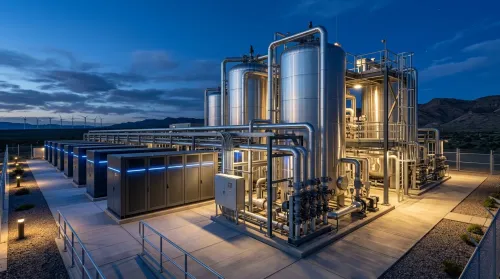
Energy storage is the critical enabler for a decentralized and resilient grid, providing the dispatchability that intermittent renewables lack and the instantaneous backup power needed during an outage. The choice of storage technology is a key technoeconomic decision driven by the specific resilience application. Lithium-ion (Li-ion) batteries currently dominate the market due to their high energy density, declining cost curve, and rapid response time. They are ideal for applications requiring short-duration (2-4 hours) backup, such as ensuring a seamless transition to a backup generator or riding through brief grid disturbances. Their primary resilience value is in providing firm capacity and critical frequency response. For longer-duration outages, however, emerging technologies like flow batteries (e.g., vanadium redox) present a compelling alternative. While they have a higher initial capital cost and lower energy density, their key advantage is the decoupling of power and energy capacity. This allows them to be cost-effectively scaled for 8, 10, or even 12+ hours of storage, a crucial capability for surviving multi-day outages. Furthermore, they exhibit minimal degradation over tens of thousands of cycles, offering a lower levelized cost of storage (LCOS) for high-utilization resilience applications. A technoeconomic framework must match the technology’s duration and cycle-life characteristics to the facility’s specific risk profile and outage tolerance.
Section 5: The Digital Backbone: Leveraging Advanced Controls and Software for a Self-Healing Grid
⚡
✂
🔄
💡
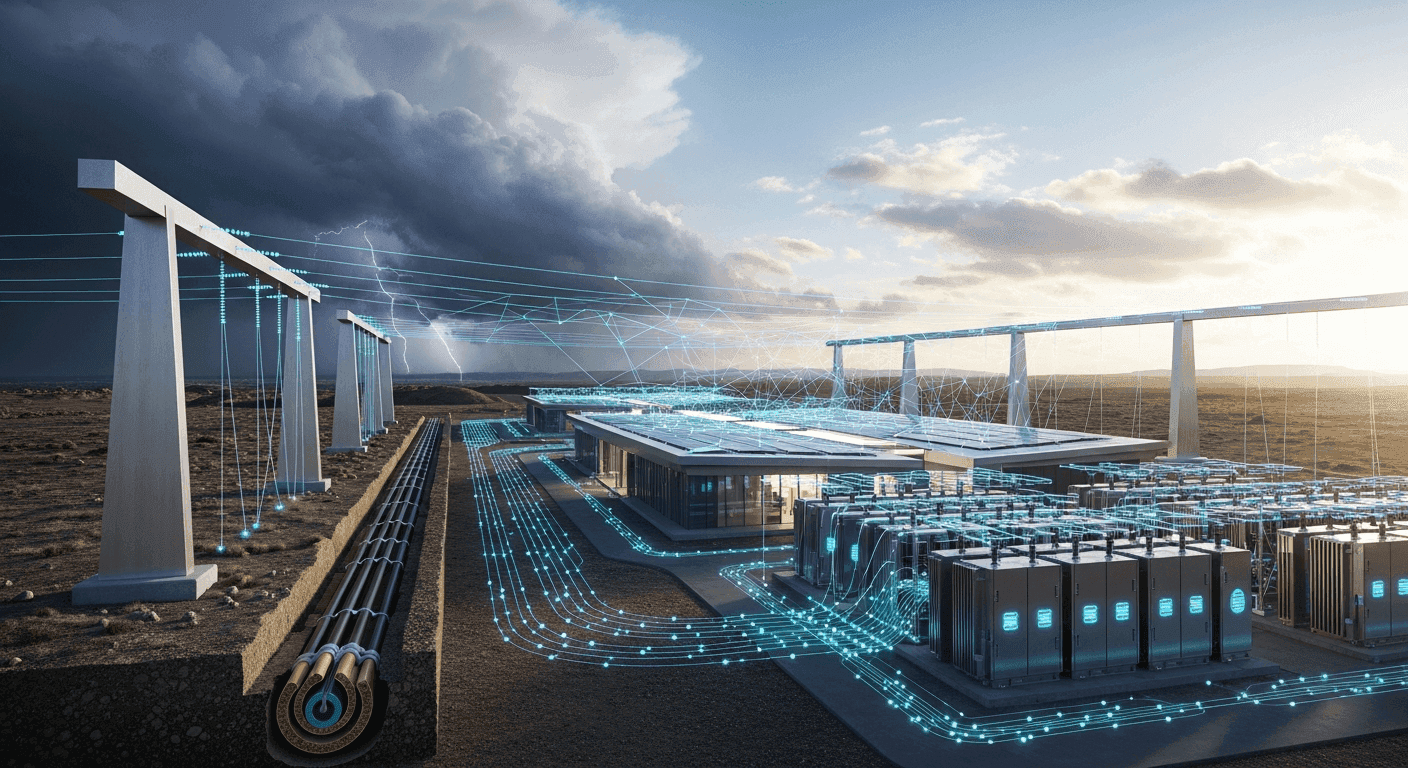
Physical hardening and decentralization are incomplete without a sophisticated digital layer to orchestrate them. A modern, resilient grid relies on an advanced “digital backbone” of sensors, communications, and software to achieve situational awareness and automated control. The cornerstone of this is an Advanced Distribution Management System (ADMS), which integrates SCADA systems, outage management, and distribution automation into a single platform. A key function within ADMS is Fault Location, Isolation, and Service Restoration (FLISR). When a fault occurs (e.g., a tree falls on a line), FLISR systems automatically detect the precise location, open remote-controlled switches to isolate the damaged segment, and then reconfigure the network by closing other switches to restore power to as many customers as possible—all within seconds or minutes, rather than hours. The technoeconomic case for these digital investments is compelling. While the software and hardware deployment has significant upfront costs, the return on investment is realized through drastically reduced SAIDI scores, lower O&M costs from fewer truck rolls, and improved asset management through predictive analytics. According to the U.S. Department of Energy, these smart grid investments have already helped avoid millions of customer-hours of outages (Source: energy.gov). This ability to dynamically reconfigure and rapidly heal is what separates a brittle, static grid from a truly resilient one.
Section 6: The Economic Calculus: A Framework for Valuing Resilience and Structuring Investment
COSTS
• Ongoing O&M
• Financing Costs
BENEFITS (VALUE)
• Avoided Restoration Costs
• Societal & Health Co-benefits
Historically, justifying resilience investments has been challenging because traditional utility regulation prioritizes minimizing upfront costs for ratepayers. However, this model fails to account for the massive, externalized costs of grid failure. A robust technoeconomic framework for resilience must monetize the *avoided* consequences of an outage. The central metric in this calculation is the Value of Lost Load (VoLL), which quantifies the economic cost incurred by customers per kilowatt-hour of unserved energy. VoLL varies dramatically by customer class—from dollars per kWh for a residential customer to thousands of dollars per kWh for a high-tech manufacturing facility or a hospital. By multiplying the expected unserved energy from a given storm scenario by the corresponding VoLL, a utility can calculate the potential economic damage and thus establish a justifiable budget for mitigation measures. A framework proposed by researchers at Lawrence Berkeley National Laboratory provides a standardized methodology for these calculations (Source: resilience.lbl.gov). Beyond VoLL, the “resilience dividend” includes co-benefits such as reduced emissions from DER integration, improved public health outcomes, and increased local economic activity from construction and maintenance. Structuring investment can take several forms: rate-basing prudent hardening projects, performance-based regulation (PBR) that rewards utilities for achieving resilience targets, or public-private partnerships to fund critical facility microgrids.
Section 7: Case Study: Technoeconomic Breakdown of a Resilient Critical Facility Microgrid
CAPEX Breakdown: $5.5M
Value Proposition
Annualized Cost: ~$500,000
Annual Bill Savings: $350,000
Value of Lost Load (VoLL): $15,000/hr
Breakeven Point: Avoids just 10 hours of outage per year to justify the net cost.
Consider a medium-sized hospital with a peak load of 2 MW and an average load of 1.2 MW. Its VoLL is extremely high due to risks to patient safety, data loss, and equipment damage, estimated at $15,000 per hour. The hospital is subject to an average of 20 hours of grid outages annually due to severe weather. A technoeconomic analysis is conducted for a microgrid solution comprising a 1 MW solar PV array, a 1 MW/4 MWh Li-ion Battery Energy Storage System (BESS), and existing backup diesel generators, all managed by a microgrid controller.
Technoeconomic Inputs:
* CAPEX: Solar ($2.5M) + BESS ($2.0M) + Controls & Integration ($1.0M) = $5.5M Total
* Operational Benefits (Grid-Connected): The solar and BESS combination reduces utility energy and demand charges by an estimated $350,000 annually through energy arbitrage and peak shaving.
* Resilience Value: The cost of 20 outage hours per year at $15,000/hr is $300,000.
Analysis:
The annualized cost of the microgrid (considering a 20-year lifetime and financing) is approximately $500,000. After subtracting the $350,000 in operational savings, the net annual cost for resilience is $150,000. Since this is half the monetized value of the avoided outages ($300,000), the investment yields a significant positive return. The microgrid not only pays for itself but also provides a critical lifeline service that cannot be achieved through traditional grid connection alone, demonstrating a clear case where targeted investment provides immense societal and economic value.
Conclusion: Building the Future-Proof Grid: Integrating Grid Resilience Strategies for a Sustainable and Secure Energy Future
The journey “Beyond the Blackout” is not a pursuit of a single silver-bullet solution but the systematic implementation of a multi-layered, integrated strategy. A truly future-proof resilient grid cannot be built on physical hardening alone, nor can it be achieved solely through digital innovation or decentralized resources. The optimal technoeconomic framework recognizes these approaches as synergistic components of a holistic system. Foundational hardening creates a robust physical backbone, decentralization through microgrids and DERs provides cellular autonomy and failure containment, energy storage imparts critical flexibility and endurance, and an advanced digital layer serves as the intelligent nervous system that orchestrates these assets for maximum effect. Moving forward requires a collaborative effort among policymakers, regulators, utilities, and technology providers to evolve market structures and investment models that properly value resilience. By embracing a framework that quantifies the immense cost of inaction and recognizes the stacked benefits of proactive investment, we can transition our power grid from a 20th-century liability into a resilient, adaptive, and secure platform for a sustainable 21st-century energy economy.