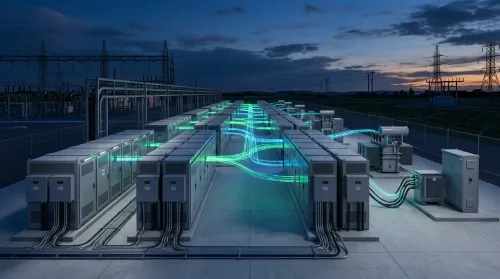
PAST: SHORT-DURATION
Focus on grid stability & frequency regulation (seconds to <4 hours).
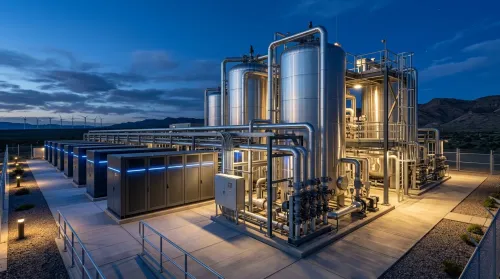
PRESENT: THE SHIFT
Driven by high renewable penetration & need for interday energy shifting.
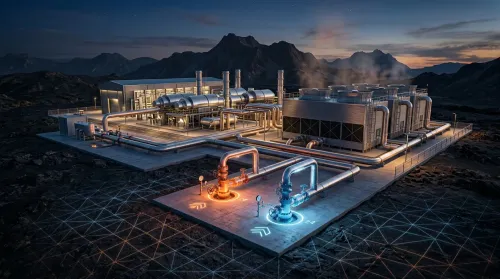
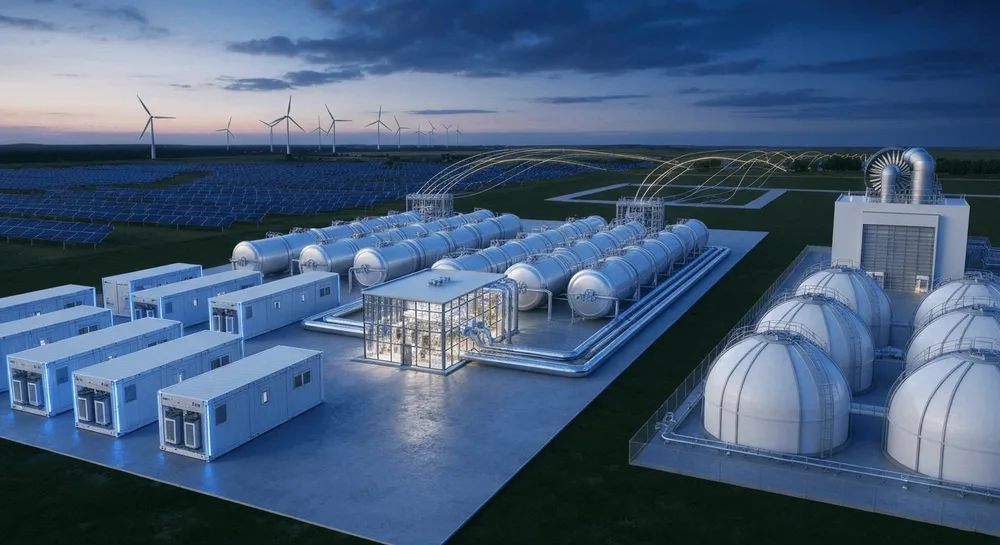
FUTURE: LONG-DURATION
Critical for grid reliability, decarbonization, and firming renewables.
Introduction: The Shifting Paradigm - Why 12+ Hour Energy Storage is Now Critical
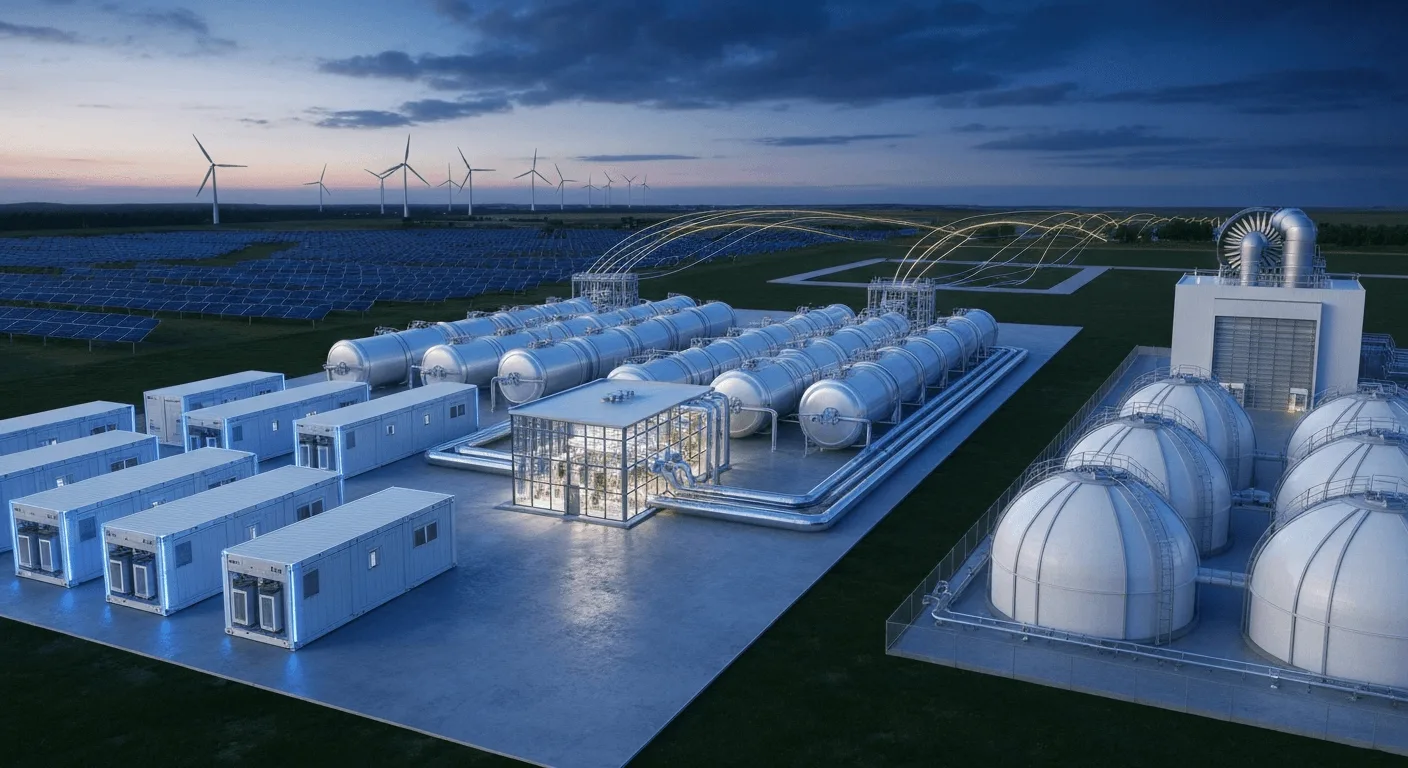
The global energy grid is undergoing its most significant transformation in a century. As intermittent renewable sources like solar and wind power constitute an ever-larger share of generation, the fundamental challenge of balancing supply and demand has become acute. The era of relying on short-duration (<4 hours) battery energy storage systems (BESS) primarily for ancillary services like frequency regulation is drawing to a close. The new imperative is long-duration energy storage (LDES), defined as systems capable of storing and discharging energy for 10-12 hours or more. This shift is driven by the need to bridge the "duck curve" gap—storing vast amounts of midday solar energy for dispatch during evening and morning peak demand periods. Without cost-effective LDES, renewable curtailment will soar, grid reliability will decline, and deep decarbonization goals will remain unattainable. This paradigm shift necessitates a new technoeconomic calculus, moving beyond the incumbent lithium-ion technology to evaluate a broader portfolio of solutions designed specifically for endurance.
Short-Duration Role
Grid Services
(Frequency, Voltage)
High power, low energy throughput.
LDES Imperative
Energy Shifting
(Renewable Firming)
High energy, daily deep cycling.
The LDES Imperative: Moving Beyond Short-Duration Grid Support
The value proposition of energy storage is evolving from a power-centric to an energy-centric model. Short-duration batteries excel at injecting or absorbing power rapidly, providing critical grid stabilization services that are monetized in capacity and ancillary service markets. However, their economic viability is fundamentally tied to the volatility of these markets. LDES, in contrast, serves a more fundamental, predictable need: bulk energy time-shifting. Its primary function is to act as a temporal bridge, ensuring that energy generated during periods of low demand and high renewable output can be reliably delivered hours later. This capability is essential for increasing the capacity factor of renewable assets, deferring costly transmission and distribution upgrades, and providing resource adequacy in a decarbonized grid. As renewable penetration levels exceed 30-40% in many regions, the value of short-duration services saturates, while the need for multi-hour energy shifting becomes the dominant economic driver and engineering requirement for maintaining a stable, low-carbon electricity system. (Source: nrel.gov)
Li-Ion BESS
🔋
Mature, high-density electrochemical cell. Power and energy are coupled.
Flow BESS
⚗️
Liquid electrolyte in tanks. Power and energy are decoupled for independent scaling.
Thermal BESS
♨️
Stores energy as heat or cold in low-cost media. Power conversion is separate.
Defining the Contenders: A High-Level Overview of Li-Ion, Flow, and Thermal BESS
Three primary technology families are vying for dominance in the LDES landscape, each with a distinct engineering and economic profile. Lithium-Ion (Li-Ion) BESS, the incumbent technology, offers high energy density and round-trip efficiency. Based on integrated electrochemical cells, its power and energy capacity are inherently coupled, leading to linear cost scaling with duration. Flow Batteries, exemplified by Vanadium Redox Flow Batteries (VRFBs), decouple power and energy. Power is determined by the size of the electrochemical stack, while energy is determined by the volume of liquid electrolyte stored in tanks, allowing for more cost-effective scaling of duration. Thermal Energy Storage (TES) systems operate by converting electricity into thermal potential—either heat (e.g., in molten salt, concrete) or cold (e.g., cryogenic air). These systems pair complex, expensive power conversion machinery with extremely low-cost storage media, making them potential candidates for very large-scale, long-duration applications. Understanding the fundamental differences in how these technologies scale power versus energy is the first step in a credible technoeconomic evaluation for LDES.
Rigorous LCOS Analysis for LDES Applications
Core Thesis: A Rigorous Technoeconomic Analysis for Long-Duration Applications
The central thesis of this analysis is that the optimal BESS technology for LDES applications cannot be determined by upfront capital cost (CAPEX) alone. A comprehensive evaluation requires a lifetime perspective, best captured by the Levelized Cost of Storage (LCOS) metric. This analysis will demonstrate that as storage duration extends beyond the conventional 4-hour mark to 12 hours and more, the fundamental architectural differences between Li-ion, flow, and thermal batteries lead to significant divergence in their LCOS. We will prove that the linear cost scaling and degradation-driven augmentation requirements of Li-ion BESS create an economic barrier at longer durations. Conversely, the decoupled power/energy architecture of flow and thermal systems, despite often having higher initial power-related costs, results in a more favorable LCOS profile for daily, deep-cycling, long-duration use cases. The objective is to provide a data-driven framework that moves beyond simplistic $/kWh comparisons to identify the true, lifetime cost-effectiveness of each technology for the critical 12+ hour storage market.
LCOS Key Variables for LDES
($/kW + $/kWh)
(Maintenance, Aux)
(Energy Loss Cost)
(Augmentation Cost)
(Lifetime MWh)
Section 1: Deconstructing the Levelized Cost of Storage (LCOS) for LDES
The LCOS Formula: Key Variables for Long-Duration Analysis (CAPEX, OPEX, RTE, Degradation, Throughput)
The Levelized Cost of Storage (LCOS) is the primary metric for comparing different storage technologies on an "apples-to-apples" basis. It represents the total discounted lifetime cost of a storage system divided by its total lifetime energy delivered. The formula aggregates initial Capital Expenditures (CAPEX), ongoing Operational Expenditures (OPEX), charging costs, and end-of-life decommissioning costs, all discounted to a present value. For LDES analysis, certain variables carry disproportionate weight compared to short-duration models. Degradation, which dictates the frequency and cost of capacity augmentation, becomes a primary cost driver under daily deep-cycling regimes. Round-Trip Efficiency (RTE) is no longer a minor consideration; its compounding effect on charging costs over a 20-year project life can be substantial. Finally, total energy throughput (the denominator in the LCOS equation) is maximized in LDES applications, meaning technologies with high cycle life and minimal degradation see their high initial CAPEX amortized over a much larger energy delivery volume, fundamentally altering the economic comparison.
CAPEX Breakdown: The Critical Distinction Between Power Block ($/kW) and Energy Block ($/kWh) Costs
A monolithic CAPEX figure in $/kWh is dangerously misleading for LDES analysis. The capital cost of any BESS must be bifurcated into its power block and energy block components. The power block ($/kW) includes components like inverters, transformers, and control systems, which scale with the maximum rate of charge/discharge (MW). The energy block ($/kWh) includes the storage medium itself—the battery cells, electrolyte, or thermal media—which scales with the total energy capacity (MWh). For Li-ion systems, these costs are semi-coupled, as cells contribute to both power and energy. However, for flow and thermal systems, the distinction is stark. They possess a high-cost power block (stacks, turbines) but a very low-cost, independently scalable energy block (electrolyte tanks, salt reservoirs). This architectural divergence is the core reason they become economically competitive at longer durations; adding an extra hour of storage capacity incurs a marginal cost dominated by the cheap energy block component, whereas for Li-ion, it requires adding the full cost of more cells.
OPEX and Augmentation: Factoring in Lifetime Maintenance, Replacements, and Performance Guarantees
Operational expenditures (OPEX) in LDES models extend far beyond routine maintenance. The most significant long-term operational cost, particularly for Li-ion, is capacity augmentation. Due to inherent electrochemical degradation, a Li-ion BESS will lose capacity with every cycle. To meet performance guarantees over a 15-20 year lifespan, the battery stacks must be periodically replaced or "augmented," representing a substantial future capital outlay that must be factored into any LCOS calculation. Flow batteries, whose electrolyte does not degrade, require minimal augmentation, primarily involving periodic stack refurbishment. Thermal systems may require component overhauls on their turbomachinery. Furthermore, OPEX must account for auxiliary loads like HVAC for Li-ion thermal management or pumps for flow batteries. When evaluating LDES, a model that ignores the multi-million-dollar cost of a Year 10 Li-ion battery replacement is fundamentally flawed and will heavily understate the true lifetime cost compared to technologies with greater durability.
The Overlooked Multiplier: How Round-Trip Efficiency (RTE) Impacts Lifetime Revenue and Operating Cost
Round-Trip Efficiency (RTE)—the ratio of electrical energy discharged to electrical energy charged—is a powerful multiplier on lifetime project economics. While Li-ion systems boast high RTEs (85-95%), many LDES technologies like flow batteries (70-80%) and thermal storage (50-70%) are less efficient. This efficiency gap translates directly into higher operating costs. For a 100 MWh system cycling daily with an electricity purchase price of $30/MWh, an RTE difference of 15% (e.g., 90% vs. 75%) results in over $270,000 in additional energy procurement costs annually. Over a 20-year project life, this amounts to millions of dollars in lost value. For a project developer, this means that for every MWh of energy sold, a lower RTE system requires purchasing significantly more input energy. Therefore, the revenue spread (arbitrage) must be sufficiently high to compensate for these inherent energy losses. A lower RTE directly erodes project margins and increases the LCOS, making it a critical variable in technology selection, especially in markets with narrow price spreads.
Degradation's Financial Toll: Modeling Cycle Life vs. Calendar Life in 12+ Hour Use Cases
Degradation is the silent killer of BESS project economics, and its impact is magnified in LDES applications. It's crucial to distinguish between calendar life, the degradation that occurs over time regardless of use, and cycle life, the degradation caused by charging and discharging. For a 12+ hour system performing daily renewables shifting, cycle life degradation is the dominant factor. Li-ion technologies typically offer 4,000-8,000 deep cycles before reaching ~70-80% of original capacity, which can be exhausted in 10-15 years in an LDES application. This triggers expensive augmentation. In contrast, vanadium flow batteries boast a cycle life exceeding 15,000-20,000 cycles with negligible capacity fade in the electrolyte, aligning perfectly with a 20+ year project timeline. Technoeconomic models must accurately project capacity fade based on the expected annual throughput. Failing to do so—for instance, by using a simple linear degradation rate—will drastically underestimate the "stair-step" costs of augmentation and misrepresent the long-term financial viability of degradation-prone technologies in high-utilization scenarios.
Li-Ion CAPEX Scaling
Power & Energy are coupled. Cost scales linearly with duration.
12-Hr CAPEX ≈ 3x 4-Hr CAPEX
Lifetime Cost Challenge
Degradation requires costly battery replacements (Augmentation).
Year 1: 100% Capacity
Year 10: 75% Capacity + AUGMENTATION
Section 2: Lithium-Ion BESS - Pushing the Limits of a Mature Technology
Technical Profile: NMC vs. LFP for Extended Duration Applications
Within the Li-ion family, the choice of cathode chemistry is critical for LDES. Nickel Manganese Cobalt (NMC) chemistries, favored in electric vehicles for their high energy density, are generally less suitable for stationary LDES. Their lower thermal stability necessitates more robust and costly thermal management systems, and their cycle life is typically shorter. Lithium Iron Phosphate (LFP) has emerged as the dominant chemistry for grid-scale applications. LFP offers superior thermal stability, enhancing safety and reducing the risk of thermal runaway. Crucially, it provides a significantly higher cycle life (often double that of NMC) and a flatter voltage curve, simplifying battery management. While LFP's lower energy density means a larger physical footprint per MWh, its advantages in safety, longevity, and lower cost (due to the absence of cobalt) make it the default choice when engineering a Li-ion system for the demanding daily cycling requirements of a 12+ hour duration profile.
Economic Profile: Why Linear CAPEX Scaling Fails at 12+ Hours
The fundamental economic challenge for Li-ion BESS in LDES applications is its coupled power-energy cost structure. Because the battery cells provide both power and energy, scaling from a 1 MW/4 MWh system to a 1 MW/12 MWh system requires roughly tripling the number of cells, racks, and associated battery management systems. This results in a nearly linear increase in total CAPEX as duration extends. While manufacturing scale has driven down the per-kWh cost significantly, this linear scaling principle remains. A 4-hour system may be cost-competitive, but at 12 hours, the total project cost becomes prohibitively high compared to technologies that can add energy capacity at a much lower marginal cost. This scaling law is the primary reason Li-ion faces a "glass ceiling" in the LDES market; it cannot escape the high cost of adding duration, which is precisely the attribute that defines LDES.
Technoeconomic Challenges: Degradation, Augmentation Schedules, and Thermal Management Costs
Beyond the initial CAPEX, the lifetime technoeconomic profile of Li-ion for LDES is strained by three key challenges. First, degradation is relentless. A system cycling daily at a deep depth-of-discharge will rapidly consume its warranted cycle life, leading to a predictable but costly augmentation schedule. A utility-scale project may require a full battery stack replacement in years 10-12, an expense that can amount to 40-50% of the initial system CAPEX and devastate project IRR if not accurately modeled. Second, thermal management is a significant parasitic load and OPEX component. Maintaining the massive cell arrays within their optimal temperature window (typically 20-30°C) requires powerful HVAC systems that consume a non-trivial percentage of the system's throughput, directly reducing the net energy delivered and lowering the effective RTE. Finally, performance guarantees often limit the usable state-of-charge window (e.g., 10-90%) to prolong life, meaning a 12 MWh nameplate system may only deliver 9.6 MWh in practice, further increasing the effective $/kWh cost.
LCOS Analysis for Li-Ion at 12+ Hours: Identifying the Cost Crossover Point
When modeled using a comprehensive LCOS framework, the economic trajectory of Li-ion BESS becomes clear. At short durations (2-6 hours), its high RTE and declining CAPEX give it a highly competitive, often leading, LCOS. However, as the model duration extends to 12+ hours, the LCOS curve for Li-ion begins to steepen significantly. This inflection is caused by the confluence of high energy-scaling CAPEX and the discounted future cost of capacity augmentation. Competing technologies like flow batteries, which have a higher LCOS at 2-4 hours due to their expensive power block, exhibit a much flatter LCOS curve as duration increases. The cost crossover point, where the LCOS of a flow or thermal system drops below that of a Li-ion system, typically occurs in the 8-10 hour range for daily cycling applications. For any project requiring 12+ hours of storage, Li-ion's lifetime cost is therefore likely to be substantially higher than alternatives designed for duration. To explore detailed cost projections for various technologies, analysts can reference comprehensive datasets from leading energy consultancies. For deeper insights, you can review market data after a quick sign-up at https://jisenergy.com/sign-up-login/.
The Decoupling Advantage
Electrochemical Stack
Electrolyte Tanks
Scale energy cheaply by simply adding more low-cost electrolyte.
Lifetime Durability
Electrolyte does not degrade, enabling massive cycle life.
Cycle Life: 20,000+
Augmentation Need: Minimal
Section 3: Flow Batteries (Vanadium Redox Focus) - Designed for Duration
Technical Profile: The Power/Energy Decoupling Advantage
The defining characteristic of a flow battery is the physical separation of its power and energy components. The power conversion system (the "stack") where the electrochemical reactions occur is a self-contained unit that dictates the system's MW rating. The energy capacity (MWh), however, is determined solely by the volume of the liquid electrolyte (e.g., vanadium sulfate) stored in external tanks. This architectural decoupling is a game-changer for LDES. To increase a system's duration from 4 hours to 12 hours, one does not need to add more expensive stacks; one simply increases the size of the tanks and fills them with more electrolyte. This allows for precise and cost-effective tailoring of the system to the specific energy storage needs of an application, a flexibility that integrated-cell batteries like Li-ion cannot offer. Furthermore, the technology is inherently safe, with the aqueous electrolyte being non-flammable.
Economic Profile: High Initial Power Cost vs. Low Incremental Energy Cost
The economic profile of a Vanadium Redox Flow Battery (VRFB) is the inverse of its technical simplicity. The power block, consisting of the cell stacks, pumps, and control systems, is complex and represents a significant portion of the initial CAPEX, resulting in a high $/kW cost. This makes flow batteries relatively expensive for short-duration, high-power applications. However, the energy block—the vanadium electrolyte—has a very low marginal cost ($/kWh). While vanadium itself is a commodity with price volatility, it is fully reusable and does not degrade, retaining its value at the end of the project's life. This creates a compelling economic case for LDES: after the initial investment in the power block, adding hours of storage capacity is exceptionally cheap. This "high fixed, low variable" cost structure is what allows the technology's LCOS to fall dramatically as duration increases.
Technoeconomic Strengths: Minimal Degradation, High Cycle Life, and Low Augmentation Needs
From a lifetime cost perspective, the technoeconomic strengths of VRFBs are profound. The primary asset, the vanadium electrolyte, does not suffer from the cycling-induced degradation that plagues solid-state batteries. This leads to an extremely high cycle life, often warrantied for over 20,000 cycles, which is more than sufficient for a 20+ year project involving daily energy shifting. The direct financial benefit is the near-elimination of augmentation costs. There is no need for a massive mid-life capital expenditure to replace degraded battery modules. The OPEX is predictable, consisting of routine maintenance on pumps and periodic refurbishment of the stacks, which is a far less costly undertaking than a full Li-ion replacement. This durability and low-maintenance profile de-risks long-term project financials and provides a stable, predictable LCOS that is highly attractive to investors and asset owners. (Source: sandia.gov)
LCOS Analysis for Flow Batteries: Quantifying the Long-Term Financial Benefits
When subjected to a rigorous LCOS analysis for a 12+ hour duration, the benefits of the flow battery's architecture become quantifiable. The model shows a high LCOS at short durations (2-4 hours) due to the heavy amortization of the power block over a small amount of delivered energy. However, as the duration is extended in the model, the LCOS curve flattens dramatically. The low marginal cost of adding energy capacity and, crucially, the absence of a discounted multi-million-dollar augmentation event, means the numerator of the LCOS equation (lifetime costs) grows much slower than the denominator (lifetime energy throughput). For a typical daily cycling renewables-shifting use case, a VRFB's LCOS will intersect with and fall below that of a Li-ion system in the 8-10 hour duration range. At 12, 14, or 16 hours, the LCOS advantage of the flow battery becomes significant, often resulting in a 20-30% lower lifetime cost per MWh delivered compared to its Li-ion counterpart.
Power Block ($/kW)
Turbines, pumps, heat exchangers. Complex and high-cost.
Energy Block ($/kWh)
Molten salt, water, gravel, air. Abundant and ultra-low-cost media.
Key Trade-Off
Lower Round-Trip Efficiency (RTE) means higher operational energy costs.
Section 4: Thermal Energy Storage - Leveraging Thermodynamics for Low-Cost Capacity
Technical Profile: Principles of Molten Salt, Cryogenic Air, and Concrete/Brick Thermal Storage
Thermal energy storage (TES) systems encompass a diverse range of technologies that all share a common principle: using electricity to create a temperature differential in a storage medium, and then using that differential to drive a heat engine or turbine to regenerate electricity. Molten Salt systems, proven in concentrated solar power plants, use electricity to heat salts to high temperatures (e.g., 565°C) and store them in insulated tanks. Cryogenic (or Liquid Air) Energy Storage (LAES) uses electricity to cool air until it liquefies (-196°C), storing it in low-pressure vessels. During discharge, the liquid air is expanded back into a gas to drive a turbine. Newer concepts like Concrete/Brick Thermal Storage use electric heaters to heat blocks of refractory materials to extreme temperatures. In all cases, the power generation system (turbines, heat exchangers) is distinct from the low-cost bulk storage medium (salt, air, concrete).
Economic Profile: Ultra-Low-Cost Storage Media ($/kWh) vs. Complex Power Conversion Systems ($/kW)
The economic profile of TES is an extreme version of the flow battery's. The cost of the storage media is exceptionally low, often falling below $10-20/kWh. Materials like salt, gravel, and air are abundant and cheap, making the marginal cost of adding energy capacity almost negligible. This is the core economic advantage of TES. However, this is counterbalanced by an extremely high-cost power conversion system ($/kW). The required turbomachinery, heat exchangers, and industrial-grade plumbing are complex, capital-intensive, and benefit from large economies of scale. This profile makes TES economically unviable for smaller-scale or shorter-duration applications. It is purpose-built for massive, grid-scale projects where hundreds of megawatts of power are paired with many hours (often 12 to 100+) of storage, allowing the enormous power block cost to be amortized over a vast amount of low-cost energy capacity.
Technoeconomic Considerations: Round-Trip Efficiency, Ramp Rates, and Physical Footprint
Despite the promise of ultra-low energy CAPEX, TES technologies face significant technoeconomic hurdles. The most prominent is Round-Trip Efficiency (RTE). The thermodynamic conversions from electricity-to-heat-to-electricity are inherently lossy, with typical RTEs ranging from 50% to 70%. This means for every 100 MWh of electricity used for charging, only 50-70 MWh is returned to the grid, representing a substantial operating cost. Second, ramp rates are generally slower than electrochemical batteries. Starting up complex thermal cycles can take minutes to hours, which may limit their ability to participate in lucrative, fast-response ancillary service markets. Finally, the physical footprint of these systems is considerably larger than that of energy-dense Li-ion batteries. The large insulated tanks, power island, and cooling systems require significant land area, making them unsuitable for space-constrained locations. These factors must be carefully weighed against the benefit of low energy-specific capital cost.
LCOS Analysis for Thermal BESS: When Scale and Dispatch Profile Justify the Technology
The LCOS for thermal storage is highly sensitive to project scale and use case. An LCOS model for a 10 MW / 40 MWh system would likely show TES to be prohibitively expensive due to the high $/kW cost of the power block. However, when the model is scaled up to a 200 MW / 2400 MWh (12-hour) scenario, the economics transform. The fixed cost of the power island is spread over an immense energy capacity, causing the overall $/kWh CAPEX to plummet. The LCOS becomes competitive with other technologies, and at very long durations (24+ hours), it can become the lowest-cost option, despite its poor RTE. The ideal dispatch profile involves consistent, predictable, deep daily cycles that maximize throughput and allow the system to operate at its designed optimal efficiency. TES is a technology for bulk energy shifting at its grandest scale, justified only when the need for massive, long-duration storage outweighs the drawbacks of its lower efficiency and operational inflexibility.
LCOS vs. Duration (Illustrative)
Daily Cycling, 20-Year Life
Section 5: Head-to-Head LCOS Comparison for a 12-Hour Duration Scenario
Modeling Assumptions: System Size (MW/MWh), Use Case (e.g., Renewables Shifting), and Financial Inputs
To conduct a credible head-to-head comparison, we establish a standardized project scenario: a 100 MW / 1200 MWh (12-hour duration) BESS. The primary use case is daily renewables shifting, assuming one full charge/discharge cycle per day, 350 days per year. Key financial inputs include a 20-year project life, a discount rate of 7%, an electricity purchase price of $30/MWh for charging, and technology-specific inputs for CAPEX, OPEX, RTE, and degradation rates derived from recent industry reports. For Li-ion (LFP), we assume an all-in CAPEX of $350/kWh, a 15-year augmentation cycle, and 90% RTE. For the VRFB, we model a higher power-block cost leading to an all-in CAPEX of $420/kWh, but no augmentation and a 75% RTE. For Thermal (Molten Salt), we assume a large project scale discount, leading to a CAPEX of $380/kWh, no augmentation, and a 65% RTE. These are illustrative figures that form the basis of our comparative LCOS calculation.
Initial CAPEX Showdown: A Component-by-Component Cost Comparison
In our 100 MW / 1200 MWh scenario, the initial CAPEX breakdown reveals the core architectural differences. The Li-ion system has a total upfront cost of $420 million, with the battery blocks themselves constituting the vast majority of the expense. The VRFB system has a higher total CAPEX of $504 million. A component analysis shows a very high cost for the 100 MW power conversion stack and balance of plant, but the cost of the 1200 MWh of vanadium electrolyte is comparatively lower than the equivalent Li-ion cells. The Thermal system, benefiting from assumed scale, comes in at a CAPEX of $456 million. Here, the 100 MW turbomachinery and power island are immensely expensive, but the cost of the thousands of tons of molten salt required for 1200 MWh is a relatively small fraction of the total. On upfront cost alone, Li-ion appears to be the winner. However, this initial snapshot is only the first chapter of the 20-year financial story.
Lifetime OPEX and Replacement Costs: The 20-Year Financial Picture
The 20-year financial picture dramatically alters the initial ranking. The Li-ion system's LCOS is burdened by two major future costs: a projected $180 million (in present value terms) for battery augmentation in year 15 and consistently higher auxiliary power draw for its HVAC system. The VRFB system's lifetime OPEX is dominated by its lower RTE, resulting in higher annual electricity procurement costs compared to Li-ion. However, it has no major replacement costs, only modest periodic stack refurbishment. The Thermal system has the highest operating cost penalty due to its 65% RTE, requiring significantly more input energy for the same output. Its maintenance costs on the complex turbomachinery are also higher than the other two. When all these costs are discounted to their net present value, the initial CAPEX advantage of Li-ion is completely erased by its mid-life replacement liability. The flow battery's primary lifetime cost is efficiency loss, a predictable operational variable rather than a massive capital expense.
Sensitivity Analysis: Impact of Cycle Frequency, RTE, and Degradation on Final LCOS
The robustness of our LCOS conclusion depends on its sensitivity to key assumptions. A sensitivity analysis reveals critical insights. If the cycle frequency is reduced (e.g., the plant operates only 250 days a year), the lifetime throughput decreases, which disproportionately benefits Li-ion by delaying its degradation-based augmentation. Conversely, in a high-frequency use case (e.g., providing additional grid services), Li-ion's LCOS worsens significantly while the flow battery's remains stable. A 5% improvement in a flow or thermal system's RTE has a major positive impact on its LCOS, directly reducing a primary operational cost. The most sensitive variable for Li-ion is its degradation rate; if actual degradation is faster than warrantied, the augmentation schedule accelerates, causing a catastrophic increase in its LCOS. This highlights that the financial success of a Li-ion LDES project is highly sensitive to operational wear, whereas a flow battery's is more sensitive to market price spreads (due to RTE).
Graphical Analysis: Visualizing the LCOS Curves for Li-Ion, Flow, and Thermal from 4 to 16+ Hours
Plotting the calculated LCOS for each technology against storage duration creates the definitive visual for this analysis. The graph shows the Li-ion LCOS starting as the lowest at 4 hours but rising in a steepening curve, crossing the flow battery's LCOS at approximately 9 hours. The flow battery's LCOS begins higher but follows a much flatter trajectory, declining slowly as duration increases due to better amortization of its power block. The thermal storage LCOS starts as the highest by a wide margin but slopes downward most aggressively, eventually crossing below the flow battery's LCOS at durations beyond 16-20 hours (for this specific project scale). This graphical representation confirms the core thesis: for the 12-hour duration central to our scenario, the flow battery clearly demonstrates the lowest lifetime cost. This aligns with findings from major research bodies like the U.S. National Renewable Energy Laboratory (NREL), which consistently show non-lithium technologies becoming more competitive as duration requirements increase. (Source: nrel.gov)
Beyond LCOS: A Comparative Snapshot
Factor
Energy Density
Safety (Fire Risk)
Supply Chain Risk
Ancillary Service Speed
Li-Ion
High
Medium
High (Li, Co)
Excellent
Flow (VRFB)
Low
High
Medium (V)
Good
Thermal
Low
High
Low
Fair
Section 6: Beyond LCOS: Critical Engineering and Integration Factors
Energy Density and Footprint: Site Constraints and Balance of Plant (BOP) Implications
While LCOS is a dominant decision driver, physical constraints can render it moot. Li-ion BESS offers the highest volumetric and gravimetric energy density of the mature technologies. This results in the smallest physical footprint, a critical advantage in urban or land-constrained areas. Flow batteries, with their large electrolyte tanks, and thermal systems, with their extensive power island and storage reservoirs, require significantly more land area per MWh. This larger footprint directly impacts Balance of Plant (BOP) costs, including civil works, foundations, and cabling. A project developer must evaluate not just the cost of the BESS itself, but the all-in, site-specific installed cost. A lower LCOS technology may be disqualified if the required land is unavailable or prohibitively expensive, highlighting the interplay between technoeconomics and practical engineering realities.
Operational Complexity and Safety: HVAC, Fire Suppression, and Control System Requirements
Each technology presents unique operational and safety challenges. Li-ion systems, particularly at the GWh scale, require sophisticated Battery Management Systems (BMS), robust HVAC to prevent thermal runaway, and advanced fire detection and suppression systems (e.g., NFPA 855 compliance). The risk of fire, while manageable, is a significant design and insurance consideration. Flow batteries mitigate fire risk due to their aqueous electrolyte but introduce the complexity of a fluid handling system, with pumps, valves, and leak detection systems that require a different maintenance skillset. Thermal storage involves managing high-temperature fluids or cryogenic liquids, requiring industrial-grade process safety management and controls similar to a power plant. The operational complexity and inherent safety profile can influence insurance premiums, personnel training costs, and permitting timelines, all of which are real-world costs outside the direct LCOS calculation.
Supply Chain and Material Sourcing: Geopolitical Risks and Price Volatility
The long-term viability of a storage technology is intrinsically linked to the stability of its supply chain. The Li-ion industry is heavily dependent on the sourcing and processing of lithium, cobalt, and nickel, much of which is concentrated in a few geographic regions, creating geopolitical risks and price volatility. Vanadium, the key ingredient for VRFBs, also has a concentrated supply chain, though efforts are underway to diversify sourcing and improve electrolyte recycling. A key advantage of many thermal storage systems is their reliance on common, globally abundant materials like salt, steel, concrete, and air. This insulates them from the geopolitical turmoil and resource competition affecting the battery minerals market. Project financiers and long-term asset owners must consider supply chain risk as a critical diligence item, as a future spike in the price of a key mineral could impact the cost of replacement parts or augmentation. (Source: iea.org)
Ancillary Service Capabilities and Revenue Stacking Potential
A BESS project's financial model is often strengthened by "revenue stacking"—earning income from both its primary application (e.g., energy shifting) and secondary ancillary services. Li-ion batteries excel in this regard due to their near-instantaneous response time and high RTE, allowing them to participate effectively in high-value frequency regulation and spinning reserve markets. Flow batteries also have fast response times on their power block, making them capable providers of these services. Thermal systems, with their slower ramp rates dictated by thermodynamic cycles, are generally less suited to providing rapid grid services. This means that in markets with robust ancillary service payments, a Li-ion or flow system may be able to generate additional revenue streams that a thermal system cannot, which can offset some of its higher lifetime energy storage costs and improve its overall project IRR.
Case Study: C&I Technology Selection Matrix
1 MW / 14 MWh Manufacturing Facility
| Criterion | Li-Ion | Flow (VRFB) | Thermal |
|---|---|---|---|
| LCOS (14h) | Medium-High | Low | High (Scale) |
| Upfront CAPEX | Low | Medium | High |
| Footprint | Small | Medium | Large |
| Safety Profile | Medium | High | High |
Practical Application: A Case Study in C&I Resiliency and Peak Shaving
Project Profile: 1 MW / 14 MWh System for a Manufacturing Facility
Consider a manufacturing facility with high electricity costs and a critical need for production continuity. The facility requires a BESS to perform two functions: daily peak shaving to reduce demand charges and providing 14 hours of backup power during grid outages. The system size is specified as 1 MW of power with 14 MWh of energy capacity. The key project drivers are, in order of priority: 1) Lowest total cost of ownership over 20 years, 2) High safety profile to satisfy insurers and site regulations, and 3) A manageable footprint that fits within the existing plant boundaries. The long duration requirement immediately pushes the analysis beyond standard 4-hour Li-ion solutions and necessitates a full comparative assessment.
Technology Selection Matrix: Evaluating Li-Ion, Flow, and Thermal Against Project Goals
A selection matrix quantitatively scores each technology against the project's goals. Li-ion scores highest on upfront CAPEX and footprint, making it attractive from a capital budget and space-planning perspective. However, it scores poorly on 20-year LCOS due to the projected high cost of replacing the battery modules to maintain the 14-hour capacity. Its safety profile is deemed acceptable but requires costly additional fire suppression infrastructure. The VRFB has a higher upfront cost and a larger footprint than Li-ion, but scores the highest on LCOS due to its longevity and lack of replacement costs. Its non-flammable nature gives it a top score on safety. Thermal storage is quickly disqualified; the 1 MW power block is too small for the technology to be cost-effective, resulting in an astronomical $/kW cost and an unacceptably high LCOS for this C&I-scale project.
Financial Modeling Summary: Comparing NPV, IRR, and LCOS for Each Technology
A detailed financial model confirms the matrix's findings. The Li-ion option shows a positive Net Present Value (NPV) and an acceptable Internal Rate of Return (IRR), but the model is highly sensitive to the future cost of battery replacements; a 20% increase in that future cost turns the IRR negative. The VRFB option, despite its higher initial investment, yields a significantly higher NPV and a more robust IRR over the 20-year period. This is because its cash flows are more predictable, free from the large negative outflow of a mid-life augmentation. The LCOS calculation for this 14-hour use case shows the VRFB at approximately $145/MWh, while the Li-ion system comes in at over $180/MWh once its full life-cycle costs are included. The thermal option's financial model is non-viable at this scale.
The Engineering Decision: Justifying the Final Technology Choice Based on Technoeconomic and Practical Factors
The final engineering decision is for the Vanadium Redox Flow Battery. The justification is multi-faceted. While the Li-ion system offered a lower initial cost, the technoeconomic analysis proved that its total cost of ownership, captured by the LCOS, was significantly higher for this 14-hour, daily-cycling application. The VRFB's superior LCOS provides the best long-term economic value. Furthermore, the flow battery's high safety profile aligns with the client's stringent on-site safety requirements and simplifies the permitting and insurance process. The larger footprint was deemed manageable after a site survey. The decision demonstrates a sophisticated approach, prioritizing long-term value and operational certainty over short-term capital savings, and showcases how a purpose-built LDES technology is often the superior choice when the application demands it.
Step 1: DEFINE
Define duration, cycle needs, footprint, and budget.
Step 2: MODEL
Calculate lifetime LCOS, including CAPEX, OPEX, and augmentation.
Step 3: EVALUATE
Assess non-cost factors like safety, supply chain, and operational risk.
Step 4: SELECT
Choose the optimal technology where economic value and practical needs align.
Conclusion: A Decision Framework for Selecting the Optimal 12+ Hour BESS
Synthesizing the Data: Key Takeaways from the LCOS Comparison
This comprehensive technoeconomic analysis reveals a clear narrative for 12+ hour energy storage. First, reliance on upfront CAPEX is a flawed approach; a lifetime LCOS model is essential. Second, Li-ion BESS, while dominant in the short-duration market, faces fundamental economic challenges in LDES applications due to its coupled power/energy cost scaling and degradation-driven replacement cycles. Third, technologies with decoupled architectures, like flow and thermal batteries, are specifically advantaged for LDES. Their LCOS curves are flatter, and they cross below Li-ion's at durations typically between 8 and 10 hours for daily cycling applications. The key takeaway is that the financial penalty of Li-ion's mid-life augmentation and the operational cost of thermal's low RTE are critical variables that can make or break a project's long-term viability.
No One-Size-Fits-All: Matching Technology to Application and Dispatch Profile
While our analysis points to clear LCOS winners at specific durations, the ultimate decision is nuanced. There is no single "best" LDES technology. The optimal choice is a function of the specific application. A project with severe land constraints might be forced to accept the higher LCOS of a Li-ion system for its energy density. A massive, grid-scale project aimed at seasonal shifting might find that only a thermal storage system offers the necessary scale and low energy CAPEX, despite its poor efficiency. A commercial facility prioritizing safety and predictable 20-year costs will favor a flow battery. The decision framework requires weighting the LCOS analysis against these practical constraints and project-specific value drivers, such as the ability to capture ancillary service revenue or the risk tolerance for supply chain volatility.
The Future of LDES: Emerging Technologies and the Evolving Market Landscape
The LDES landscape is dynamic and rapidly evolving. While this analysis focused on the three leading technology families, a host of emerging contenders, including iron-air batteries, zinc-hybrid cathodes, and advanced compressed air energy storage (A-CAES), are vying for market entry. These technologies promise to combine the low-cost media of thermal systems with the operational flexibility of electrochemical batteries. Government initiatives like the U.S. Department of Energy's "Energy Storage Grand Challenge" are accelerating research and development, aiming to drive down the LCOS of LDES by 90% this decade. As the market matures, project developers will have an even broader portfolio of technologies to choose from. A rigorous, application-specific technoeconomic framework will therefore become more critical than ever in navigating this complex and promising future to build a reliable, decarbonized grid.
The financial tipping point for LDES often hinges on accurately modeling lifetime augmentation costs versus round-trip efficiency losses. Learn more at https://jisenergy.com Try CogenS free at https://cogens.jisenergy.com