The Central Challenge of the Nuclear Renaissance
Introduction: The Nuclear Renaissance and the Financial Hurdle for AP1000 Deployment
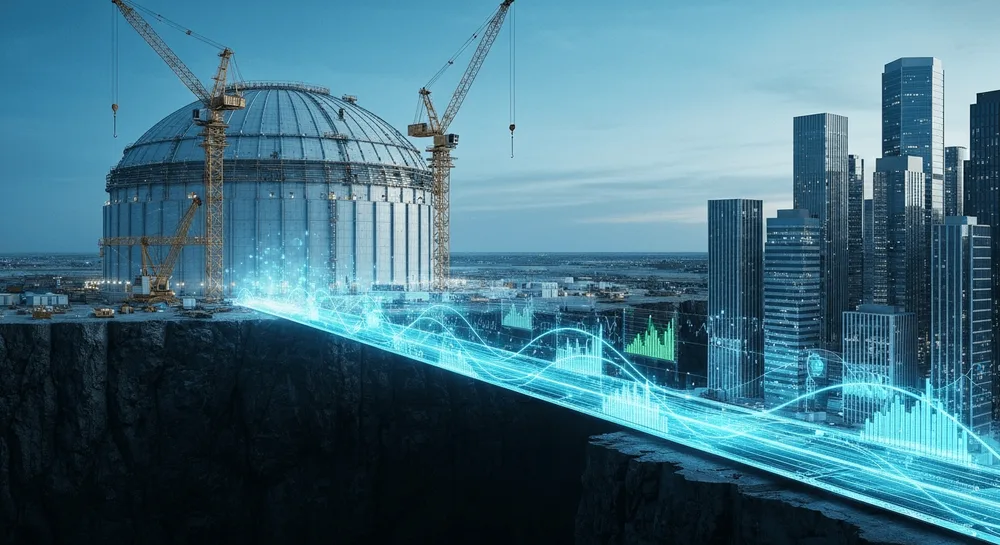
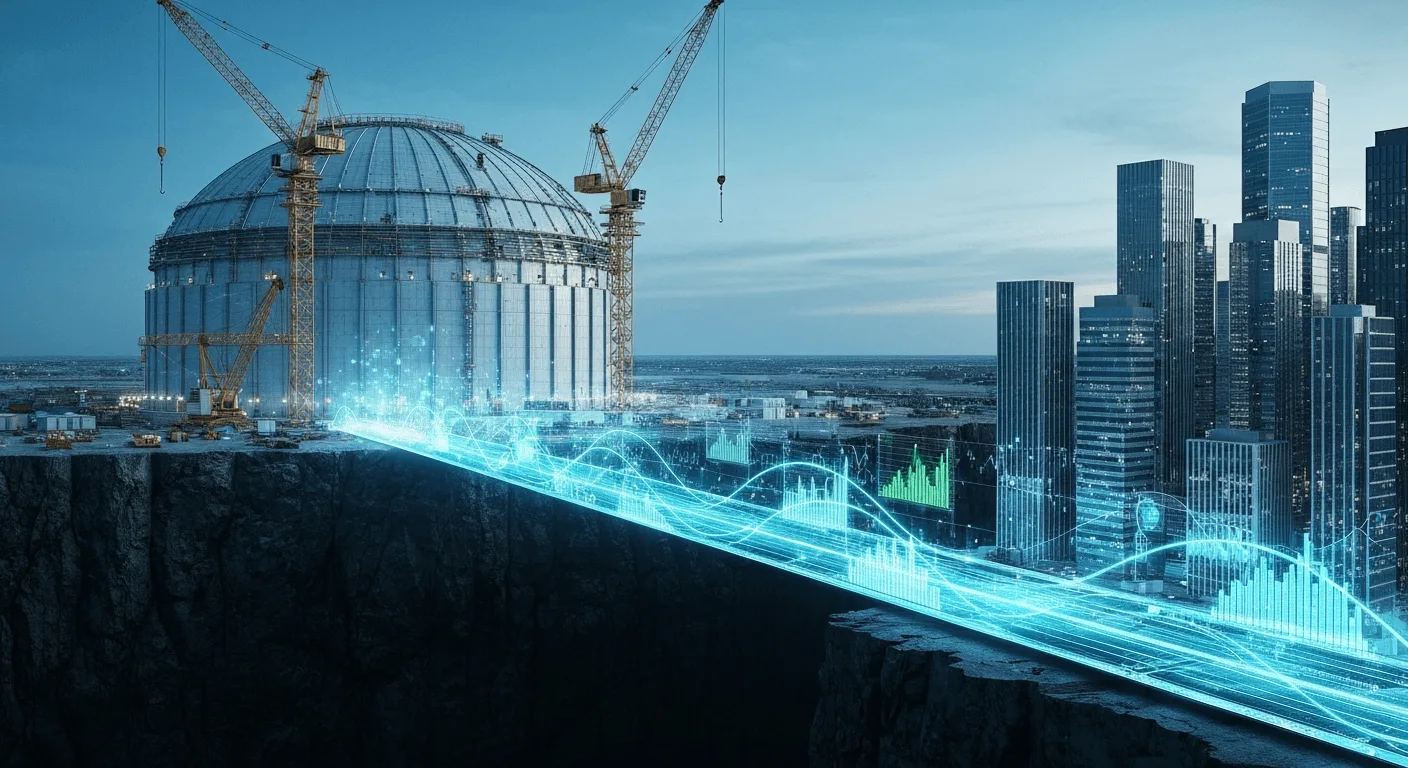
The global push for decarbonization and energy security has ignited a "nuclear renaissance," positioning advanced reactors as a critical source of firm, carbon-free power. Among these, the Westinghouse AP1000 stands out as a proven Generation III+ design. However, the path to deployment is obstructed by a formidable financial hurdle. The history of large-scale nuclear projects, such as the significant cost and schedule overruns at the Vogtle 3 & 4 units in Georgia, has made private capital markets exceptionally wary. The sheer scale of upfront capital required—often exceeding $10-15 billion per gigawatt—coupled with multi-year construction timelines, creates a risk profile that is frequently deemed unbankable by traditional project finance standards. Lenders and equity investors are deterred by the immense exposure to potential construction delays, regulatory shifts, and commodity price volatility. This creates a critical paradox: the technology to achieve climate goals exists, but the financial mechanisms to deploy it at scale remain largely inaccessible without significant de-risking. Overcoming this capital barrier is the single most important challenge for realizing the promise of the AP1000 and the broader nuclear energy future.
AP1000 Reactor: Core Value Proposition
The AP1000 Reactor: A Primer on Generation III+ Technology and Its Value Proposition
The AP1000 is a 1,110 MWe pressurized water reactor (PWR) that represents a significant leap forward in nuclear design, earning its "Generation III+" designation. Its core value proposition is rooted in a philosophy of simplification and enhanced safety, directly addressing the complexities and costs that plagued earlier generations. The most revolutionary feature is its passive safety system. In the event of a station blackout, the AP1000 relies on natural forces—gravity, natural circulation, and compressed gases—to maintain core cooling for 72 hours without any operator action or external power. This drastically reduces the need for redundant, complex safety systems and their associated pumps and diesel generators, which in turn simplifies maintenance and lowers operational costs. Furthermore, the design heavily emphasizes modular construction. Large structural and equipment modules are manufactured in factory settings and then shipped to the site for assembly. This approach is intended to improve construction quality, shorten schedules, and reduce on-site labor costs, moving away from the bespoke, stick-built methods of the past. The goal of this standardized, modular design is to achieve "Nth-of-a-Kind" (NOAK) cost reductions, making subsequent units progressively cheaper and faster to build than the first-of-a-kind (FOAK) projects.
Lifetime Cost Components of an AP1000 Project
Deconstructing the AP1000 Cost Structure: From Overnight Capital to Decommissioning
A credible technoeconomic model for an AP1000 project requires a granular understanding of its multi-faceted cost structure. The most prominent figure is the "overnight cost," which represents the capital expense of building the plant as if it were completed instantaneously, excluding financing costs. This includes the Engineering, Procurement, and Construction (EPC) contract, owner's costs (e.g., land acquisition, permitting, project management), and significant contingency budgets. However, the largest variable is often Interest During Construction (IDC), or the cost of financing the project over its long build period. For a multi-billion-dollar project spanning 5-7 years, IDC can add 25-40% to the total capital investment, making the cost of capital a primary driver of overall project expense. Once operational, the cost structure shifts to ongoing expenses. These include fixed O&M (staffing, security, maintenance), variable O&M (consumables), and nuclear fuel costs, which are relatively low and stable compared to fossil fuels. Finally, the model must account for long-term liabilities through a decommissioning fund, an annuity paid over the plant's 60-to-80-year operational life to cover the costs of safely dismantling the facility and managing used fuel. This comprehensive view from initial capital outlay to final decommissioning is essential for accurately calculating the project's Levelized Cost of Electricity (LCOE).
The DOE LPO De-Risking Mechanism
The Game-Changer: Understanding the DOE Loan Programs Office (LPO) and Title 17 Guarantees
The U.S. Department of Energy’s Loan Programs Office (LPO) has become the most critical enabler of new nuclear development in the United States. Operating under the authority of Title 17 of the Energy Policy Act of 2005, the LPO's mission is to bridge the financing gap for innovative and clean energy technologies that are commercially viable but struggle to secure traditional project finance due to high perceived risk. The LPO's primary tool is the loan guarantee, which is fundamentally different from a direct loan. Instead of lending money itself, the DOE guarantees the repayment of debt issued by private lenders (e.g., commercial banks, institutional investors) to a qualifying project. In the event of a project default, the U.S. government steps in to repay the lenders. This federal backstop effectively transfers the credit risk from the private sector to the government, transforming a high-risk project loan into a security with a credit rating equivalent to U.S. Treasury bonds. For an AP1000 project, this is a game-changer. It unlocks access to vast pools of capital at significantly lower interest rates and for much longer tenors (e.g., 25-30 years) than would ever be available on the open market, directly attacking the crippling cost of Interest During Construction. (Source: energy.gov)
Core Inputs for AP1000 Financial Model
Technical & Operational
- Capacity: 1,110 MWe
- Capacity Factor: >92%
- Construction Time: 5-7 years
- Operational Life: 60 years
Financial & LPO-Specific
- Overnight Cost: $8,000-$12,000/kW
- Guaranteed Debt Interest Rate
- Debt/Equity Ratio: e.g., 80/20
- Discount & Tax Rates
Building the Technoeconomic Model: Core Inputs for AP1000 Project Finance with DOE LPO Support
Constructing a robust technoeconomic model for an LPO-backed AP1000 project requires a precise set of inputs that blend engineering realities with financial structuring. The model, typically a multi-decade Discounted Cash Flow (DCF) analysis, is built upon a foundation of core technical assumptions. These include the net electrical output (approx. 1,110 MWe), a high capacity factor (realistically modeled at 92-95% to reflect operational excellence), a detailed construction schedule outlining cash draws over 5-7 years, and a 60-year operational lifespan. On the cost side, the model must incorporate a defensible "all-in" overnight capital cost ($/kW), which is often the most sensitive variable. This is supplemented by projections for fixed and variable O&M, fuel cycle costs, and decommissioning fund contributions, all escalated by an assumed inflation rate. The financial architecture is where LPO support becomes explicit. Key inputs here include the debt-to-equity ratio, the interest rate on the government-guaranteed debt (often pegged to a benchmark like the U.S. Treasury rate plus a small spread), the loan tenor, and any associated LPO fees like the Credit Subsidy Cost. Finally, macroeconomic inputs such as the corporate tax rate, depreciation schedules (e.g., MACRS), and the equity discount rate are layered in to project after-tax cash flows and determine project viability. (Source: National Renewable Energy Laboratory)
Capital Stack Comparison
Standard Financing
With DOE LPO Guarantee
Capital Stack and Financing Structure: Modeling Debt and Equity with an LPO Guarantee
The LPO guarantee fundamentally reshapes the capital stack—the mix of debt and equity used to finance the project. In a conventional project finance scenario for a high-risk asset, lenders would demand a substantial equity cushion, leading to a conservative capital stack, perhaps 50% equity and 50% debt. Furthermore, the debt would carry a high interest rate to compensate for the significant construction and market risks. The introduction of a DOE loan guarantee inverts this structure. Because the government backstop virtually eliminates default risk for senior lenders, a project can sustain a much higher degree of leverage. It is common to model an LPO-backed AP1000 project with a capital stack of 80% debt and only 20% equity. This has profound implications for the financial model. The higher leverage means the project developer and its equity partners only need to raise a fraction of the total project cost themselves, vastly expanding the universe of potential investors. More importantly, this highly leveraged, low-cost debt significantly lowers the project's Weighted Average Cost of Capital (WACC). This reduction in WACC is the primary mechanism through which the LPO guarantee drives down the LCOE and boosts the project's overall financial attractiveness, making it possible to deliver power at a more competitive price while still generating strong returns for equity holders.
LPO Guarantee's Impact on Key Financial Metrics
Key Financial Metrics: Analyzing LCOE, IRR, NPV, and DSCR Under LPO-Backed Scenarios
The output of the technoeconomic model is distilled into several key financial metrics that determine project feasibility and attractiveness. The Levelized Cost of Electricity (LCOE) is paramount; it represents the minimum average price at which electricity must be sold for the project to break even over its lifetime. An LPO guarantee directly and dramatically lowers LCOE by reducing the cost of capital, making the AP1000's output more competitive. From the investor's perspective, the Equity Internal Rate of Return (IRR) is the critical measure of profitability. By enabling high leverage, the LPO guarantee allows a smaller equity investment to command the cash flows of a very large asset, significantly amplifying the equity IRR, often from single digits to the mid-teens. Net Present Value (NPV), which calculates the project’s total value by discounting all future cash flows to the present, will be substantially higher in an LPO scenario due to the improved cash flows. Finally, the Debt Service Coverage Ratio (DSCR)—the ratio of cash flow available to pay debt obligations—is a key metric for lenders and the LPO itself. Despite the high debt load, the low interest rate means debt service payments are manageable, leading to a healthier and more resilient DSCR, typically modeled to remain above a 1.4x-1.5x threshold.
Sensitivity Analysis: Impact on Project IRR
Sensitivity and Risk Analysis: Stress-Testing the Model Against Market and Construction Volatility
A base-case financial model provides a valuable but incomplete picture. The true test of a project's viability lies in its resilience to adverse conditions. Therefore, rigorous sensitivity and risk analysis is a non-negotiable component of any technoeconomic assessment, particularly for an LPO application. This involves systematically varying key inputs to understand their impact on outputs like IRR, NPV, and DSCR. The most critical variable to stress-test is construction cost. A tornado chart analysis will almost invariably show that a 10-20% capital cost overrun has the single largest negative impact on project returns. Other key sensitivities include delays in the start of commercial operations (which extends the period of interest accrual without revenue), long-term electricity price volatility (for projects selling into merchant markets), and unexpected increases in major maintenance costs. For more sophisticated analysis, a Monte Carlo simulation can be employed, running thousands of iterations with randomized inputs based on defined probability distributions. This produces a probabilistic view of project outcomes, helping stakeholders understand the likelihood of achieving target returns and a crucial tool for risk mitigation. To conduct such detailed analysis, energy professionals often rely on specialized platforms to access market data and modeling tools, such as those offered by `https://jisenergy.com/sign-up-login/`.
Case Study: AP1000 Project Finance Comparison
| Metric | Scenario A (Without LPO) | Scenario B (With LPO) |
|---|---|---|
| Debt/Equity Ratio | 50 / 50 | 80 / 20 |
| Debt Interest Rate | ~8.0% | ~4.5% |
| Resulting LCOE | ~$95 / MWh | ~$65 / MWh |
| Equity IRR | ~7% (Marginal) | ~15% (Attractive) |
Case Study: Comparative Technoeconomic Analysis of an AP1000 Project With and Without DOE LPO Financing
To illustrate the transformative impact of LPO support, consider a hypothetical AP1000 project with an all-in capital cost of $15 billion. In Scenario A, without LPO backing, the project struggles to secure financing. It might achieve a 50/50 debt-to-equity split, with the debt priced at a high-risk rate of 8%. The financial model for this scenario would likely yield a Levelized Cost of Electricity (LCOE) around $95/MWh. For equity investors, who must contribute $7.5 billion in capital, the resulting IRR might be a marginal 7%, likely insufficient to compensate for the immense construction risk. Now, consider Scenario B with a DOE LPO loan guarantee. The project can now secure 80% of its financing ($12 billion) as long-term debt guaranteed by the government, priced at a much lower rate of approximately 4.5% (SOFR + spread). The equity requirement plummets to just $3 billion. The impact is profound: the significantly lower weighted average cost of capital drives the LCOE down to approximately $65/MWh, making it competitive with other firm power sources. For the equity investors, the higher leverage magnifies their returns, pushing the projected IRR up to an attractive 15% or higher. This stark comparison demonstrates that the LPO guarantee doesn't just incrementally improve project economics; it fundamentally enables them. (Source: MIT Energy Initiative)
LPO as a Central Enabler for Stakeholders
Project Viability
Secure Pipeline
De-Risked Asset
Low-Cost PPA
Strategic Implications for Stakeholders: How EPCs, Developers, and Utilities Can Leverage LPO Opportunities
The availability of DOE LPO financing creates a paradigm shift for all stakeholders in the nuclear energy ecosystem. For project developers, it transforms the AP1000 from a high-risk, speculative venture into a bankable, executable infrastructure project. This unlocks the ability to move projects from paper to reality. For EPC contractors, a clear and viable financing pathway through the LPO means a more robust and predictable pipeline of future projects, allowing for investment in supply chains and workforce development with greater confidence. This helps drive the "Nth-of-a-Kind" cost reductions that are critical for the industry's long-term success. For utilities and large industrial power consumers, LPO-backed projects can offer long-term Power Purchase Agreements (PPAs) at competitive, stable prices, providing a hedge against volatile fossil fuel markets and a clear path to meeting decarbonization mandates. Finally, for institutional investors like pension funds and insurance companies, the government guarantee creates a new, attractive asset class: long-duration, investment-grade debt backed by the full faith and credit of the U.S. government. To capitalize on these opportunities, stakeholders must proactively engage with the LPO, preparing meticulously detailed applications that feature robust technoeconomic models and risk analyses. (Source: energy.gov)
Conclusion: Unlocking the Future of Nuclear with Robust AP1000 Project Finance and DOE LPO Partnership
The deployment of AP1000 reactors at the scale required to meet climate and energy security objectives is not fundamentally a technological problem; it is a financial one. The inherent strengths of the AP1000—its passive safety, modular design, and potential for learning-curve cost reductions—provide a solid technical foundation. However, without a mechanism to overcome the immense upfront capital costs and long-duration risk profile, these projects will remain stalled. As demonstrated through technoeconomic modeling, the DOE Loan Programs Office provides the critical key to unlock this financial stalemate. By providing loan guarantees, the LPO does not subsidize unviable projects but rather de-risks bankable ones, enabling access to private capital at a cost that makes nuclear power competitive. The combination of proven Generation III+ technology, a meticulously constructed financial model that can withstand rigorous sensitivity analysis, and a strategic partnership with the LPO creates a powerful, synergistic formula. This triad makes the financing of new nuclear power not just possible, but attractive, paving the way for the AP1000 to play its vital role in a clean and reliable energy future.
To de-risk your AP1000 project for an LPO application, a detailed sensitivity analysis on capital costs is absolutely non-negotiable. Learn more at https://jisenergy.com Try CogenS free at https://cogens.jisenergy.com