Introduction: The Inevitable Collision of AI's Power Thirst and Grid Limitations
The rapid proliferation of Artificial Intelligence, particularly large language models (LLMs) and generative AI, has ignited an unprecedented demand for computational power. This is not a linear increase; it is an exponential surge concentrated in hyperscale data centers. Each new generation of GPUs and specialized AI accelerators packs more processing power, but at the cost of dramatically higher energy consumption and thermal density. Rack power densities, once stable at 10-15 kW, are now routinely exceeding 50 kW and pushing towards 100 kW. This creates a fundamental problem: our electrical grid, a century-old marvel of engineering, was designed for distributed, predictable loads, not for gigawatt-scale, high-density computing hubs materializing in just a few years. This mismatch creates a collision course where the ambitions of the digital age are crashing against the physical limitations of our energy infrastructure. The resulting challenges are twofold: securing sufficient power in constrained regions and ensuring the flawless reliability required for mission-critical AI workloads. This is the crucible in which Battery Energy Storage Systems (BESS) are being forged, evolving from a peripheral component to a core enabling technology for the entire AI ecosystem.
The AI-Driven Power Surge: Deconstructing Modern Data Center Energy Needs
The energy profile of an AI-powered data center is fundamentally different from its predecessors. The traditional metric of Power Usage Effectiveness (PUE) is being redefined as the ratio of IT load to cooling and other overhead shifts dramatically. High-density GPU clusters operate at near-constant full capacity during training cycles, creating a massive, unyielding baseload demand. This continuous power requirement is layered with the need for instantaneous, high-fidelity backup, a role traditionally filled by diesel generators and uninterruptible power supplies (UPS). However, BESS is uniquely positioned to address multiple needs simultaneously. It provides sub-cycle UPS-level response times, eliminating the need for separate flywheel or lead-acid systems. It can be dispatched to perform peak shaving, arbitraging energy costs by charging during off-peak hours and discharging during expensive peak periods, thereby managing volatile electricity bills. Most critically, for data centers in areas with constrained transmission, BESS can supply the marginal power needed to operate while waiting for grid upgrades, effectively decoupling a project’s timeline from the utility’s interconnection queue. This multi-functionality transforms BESS from a simple backup system into a dynamic energy management tool essential for the operational and financial viability of modern data centers.
Navigating the Volatile BESS Supply Chain for Data Centers: From Mine to Megawatt
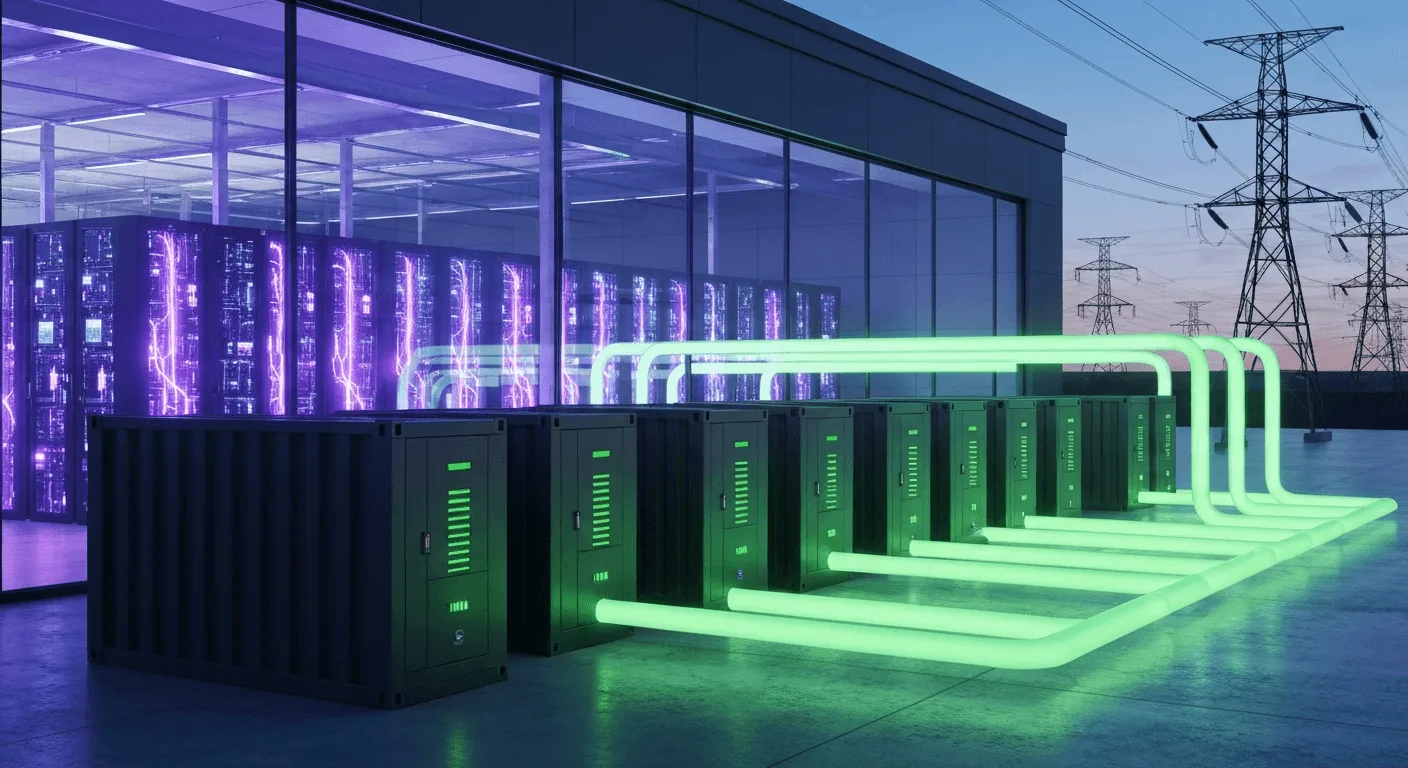
The journey of a battery from raw material to an operational megawatt-scale system for a data center is fraught with geopolitical, logistical, and economic complexities. It begins at the mine, with the extraction of critical minerals like lithium, phosphate, and iron for LFP batteries, or nickel and cobalt for NMC. The geographical concentration of these resources and, more importantly, their processing facilities, creates significant supply chain risks. As the International Energy Agency (IEA) highlights, a small number of countries dominate the refining and processing stages, making the supply chain vulnerable to trade disputes and policy shifts (Source: iea.org). Once processed into cathode and anode materials, the components are shipped to massive gigafactories for cell manufacturing. These cells are then assembled into modules and packs, integrated with a Battery Management System (BMS), and finally containerized with power conversion systems (PCS), thermal management, and fire suppression. Each step represents a potential bottleneck and cost variable. Data center developers must now engage in sophisticated supply chain management, securing multi-year agreements and diversifying suppliers to mitigate risks and ensure that the BESS, a critical path item, does not delay the multi-billion-dollar data center it is meant to support.
Chemistry Showdown: Why LFP is Winning the Data Center Race Against NMC
While the electric vehicle market was long dominated by high energy density chemistries like Nickel Manganese Cobalt (NMC), the specific demands of stationary storage for data centers have tilted the scales decisively in favor of Lithium Iron Phosphate (LFP). The primary driver is safety. LFP's crystalline structure is inherently more stable, making it far less susceptible to thermal runaway—a critical consideration for multi-megawatt installations housed near mission-critical IT infrastructure. This enhanced safety profile translates to lower fire suppression costs and a more manageable risk profile for insurers and investors. From a technoeconomic standpoint, LFP also excels. It boasts a significantly longer cycle life, with modern cells capable of 6,000-10,000 cycles before significant degradation, which is essential for applications involving daily energy arbitrage or frequent grid service participation. Furthermore, LFP chemistry avoids the use of cobalt and nickel, two minerals with volatile pricing and significant ethical and geopolitical sourcing concerns. While NMC offers superior energy density, this is a secondary concern for stationary data center applications where physical footprint is less constrained than in a vehicle. The combination of superior safety, longevity, and a more stable, ethical supply chain makes LFP the clear frontrunner for data center BESS deployments.
The Rise of Alternatives: Evaluating Sodium-Ion and Flow Batteries for Long-Duration Needs
As data centers consider resilience against multi-day grid outages or aim to pair with intermittent renewables like solar, the economic case for lithium-ion batteries begins to wane beyond 4-6 hours of duration. This has opened the door for alternative chemistries optimized for long-duration energy storage (LDES). Sodium-ion (Na-ion) batteries are a leading contender, directly challenging lithium-ion's dominance. Using abundant and low-cost sodium instead of lithium, Na-ion offers a pathway to significantly lower capital costs, albeit with lower energy density and efficiency at its current stage of development. For a data center, where cost and safety are paramount, the potential for a 20-40% reduction in the levelized cost of storage makes Na-ion a technology to watch closely. In parallel, flow batteries, such as vanadium redox flow systems, offer a different value proposition. Their key advantage is the decoupling of power and energy; to add more duration, one simply adds more liquid electrolyte. This makes them economically scalable for 8, 12, or even 24-hour durations. While they have a larger footprint and lower round-trip efficiency, their ability to cycle indefinitely without degradation makes them ideal for high-throughput applications or as a replacement for entire fleets of diesel generators, providing true long-term energy assurance.
The Technoeconomic Calculus: LCOE, CapEx, and Revenue Stacking for Data Center BESS
The financial justification for a data center BESS hinges on moving beyond a simple cost-benefit analysis of backup power. The core evaluation begins with Capital Expenditure (CapEx), which includes the battery packs, power conversion system (PCS), and balance-of-system (BOS) components, all bundled into an engineering, procurement, and construction (EPC) contract. This upfront cost is then amortized over the system's life to calculate a Levelized Cost of Storage (LCOS), the key metric for comparing it to alternatives like diesel generators or grid power. However, the true economic power of BESS is unlocked through "revenue stacking" or "value stacking." A BESS asset is not idle; it can be strategically dispatched to generate revenue or create savings. This includes participating in ancillary service markets to provide frequency regulation or spinning reserves to the grid operator, which generates a direct revenue stream. It also includes intelligent peak shaving to reduce a data center's monthly demand charges, which can constitute a significant portion of its electricity bill. To effectively model these revenue streams and optimize dispatch strategies, operators are increasingly turning to sophisticated energy analytics platforms; you can explore some of these capabilities when you sign up at https://jisenergy.com/sign-up-login/. By combining these stacked values, the LCOS is effectively reduced, transforming the BESS from a pure-cost insurance policy into a revenue-generating asset with a compelling return on investment.
Beyond the Datasheet: Critical Engineering and Integration Considerations for BESS Projects
A successful data center BESS project extends far beyond selecting a chemistry and a capacity. The engineering and integration details are paramount to achieving the required performance, safety, and lifespan. Thermal management is chief among these; maintaining a stable operating temperature is the single most important factor in battery health and longevity. This involves sophisticated HVAC or liquid cooling systems designed to handle the immense heat generated during high-power discharge cycles. Equally critical is fire safety. Adherence to standards like NFPA 855 is non-negotiable for permitting and insurability. This dictates system spacing, fire suppression technologies (e.g., clean agents, water mist), and deflagration venting. As the U.S. Department of Energy (DOE) emphasizes, a multi-layered safety approach is essential for large-scale deployments (Source: energy.gov). Furthermore, the Power Conversion System (PCS) must be seamlessly integrated with the data center's existing electrical infrastructure, including the UPS, to ensure instantaneous, no-break power transfer. Finally, a forward-looking technoeconomic model must include an augmentation strategy. All batteries degrade over time; a plan must be in place to add new battery capacity over the project's 10-20 year lifespan to maintain its required output, with the associated costs factored into the initial financial model.
Market Dynamics and Policy Tailwinds: How the IRA and Interconnection Queues are Shaping the BESS Supply Chain
Two external forces are dramatically reshaping the business case for data center BESS. The first is policy: the Inflation Reduction Act (IRA) of 2022. For the first time, the IRA introduced an Investment Tax Credit (ITC) for standalone energy storage projects, decoupling it from the requirement to be co-located with a renewable generation source like solar. This provides a direct, 30% reduction in the project's capital cost, with additional "adders" available for meeting domestic content or other requirements (Source: whitehouse.gov). This single policy mechanism has fundamentally altered the financial calculus, slashing payback periods and making BESS economically viable for a much broader range of data center applications. The second force is a market failure: grid interconnection queues. Across the country, wait times for large loads like data centers to secure a grid connection can stretch for years. This has created an acute business need for "bridge power." A data center can install a BESS to allow the facility to be commissioned and begin operations at partial capacity while waiting in the queue for the full utility service. In this context, the BESS is no longer just an energy asset; it is a schedule acceleration tool, creating immense value by bringing a billion-dollar facility online months or years ahead of schedule.
Case Study: Modeling the Financial Pro Forma of a 100MW Hyperscale Data Center BESS Installation
Consider a hypothetical 100MW hyperscale data center requiring four hours of backup, necessitating a 100MW / 400MWh LFP BESS. Using an all-in installed cost estimate of $300/kWh, the initial CapEx is $120 million. Applying the 30% IRA ITC immediately reduces this to a net capital cost of $84 million. The operational value is then stacked. First, reliability: while difficult to model as direct revenue, avoiding a single multi-hour outage can prevent millions in losses, making this a crucial, if unquantified, benefit. Second, active market participation: in a market like ERCOT or PJM, a 100MW asset providing ancillary services could conservatively generate $5,000-$10,000/MW-month, translating to $6-12 million in annual revenue. Let's assume a moderate $8 million. Third, peak shaving: by mitigating 50MW of peak demand during 100 high-cost hours per year at a demand charge of $30/kW-month, the system could save an additional ~$4.5 million annually. Combining these value streams yields an annual benefit of ~$12.5 million. When set against the net CapEx of $84 million, this results in a simple payback period of under seven years. This transforms the BESS from a sunk cost for insurance into a strategic financial asset with a clear and attractive return profile, justifying the significant upfront investment.
Conclusion: The Future is Integrated - BESS as a Strategic Asset, Not a Cost Center
The collision of AI's insatiable power demand with the physical and temporal constraints of the electric grid has elevated battery energy storage from a niche backup solution to a cornerstone of modern digital infrastructure. The technoeconomic analysis is no longer a simple question of "what does an outage cost?" but rather "what is the total value of perfect reliability, energy cost control, and schedule certainty?" As we've seen, the confluence of maturing LFP technology, a volatile but manageable supply chain, and transformative policies like the IRA has fundamentally reshaped the financial viability of BESS. Data center developers who continue to view BESS as a pure cost center, a bigger and more expensive UPS, will be at a competitive disadvantage. The leaders in the AI race will be those who recognize BESS for what it has become: a multi-faceted, revenue-generating, strategic asset. It is a tool that not only powers AI but also strengthens the grid, accelerates deployment, and provides a financial return. The future of hyperscale data centers is not just about building bigger facilities; it is about building smarter, more resilient, and more integrated energy systems, with BESS at their very heart.
Modeling the technoeconomics of a data center BESS, from CapEx reduction via the IRA to complex revenue stacking, requires a sophisticated platform. Learn more at https://jisenergy.com Try CogenS free at https://cogens.jisenergy.com