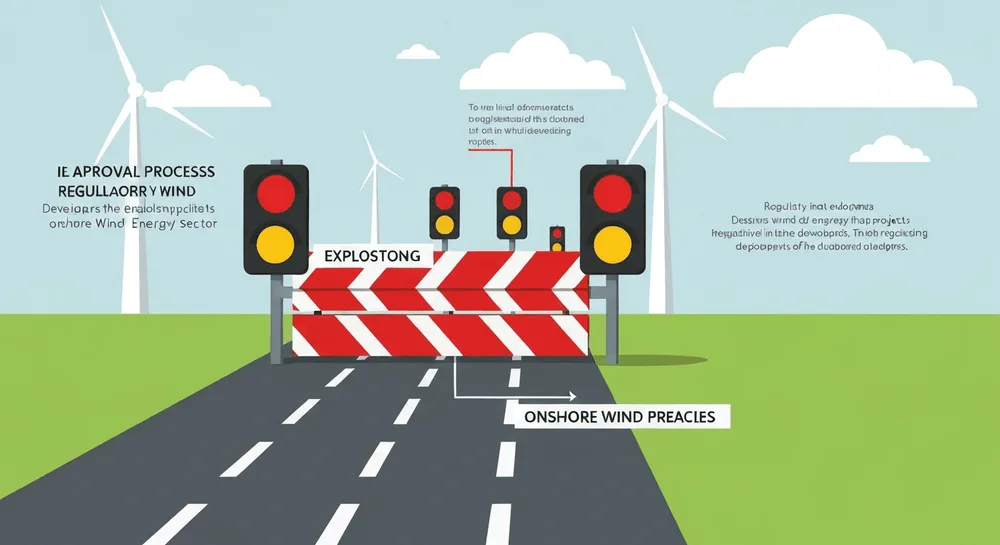
The U.S. onshore wind sector is confronting a sudden and formidable new development risk. The Department of Defense has effectively frozen its permitting review process, halting progress for more than 250 projects representing approximately 30 GW of capacity. For the past 15 years, developers have relied on a predictable, if sometimes lengthy, procedure to gain DOD clearance for projects on private land that could potentially interfere with military operations or radar systems. That established route has been closed off without a clear alternative, injecting a severe dose of uncertainty into project timelines and financial models. This indefinite pause introduces a significant federal-level variable that complicates project finance far beyond typical interconnection queue delays or local siting disputes.
This permitting impasse creates immediate technoeconomic consequences. Project capital stacks, already stressed by high interest rates and supply chain constraints, now face an unquantifiable delay risk. Investors and lenders will likely re-evaluate their exposure to the onshore wind market, potentially increasing the cost of capital or demanding more stringent covenants for projects that have not yet cleared the DOD review. The national interconnection queue is already saturated with projects, and this new bottleneck at the federal level could cause a cascade of delays, affecting everything from equipment procurement schedules to power purchase agreement milestones. Developers must now model scenarios with indefinite timelines, a difficult task that undermines the bankability of projects in the early and mid-stages of development.
The situation highlights the growing complexity of energy infrastructure development in the United States. While grid operators like PJM are finally making progress on unblocking their interconnection queues, this DOD action demonstrates how new hurdles can emerge from entirely different government agencies. It underscores the critical need for comprehensive permitting reform that coordinates across federal departments. According to the U.S. Energy Information Administration, wind power is a crucial component of the nation's generation mix. Stalling 30 GW of capacity—roughly 20% of the currently installed onshore wind fleet—threatens to slow the pace of decarbonization and grid expansion at a time when data center and electrification loads are accelerating demand. Project developers must now engage in a new level of federal policy advocacy to find a resolution and restore a predictable path to market.
This Week's Top 5 Energy News Items
- 250+ onshore wind projects stalled as Pentagon freezes permitting
- NERC issues Level 3 Alert to address ‘immediate risks’ data center loads pose to the grid
- Gas power leapfrogs wind for first time in 10 years in Texas’ grid connection queue
- At long last, the PJM interconnection queue is moving again. Now what?
- Maine’s community solar boom is going bust
For deeper technoeconomic analysis on this trend, try CogenS free.