The Long-Duration Storage Market Matures
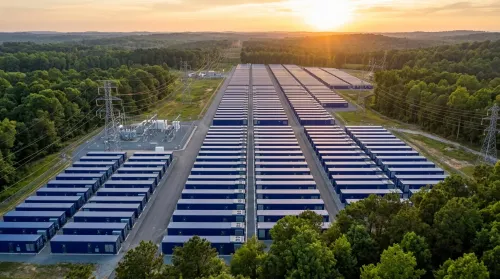
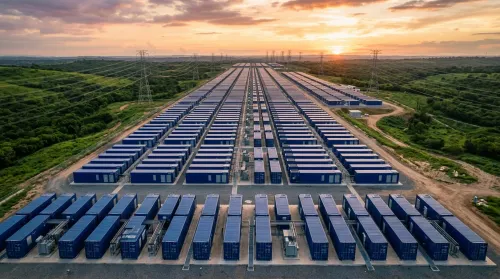
Lithium-Ion BESS
The incumbent for grid services.
Duration: 2-4 Hours
Optimized for ancillary services & peak shaving.
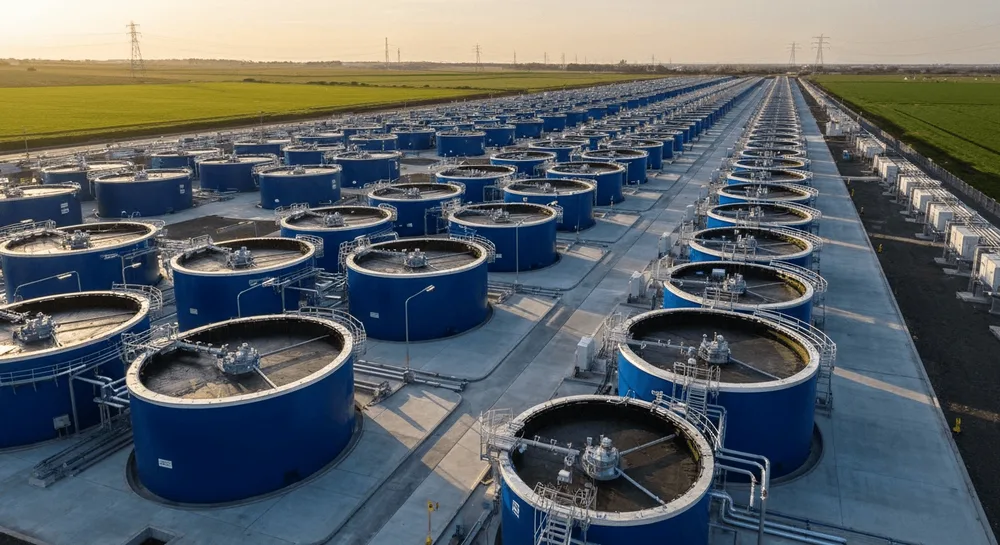
Flow Batteries
Decoupled power & energy for long duration.
Duration: 8-16+ Hours
Ideal for data centers & grid firming.
Thermal Storage
Storing energy as industrial-grade heat.
Duration: 100+ Hours
Targets industrial process heat decarbonization.
The market for long-duration energy storage (LDES) advanced significantly this week, with major commercial contracts demonstrating the financial viability of technologies beyond lithium-ion. Two announcements in particular signal a new phase of deployment for alternative storage chemistries, moving them from pilot-scale to gigawatt-hour commercial operations. Invinity Energy Systems secured a landmark contract to deliver a 2.1 GWh vanadium flow battery for a data center project in Switzerland. Simultaneously, Antora Energy commissioned a 5 GWh thermal energy storage system at a biofuels facility in South Dakota, designed to provide 50 MW of round-the-clock process heat. These are not incremental steps; they represent a material shift in how project developers and large energy consumers are solving for extended periods of renewable intermittency and industrial decarbonization.
Invinity's deal is a crucial proof point for flow batteries, a technology that decouples power (MW) from energy (MWh) and promises minimal degradation over tens of thousands of cycles. For a baseload-like consumer such as a data center, this durability is a critical advantage over lithium-ion BESS, whose economics are more sensitive to cycle depth and frequency. The project's scale also confirms that flow battery manufacturing has reached a level of maturity capable of supporting gigawatt-hour-scale offtake. The financing from Grok Ventures for Antora's project highlights growing investor confidence in thermal storage as a solution for industrial heat, a sector notoriously difficult to electrify. By converting renewable electricity into heat stored in carbon blocks, Antora's system can deliver process heat exceeding 1,500°C, directly competing with natural gas boilers. This technology addresses a fundamental challenge for sectors like cement, steel, and chemicals. The U.S. Department of Energy's Long Duration Storage Shot has targeted a 90% cost reduction for LDES, and these commercial deployments are critical steps toward that goal.
These developments are occurring as the limitations of 2-to-4-hour lithium-ion batteries become more apparent in grids with high renewable penetration. While essential for ancillary services and peak shaving, shorter-duration BESS cannot solve multi-day weather events (the “dark doldrums”) or provide the firm, 24/7 power that data centers and heavy industry require. Other technologies are also emerging to fill this gap. California-based Inlyte Energy is planning pilot projects for its iron-sodium battery, another LDES chemistry specifically targeting the volatile power needs of data centers. As shown in recent EIA projections, the electricity demand from data centers is set to become a dominant factor in commercial load growth. The maturation of a diverse portfolio of storage technologies—from flow to thermal to novel chemistries—is essential infrastructure for a reliable, decarbonized grid.
This Week's Top 5 Energy News Items
- Invinity lands contract for 2.1GWh flow battery in Switzerland, share price soars 60%
- Antora’s hot carbon thermal batteries win 5 GWh energy storage project
- NextEra and Dominion are merging. Here’s what you need to know
- Gas power leapfrogs wind for first time in 10 years in Texas’ grid connection queue
- Geothermal energy gets boost from new coalition of Western governors
For deeper technoeconomic analysis on this trend, try CogenS free.