The Grid's New Chemistry: Sodium-Ion Enters the Arena
Incumbent: Li-Ion (LFP)
- Minerals: Li, P, Fe, Cu
- Cost Profile: Higher, Volatile
- Energy Density: 160-200 Wh/kg
- Safety (Thermal): Good
Challenger: Sodium-Ion
- Minerals: Na, Fe, Mn, Al
- Cost Profile: Lower, Abundant
- Energy Density: 120-160 Wh/kg
- Safety (Thermal): Excellent
Manufacturing Inflection Point
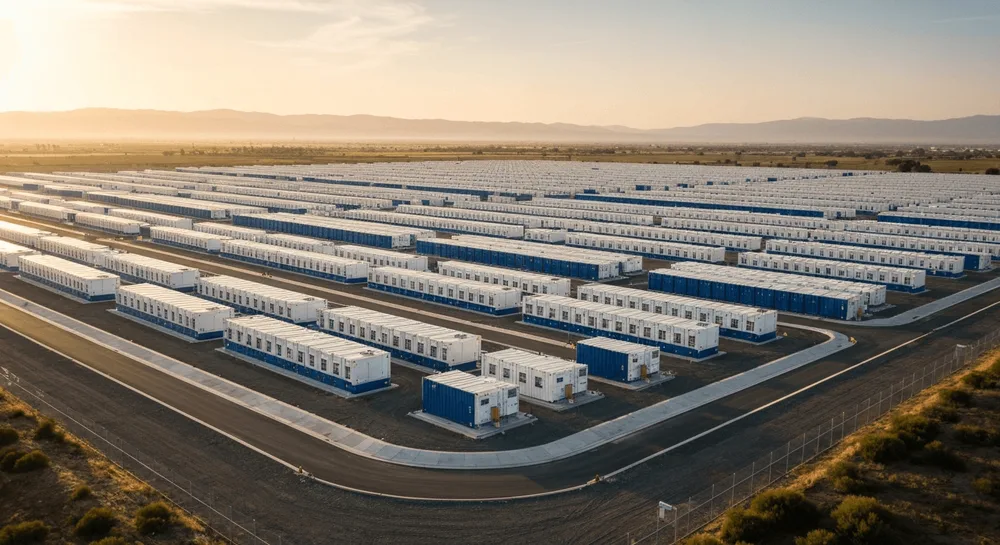
Peak Energy's new Sacramento factory capacity — the first U.S. facility dedicated to grid-scale Na-ion BESS.
The energy storage market is witnessing a significant technological diversification as sodium-ion (Na-ion) batteries transition from research labs to commercial-scale manufacturing. This week, startup Peak Energy announced it will build a 4 GWh gigafactory in Sacramento, California—the country’s first facility dedicated to producing sodium-ion battery storage systems specifically for the grid. This move is emblematic of a broader trend, with companies like ESS Inc. and Unigrid also advancing sodium-ion technologies for deployment in the U.S. and Europe. The new manufacturing capacity signals a maturing supply chain for alternatives to the dominant lithium-ion chemistries.
The commercial driver for this shift is rooted in technoeconomics. While lithium-ion, particularly Lithium Iron Phosphate (LFP), offers higher energy density, its supply chain is exposed to price volatility and geopolitical risks associated with lithium, cobalt, and nickel. Sodium-ion batteries utilize abundant and low-cost materials like sodium (from salt), iron, and manganese, promising a more stable and potentially lower long-term cost curve. According to the U.S. Department of Energy, diversifying battery chemistries is crucial for energy security. For developers of large-scale battery energy storage systems (BESS), this translates into reduced material cost risk and a more resilient procurement strategy. The trade-off is lower energy density, which requires a larger physical footprint for the same MWh capacity, a factor that must be included in project siting and balance-of-system cost models.
This manufacturing ramp-up arrives as demand signals for energy storage intensify globally. A leaked European Union action plan revealed a target of 200 GW of energy storage by 2030 to manage grid flexibility needs. Large-scale projects are already attracting massive financing, such as GIGA Storage's €450 million debt financing for a 2,800 MWh project in Belgium. As detailed in NREL's cost projections, achieving long-term cost reductions depends on manufacturing scale and technological innovation. The emergence of a viable sodium-ion manufacturing base in the U.S. provides a crucial alternative pathway to meet these targets, especially for stationary storage applications where volumetric energy density is less critical than it is for electric vehicles.
This Week's Top 5 Energy News Items
- Peak Energy to build 4 GWh grid-scale sodium-ion BESS factory in California
- NRC Targets Faster Nuclear Licensing With NEPA Streamlining Proposal
- DOE closes up to $3.26B loan to AEP Texas
- Brookfield, Bloom Energy expand partnership to $25 billion framework for onsite data center power
- Leaked EU Electrification Action Plan recognises need for 200GW of energy storage by 2030
For deeper technoeconomic analysis on this trend, try CogenS free.