The Economic Paradigm Shift in Nuclear Power
Introduction: The Economic Paradigm Shift of Small Modular Reactors
For decades, the commercial nuclear sector has been defined by gigawatt-scale, bespoke megaprojects. While these traditional light-water reactors deliver unparalleled baseload generation, their economic viability has been severely undermined by ballooning capital expenditures and crippling schedule delays. The core of this economic failure lies in the stick-built construction methodology, where staggering complexity, site-specific engineering, and immense labor requirements drive up costs exponentially.
Small Modular Reactors (SMRs) represent a fundamental technoeconomic paradigm shift. By scaling down the generation capacity to under 300 MW(e) per module, the industry is transitioning from a construction-centric model to a manufacturing-centric one. This shift relies on standardizing components, maximizing factory fabrication, and minimizing complex onsite civil works. The strategic objective is not necessarily to achieve economies of scale at the individual unit level, but rather to unlock economies of multiples—producing reactors as standardized commodities rather than singular infrastructure landmarks. This transition promises to radically derisk project financing, shorten construction timelines from decades to mere years, and position advanced nuclear technology as a commercially viable asset class for decentralized grids and heavy industrial applications.
Technoeconomic Baselines: OCC vs. LCOE
The theoretical cost to build the plant overnight, excluding financing costs and inflation. Measured in $/kW.
The net present value of unit-cost electricity over the lifetime of the asset. Measured in $/MWh.
Understanding the Baseline: SMR Levelized Cost of Energy and Overnight Capital Costs
To rigorously evaluate SMR economics, project developers must differentiate between two foundational metrics: Overnight Capital Cost (OCC) and Levelized Cost of Energy (LCOE). The OCC represents the base construction cost of the facility—assuming it could be built instantly—stripping out the variables of construction interest, financing rates, and inflation. Expressed in dollars per kilowatt ($/kW), OCC is the primary indicator of a technology's capital intensity and the efficiency of its EPC (Engineering, Procurement, and Construction) execution.
Conversely, LCOE serves as the great equalizer across different energy generation technologies. It calculates the net present value of the total life-cycle costs (capital, operations, maintenance, fuel, and decommissioning) divided by the total expected electrical output over the plant's operational life. Expressed in dollars per megawatt-hour ($/MWh), LCOE dictates the wholesale price at which electricity must be sold for the project to break even. For SMRs to compete with combined-cycle gas turbines and firmed renewables, modeling precise LCOE trajectories is critical. The U.S. Department of Energy extensively tracks these baseline methodologies to standardize technoeconomic reporting (Source: energy.gov). Ultimately, while minimizing OCC secures project financing, optimizing LCOE secures long-term market competitiveness.
Deconstructing SMR Overnight Capital Costs
Deconstructing Overnight Capital Costs (OCC) for Modular Nuclear Projects
Analyzing the OCC of an SMR requires unpacking a complex matrix of direct costs, indirect costs, and contingencies. Direct costs generally constitute the largest portion of the OCC and encompass the physical materials and labor directly tied to the facility's construction. This includes the nuclear steam supply system (NSSS), the balance of plant (BOP) components such as turbines and generators, and critical civil-structural milestones like containment vessels and cooling infrastructure.
However, the SMR value proposition fundamentally alters the historical distribution of these costs. In traditional nuclear builds, onsite labor and custom civil engineering dominate direct expenses. SMRs invert this model. By shifting the bulk of direct costs toward precision-manufactured reactor modules procured from centralized facilities, developers can significantly drastically shrink the onsite labor footprint.
Indirect costs—which include project management, site engineering, licensing, and rigorous QA/QC overhead—are correspondingly reduced as standard design certifications replace site-specific engineering iterations. Finally, the contingency budget, traditionally a massive safety net for the unpredictable nature of nuclear mega-projects, can be tightly constrained. Because standard modules present known, predictable cost profiles, financial models no longer require inflated risk buffers, lowering the overall OCC hurdle.
Factory Fabrication vs. Stick-Built Execution
- High on-site labor rates
- Weather dependency
- Sequential construction delays
- Assembly-line efficiency
- Controlled environment (QA/QC)
- Parallel site preparation
Factory Fabrication vs. Stick-Built Execution: Shifting the Cost Paradigm
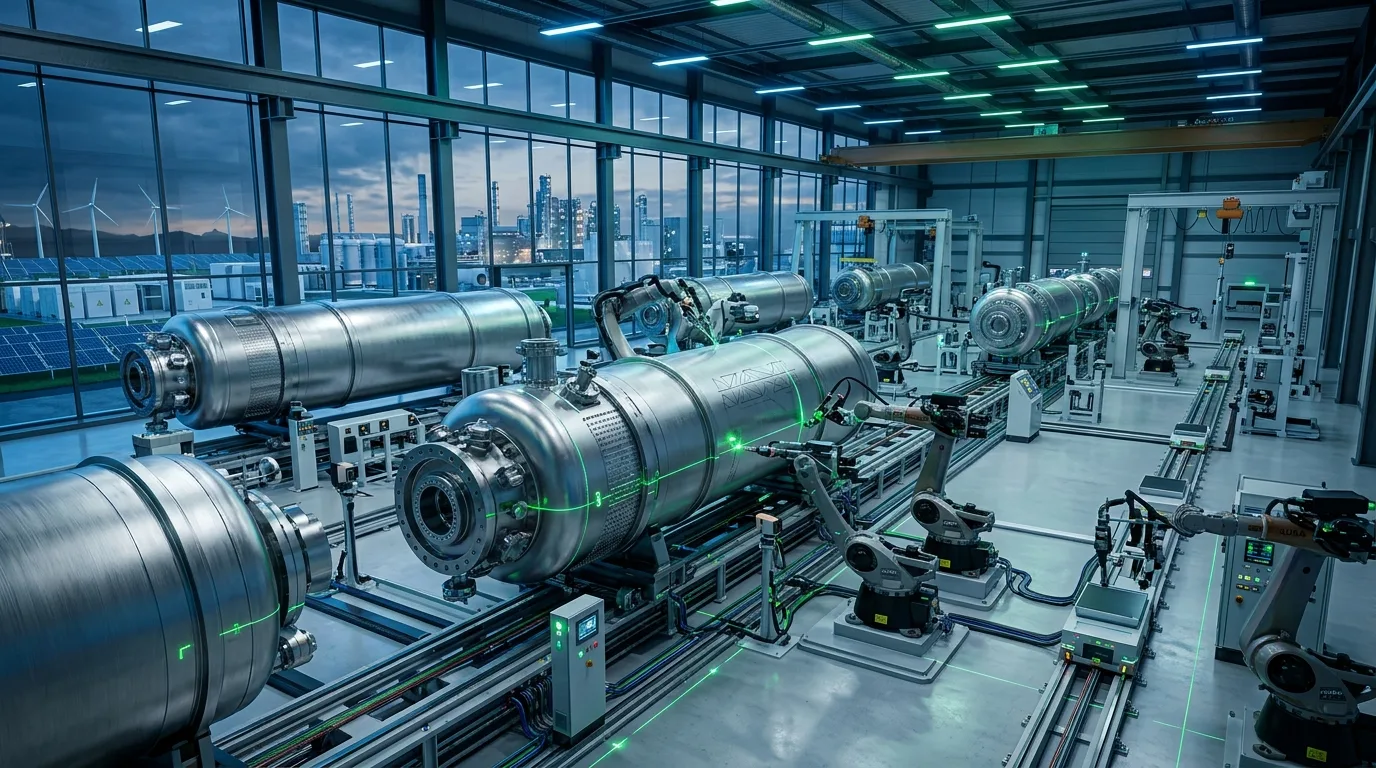
The most impactful technoeconomic lever in the SMR playbook is the transition from stick-built construction to factory-driven modular fabrication. In a stick-built execution model, raw materials and subcomponents are shipped to the project site, where an army of skilled tradespeople weld, assemble, and test the reactor in open-air conditions. This exposes the project schedule to cascading risks: adverse weather, labor shortages, highly variable localized wage rates, and sequential construction bottlenecks (e.g., electrical work cannot begin until civil structures are fully poured and cured).
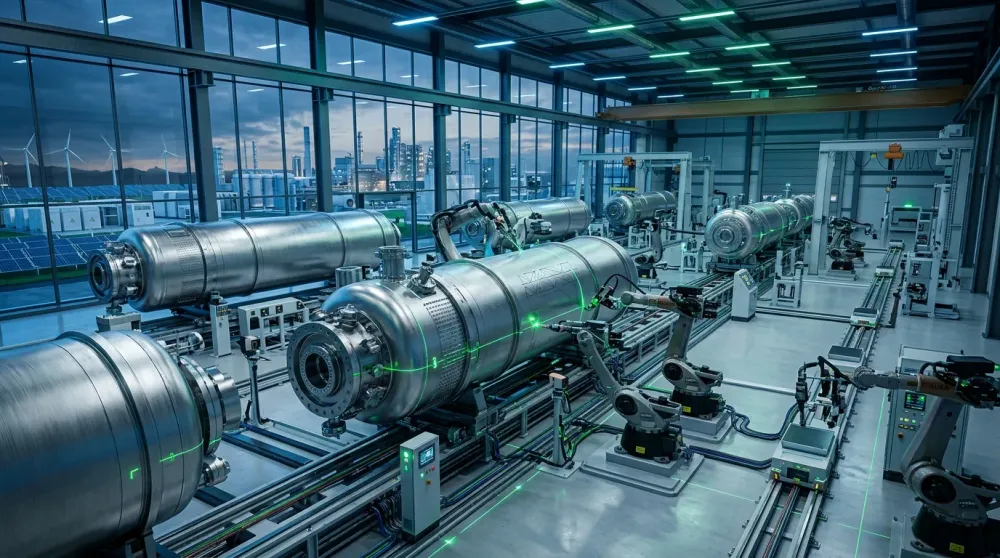
Factory fabrication eliminates these inefficiencies. By assembling the reactor core, containment vessels, and primary coolant loops in a controlled, centralized manufacturing facility, developers unlock assembly-line economics. Specialized tooling and robotics enhance metallurgical precision, resulting in drastically lower defect rates and streamlined QA/QC sign-offs. Furthermore, this paradigm allows for parallel workflows: while the reactor module is being fabricated in a factory, civil engineers can simultaneously perform site excavation and foundation work. When the modular unit arrives on-site via heavy-haul transport, construction evolves into a streamlined integration process, collapsing the project schedule and mitigating the severe cost overruns that have historically plagued the nuclear industry.
Managing Indirect EPC Costs
Indirect Costs: Engineering, Procurement, and Construction (EPC) Logistics
While hardware and manufacturing capture the spotlight, indirect costs dictate the actual success or failure of SMR EPC execution. Historically, indirect costs—comprising detailed engineering, supply chain procurement management, regulatory licensing, and site supervision—have equaled or even exceeded the direct hardware costs of nuclear plants. SMRs combat this via design standardization. Because the reactor is pre-certified by regulatory bodies, EPC firms spend significantly fewer billable hours redesigning safety systems for site-specific topographies.
However, the reduction in engineering overhead places an intense premium on procurement logistics. Modular construction demands "just-in-time" supply chain orchestration. Transporting a 300-ton reactor vessel or integrated steam generator module requires specialized logistical planning, spanning rail, barge, and heavy-haul trucking routes, all of which must be vetted well in advance of site mobilization. Furthermore, rigorous vendor surveillance is critical; a dimensional error manufactured at a tier-two supplier facility can cause catastrophic integration delays once the module reaches the site. For EPCs, the economic priority shifts from managing thousands of onsite craft laborers to implementing advanced digital twin technologies and supply chain tracking software, ensuring every module arrives perfectly sequenced for installation.
Variables Driving SMR LCOE
Technoeconomic Variables Driving the SMR Levelized Cost of Energy
To drive the Levelized Cost of Energy (LCOE) down to competitive parity with dispatchable natural gas and firmed renewables, SMR models rely on a distinct set of technoeconomic variables. Chief among these is the capacity factor. Nuclear energy consistently boasts the highest capacity factors of any power source, frequently exceeding 90% utilization (Source: eia.gov). Because capital expenditures (CapEx) constitute the overwhelming majority of a nuclear project's life-cycle costs, generating maximum MWh output continuously over the plant’s lifetime is the fastest way to dilute those initial capital costs and lower the LCOE.
Another critical lever is the asset's design life. Modern SMRs are engineered for operational lifetimes spanning 60 to 80 years. Amortizing capital depreciation across eight decades creates an exceptionally flat, predictable long-term energy price profile, highly insulated from the fuel price volatility that plagues fossil-fired assets. Furthermore, thermal efficiency plays a pivotal role. Advanced SMRs utilizing non-water coolants (such as high-temperature gas or liquid metal) can achieve thermal efficiencies approaching 45%, converting more reactor heat into megawatt-hours and directly optimizing the LCOE equation at the margin.
SMR Operations & Maintenance Cost Dynamics
- Control room staffing
- Site security personnel
- Regulatory/NRC fees
- Insurance premiums
- Water treatment chemicals
- Filter replacements
- Routine mechanical wear
- Component servicing
Fixed and Variable O&M Considerations for Facility Engineers and ESCOs
While capital expenditures heavily front-load SMR economics, Operations and Maintenance (O&M) costs define the asset’s cash flow profile throughout its 60-year lifespan. For facility engineers and Energy Service Companies (ESCOs) underwriting long-term power purchase agreements, O&M predictability is paramount. O&M costs are bifurcated into fixed and variable components.
Fixed O&M costs, measured in $/kW-yr, remain constant regardless of the facility’s output. Historically, nuclear generation has suffered from high fixed O&M due to massive staffing requirements for security, maintenance, and 24/7 control room operations. SMRs aim to slash these costs through passive safety systems—which require fewer active mechanical interventions during a transient event—and advanced digital instrumentation that consolidates control room staffing across multiple reactor modules.
Variable O&M costs, measured in $/MWh, fluctuate directly with electricity production. These encompass consumables like water treatment chemicals, ion-exchange resins, and routine mechanical wear-and-tear on balance-of-plant systems. Because SMR fuel costs are isolated from variable O&M, the overall marginal cost of generation remains remarkably low. For ESCOs deploying SMRs as part of decentralized energy portfolios, this low variable cost structure ensures dispatch priority on the grid, maximizing revenue capture in both peak and off-peak wholesale markets.
Fuel Cycle & Outage Economics
Enrichment
Refuel Cycle
Waste Mgmt
Fuel Cycle Economics, Refueling Outages, and Waste Management Variables
Unlike natural gas plants, where fuel costs can constitute 60-70% of the LCOE, the nuclear fuel cycle accounts for a relatively minor fraction—typically around 10-15%. However, SMRs introduce novel fuel cycle variables. Many advanced SMR designs, particularly microreactors and Generation IV variants, rely on High-Assay Low-Enriched Uranium (HALEU). While HALEU presents higher upfront enrichment and fabrication costs compared to traditional 5% enriched uranium, it enables significantly higher fuel burnup rates and extended core life.
This extended core life profoundly alters refueling outage economics. Traditional reactors require costly, labor-intensive refueling outages every 18 to 24 months, resulting in millions of dollars in lost generation revenue and contractor fees. Some SMRs are designed to operate for 7 to 12 years—or even their entire design life—without refueling. This effectively neutralizes the economic drag of frequent outages.
Furthermore, end-of-cycle waste management variables are baked into the operational economics via a fixed accrual fee (historically set at 1 mill, or $0.001, per kilowatt-hour in the U.S.). SMRs optimized for high fuel burnup generate less volume of high-level waste per MWh, streamlining dry cask storage requirements and containing back-end liability costs for operators.
Interest During Construction (IDC) Impact
The Impact of Discount Rates and Interest During Construction (IDC)
Because nuclear power is immensely capital-intensive, the cost of capital—represented in financial models by the Weighted Average Cost of Capital (WACC) or discount rate—can make or break a project. The single largest financial vulnerability in traditional nuclear execution is Interest During Construction (IDC). When a gigawatt-scale project takes a decade to build, the project sponsor accrues interest on billions of dollars of debt for ten years before a single megawatt-hour is sold. In high interest-rate environments, cumulative IDC can exceed the physical hardware costs of the plant.
SMRs strategically neutralize this threat. By condensing the construction schedule from ten years to three or four years through factory fabrication, SMRs drastically clip the IDC curve. Moreover, the modularity of SMRs enables staggered deployment. A developer can install a four-module facility sequentially; as module one comes online and generates revenue, that cash flow can be leveraged to service the debt for modules two through four. Lowering the risk profile of construction schedules naturally compresses the discount rate demanded by institutional investors, leading to a profound downward pressure on the finalized LCOE.
Cost Trajectory: FOAK vs. NOAK
Learning curves and supply chain maturity drive capital costs down as deployments scale.
Cost Trajectories: First-of-a-Kind (FOAK) vs. Nth-of-a-Kind (NOAK) Deployments
When analyzing SMR capital costs, one must distinguish between First-of-a-Kind (FOAK) and Nth-of-a-Kind (NOAK) deployment economics. FOAK projects inherently carry massive cost premiums. Early adopters absorb the immense expenses of initial NRC design certification, specialized tooling setup at manufacturing facilities, supplier qualification programs, and inevitable initial engineering redesigns. These factors often push the OCC of a FOAK SMR project artificially high, skewing public perception of the technology's long-term viability.
The economic model of SMRs relies entirely on reaching NOAK status. NOAK pricing is achieved through the "learning curve" effect—a fundamental principle of manufacturing where the unit cost of production decreases by a fixed percentage each time cumulative production doubles. The Idaho National Laboratory extensively models these cost reduction pathways, demonstrating how standardized production runs smooth out supply chain kinks and optimize labor efficiency (Source: inl.gov). As tier-one suppliers amortize their initial capital investments across a pipeline of dozens of reactor orders, the OCC drops dramatically. Transitioning swiftly from FOAK to NOAK is the existential challenge for SMR vendors, as LCOE competitiveness hinges on reaching this optimized, factory-line efficiency.
Site Integration: Nuclear Island vs. Balance of Plant
Highly modularized, factory-built reactor and primary coolant systems. High tech, lower onsite labor.
Turbines, cooling water, civil foundations. Often still requires traditional stick-built construction methods.
Balance of Plant (BOP) Economics and Site Integration Challenges
While the "Nuclear Island" (the reactor core, steam generators, and containment) garners the most engineering attention, the Balance of Plant (BOP) comprises the bulk of a facility’s physical footprint and a significant portion of its OCC. BOP includes non-nuclear systems essential for power conversion: steam turbines, feedwater pumps, cooling infrastructure, and site civil works.
The primary technoeconomic challenge of the BOP lies in its resistance to modularization. While the reactor can be factory-built, extensive geotechnical excavation, deep foundation pouring, and the construction of heavy structural support buildings remain largely site-specific, stick-built endeavors. If site integration is poorly managed, BOP delays can negate the schedule advantages gained by factory-building the reactor.
To mitigate this, developers are aggressively standardizing BOP layouts. By utilizing commercial off-the-shelf (COTS) equipment for turbines and generators rather than custom-machined nuclear-grade equivalents, projects can leverage existing industrial supply chains. The strategy is to clearly demarcate the nuclear and non-nuclear zones; by keeping complex, nuclear-grade QA/QC requirements confined strictly to the Nuclear Island, standard commercial EPC firms can construct the BOP at substantially lower hourly labor rates, driving down overall site integration costs.
Mechanical Integration Pathways
Mechanical Integration: HVAC, Condenser Systems, and Cooling Tower Requirements
Mechanical engineering within the BOP presents distinct capital and operational cost variables, particularly regarding thermal management. The thermodynamic cycle requires robust condenser systems and cooling infrastructure, which represent massive upfront capital investments.
The choice between wet and dry cooling drastically impacts both OCC and LCOE. Wet cooling towers offer superior thermal efficiency, allowing the turbine to convert more steam into electricity, but require extensive water rights, robust chemical treatment systems, and continuous variable O&M expenses. Conversely, dry cooling (air-cooled condensers) minimizes water consumption—making SMRs viable for arid regions or remote industrial sites—but imposes a penalty on thermal efficiency, slightly degrading the MWh output and raising the LCOE.
Furthermore, HVAC systems in SMR applications are highly complex, requiring nuclear-grade High-Efficiency Particulate Air (HEPA) filtration and specialized chiller systems to maintain strict ambient temperature controls within containment areas. Utilizing modular HVAC skids pre-assembled offsite is a critical strategy to keep mechanical integration costs within budget. Properly optimizing condenser metallurgy (e.g., titanium vs. stainless steel) and cooling infrastructure ensures long-term operational reliability while navigating the stringent capital constraints of the project.
Electrical Infrastructure Costs
Electrical Infrastructure: Switchgear, Transformers, and Grid Interconnection Costs
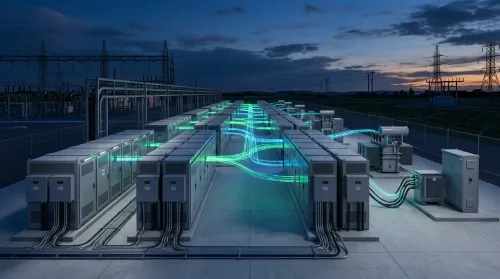
Transferring power from the SMR’s synchronous generator to the transmission grid introduces significant electrical infrastructure costs. While SMRs are smaller than gigawatt-scale plants, their grid interconnection requirements—main step-up transformers, medium-voltage switchgear, and protective relay systems—remain highly sophisticated and expensive.
Grid interconnection costs can unexpectedly break project economics if not optimized during the initial feasibility studies. Upgrading an aging regional substation or constructing miles of new transmission spur lines to accommodate 300 MW of steady baseload power can add tens of millions to the indirect OCC. Moreover, SMRs demand highly resilient onsite backup power systems (such as safety-grade diesel generators or battery arrays) to ensure safe shutdown during loss-of-offsite-power scenarios, further padding electrical capital expenditures.
To manage these specialized integrations seamlessly, project developers must align with highly qualified contractors who understand heavy electrical logistics. For seamless procurement and contractor bidding on complex infrastructure elements, platforms that connect energy developers with vetted professionals are invaluable; you can streamline your next infrastructure project by utilizing industry-specific networks via https://jisenergy.com/sign-up-login/. Ultimately, optimizing transformer procurement and grid-tie studies is a critical step in finalizing an accurate LCOE.
Monetizing SMR Thermal Output
Sales
Heat
Hydrogen
Monetizing Thermal Output: Cogeneration, District Heating, and EaaS Models
Evaluating the economics of an SMR purely on electrical output (LCOE) ignores one of the technology’s most potent commercial advantages: highly versatile thermal energy. SMRs generate immense amounts of high-temperature steam. By leveraging cogeneration—simultaneously producing electricity and utilizing residual thermal energy—developers can establish multiple distinct revenue streams, significantly accelerating the project's return on investment.
This capability underpins the growing Energy-as-a-Service (EaaS) model. In an EaaS framework, the SMR operator does not just sell megawatts to the grid; they sell high-grade process heat to adjacent chemical plants, refineries, or paper mills. Advanced high-temperature SMRs can even drive thermochemical water splitting to produce pink hydrogen, a highly lucrative commodity in industrial decarbonization. In municipal applications, low-grade residual heat can be routed into district heating networks, entirely displacing localized natural gas boilers. By monetizing both the electrical and thermal outputs, the effective LCOE drops, transforming the SMR from a simple power plant into a comprehensive, multi-commodity energy asset that meets diverse industrial demands.
Heavy Industrial Microgrid Integration
Case Study: Technoeconomic Feasibility of an SMR for a Heavy Industrial Microgrid
Consider the technoeconomic feasibility of integrating a 50 MW(e) microreactor into an isolated, heavy industrial microgrid—such as a remote mining operation. Historically, these facilities rely on imported diesel fuel, which incurs massive transportation costs and subjects the operation to severe commodity price volatility. The LCOE of diesel in remote regions can easily exceed $250/MWh.
Deploying an SMR introduces high upfront capital intensity, but the long-term economics decisively favor nuclear. A factory-fabricated microreactor provides absolute fuel price certainty and seamless, 24/7 baseload power, irrespective of weather conditions that would interrupt solar or wind alternatives. The microgrid controller balances the SMR’s steady electrical output with localized battery energy storage systems (BESS) to handle industrial load spikes, such as mill startup transients.
By eliminating millions of dollars in annual diesel logistics and shielding the operation from carbon taxes, the SMR achieves payback well within its operational lifespan. Furthermore, the ability to utilize the reactor's heat for localized mineral processing or site heating compounds the savings. This case illustrates that when isolated from the subsidized macro-grid, the technoeconomic superiority of the SMR model is fully realized.
Strategic Takeaways for Deployment
Conclusion: Strategic Takeaways for Project Developers and Engineering Firms
The evolution of SMRs is not merely a downscaling of technology, but a comprehensive restructuring of nuclear technoeconomics. For project developers and EPC firms, mastering this new paradigm requires a rigid focus on minimizing Overnight Capital Costs through standardized, factory-driven supply chains while protecting long-term LCOE via optimized operations and maintenance.
The strategic imperative is clear: transition away from the bespoke, stick-built mega-projects of the past and embrace assembly-line reproducibility. Managing indirect costs, condensing construction schedules to defeat debilitating interest loads, and intelligently integrating commercial off-the-shelf balance-of-plant components are non-negotiable disciplines. Furthermore, the ability to monetize both electrical and thermal output via EaaS models broadens the addressable market beyond traditional utilities to heavy industrials and data centers. As the supply chain matures from costly First-of-a-Kind prototypes to streamlined Nth-of-a-Kind deployments, SMRs stand ready to deliver on their promise: highly reliable, zero-carbon baseload energy with a predictable, resilient economic profile.