Industrial Decarbonization Pathways: A Technoeconomic Guide
Introduction: Decarbonizing Industrial Loads with Advanced Storage
The industrial sector stands at the precipice of a monumental shift. Historically reliant on uninterrupted fossil fuel combustion for both electrical base loads and extreme thermal requirements, heavy industry is now under intense regulatory and economic pressure to decarbonize. Advanced energy storage has emerged as the linchpin of this transition, acting as the critical buffer required to integrate intermittent renewable energy into round-the-clock manufacturing processes. By decoupling energy generation from immediate consumption, industrial facilities can significantly curtail greenhouse gas emissions without sacrificing output or operational reliability. As grid instability increases and carbon taxation models evolve globally, the integration of cutting-edge storage technologies is no longer merely a sustainability initiative—it is a fundamental requirement for maintaining industrial competitiveness in a net-zero future.
The Role of Energy Storage in Heavy-Duty Industrial Facilities
In heavy-duty industrial facilities—ranging from chemical processing plants to metallurgical refineries—energy storage plays a multifaceted role that extends far beyond simple backup power. These environments are characterized by massive, complex load profiles containing both high-voltage electrical demands and intensive heating or cooling cycles. Energy storage operates as the central nervous system for energy management, actively bridging the gap between volatile utility pricing and the rigid operational schedules of industrial production. By absorbing excess energy during periods of high renewable generation or off-peak pricing, these systems enable plants to "ride through" grid congestion and supply shortages. Furthermore, energy storage directly addresses power quality issues; it smooths transient voltage sags and frequency anomalies that would otherwise cause costly downtime and equipment degradation in highly automated manufacturing lines.
Defining the Technoeconomic Scope for EPCs, ESCOs, and Project Developers
For Engineering, Procurement, and Construction (EPC) firms, Energy Service Companies (ESCOs), and project developers, successfully integrating these systems requires rigorous technoeconomic analysis. The scope of such an analysis must seamlessly marry thermodynamic engineering with robust financial modeling. It involves evaluating specific site loads, forecasting future energy tariffs, modeling equipment degradation rates, and calculating the exact point of diminishing returns for storage capacity. Developers must weigh upfront capital expenditures against long-term operational savings, factoring in incentives, tax credits, and asset financing costs. Professionals looking to streamline this complex evaluation process and accurately model these layered variables can access specialized project assessment tools via https://jisenergy.com/sign-up-login/. Ultimately, defining this scope prevents value leakage and ensures that the selected storage architecture aligns perfectly with the facility’s financial hurdles and operational mandates.
Technical Foundations: Electrochemical vs. Thermal Storage Mechanics
The foundational divergence in industrial storage lies in the mechanics of energy capture and dispatch. Electrochemical storage, predominantly represented by battery systems, operates by converting electrical energy into chemical potential. During charging, ions move from the cathode to the anode across an electrolyte; during discharge, the process reverses, releasing a highly controlled flow of electrons back into the facility’s electrical network. Conversely, Thermal Energy Storage (TES) operates strictly on thermodynamic principles, capturing energy by altering the internal kinetic energy of a storage medium. Instead of storing electrons, TES stores heat or cold. When energy is cheap or abundant, TES systems utilize electric heaters or chillers to charge a thermal medium (like water, molten salt, or ice). When process heat or cooling is required, this stored thermal energy is dispatched directly to the HVAC system or industrial boiler, bypassing the need to reconvert it to electricity.
Lithium-Ion Storage: High Energy Density and Electrical Flexibility
Lithium-ion technology has dominated the electrochemical landscape due to its unmatched energy density and rapid response capabilities. For industrial applications, these Battery Energy Storage Systems (BESS) offer precise, sub-second electrical flexibility. Because they output high-grade electrical power, they can be utilized anywhere across a plant's electrical distribution network, supporting lighting, heavy machinery, or sensitive electronics alike. The high energy density of lithium-ion cells allows facilities to deploy significant megawatt-hour capacities within relatively compact, containerized footprints. This spatial efficiency is vital for industrial sites where real estate is at a premium. According to data from the National Renewable Energy Laboratory, lithium-ion architectures currently command the vast majority of grid-tied storage deployments due to their modularity and continuously declining module costs (Source: nrel.gov).
Thermal Energy Storage: Sensible, Latent, and Thermochemical Systems
While lithium-ion excels in electrical versatility, Thermal Energy Storage shines in tackling the bulk of industrial energy use: process heating and cooling. TES technologies are broadly categorized into sensible, latent, and thermochemical systems. Sensible storage relies on changing the temperature of a liquid or solid—such as massive chilled water tanks or concrete thermal blocks. Latent storage leverages Phase Change Materials (PCMs) like ice, waxes, or molten salts, which absorb or release massive amounts of latent heat as they transition between solid and liquid states, offering vastly superior energy density compared to sensible methods. Thermochemical storage, though more nascent, uses reversible chemical reactions to store energy almost indefinitely without thermal losses. For industrial facilities with heavy thermal loads, matching the storage medium directly to the process requirement eliminates the inefficiencies inherent in converting electricity back to heat.
Thermodynamic Efficiency and Round-Trip Performance Metrics
A pivotal factor in technoeconomic analysis is Round-Trip Efficiency (RTE). For a lithium-ion BESS, RTE measures the AC electrical energy dispatched divided by the AC energy consumed during charging, typically hovering between 85% and 90%. Losses here are primarily due to inverter conversions, internal cell resistance, and parasitic auxiliary loads like HVAC cooling for the battery racks. Thermal storage presents a more nuanced efficiency metric. If TES is utilized for "power-to-heat-to-power," the RTE drops abysmally (often below 40%) due to the harsh thermodynamic penalties of the Carnot cycle. However, when deployed for direct industrial applications—meaning "power-to-heat-to-heat" or "power-to-cold-to-cold"—TES can achieve effective thermal round-trip efficiencies exceeding 90%. Excellent insulation limits thermal decay over time, making TES exceptionally efficient when the final required energy vector is indeed thermal.
Capital Expenditure (CAPEX) Drivers for Industrial Integration
When modeling capital expenditures for industrial storage, developers must look beyond the base cost of the storage medium. CAPEX is heavily influenced by the complexity of integration into existing, highly structured operational environments. For lithium-ion, the dominant CAPEX drivers are cell procurement, power conversion systems (PCS), and electrical switchgear upgrades to handle increased fault currents. Conversely, thermal storage CAPEX is heavily weighted toward mechanical infrastructure: massive insulated tanks, high-grade heat exchangers, complex piping networks, and civil engineering work for structural support. In both paradigms, soft costs—including system engineering, permitting, labor, and control system programming—can represent up to 30-40% of total installed costs. Understanding the precise balance of these hardware and integration expenses is critical for establishing an accurate baseline for return on investment.
Battery Energy Storage System (BESS) Procurement and Balance of Plant
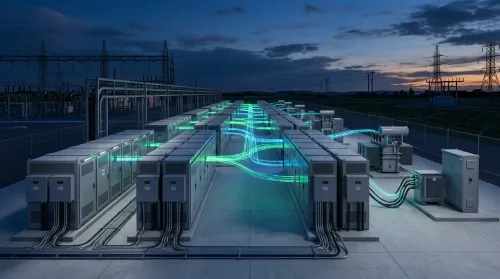
Procuring a utility-scale BESS for an industrial site involves securing far more than just battery modules. The complete package requires a sophisticated Balance of Plant (BOP) to ensure safe, grid-compliant operation. The Power Conversion System (PCS) is the most critical BOP component, responsible for seamlessly converting DC battery power to synchronized AC power. Additionally, an intelligent Energy Management System (EMS) must be integrated to dictate charge and discharge algorithms based on real-time facility loads and utility pricing signals. Procurement teams must also factor in medium-voltage step-up transformers, advanced fire suppression systems (such as clean agent gases), and dedicated HVAC units designed to keep battery enclosures strictly within a 23°C to 25°C window. Consequently, BESS procurement necessitates rigid vendor qualification to ensure interoperability among these complex sub-systems.
Thermal System Infrastructure, HVAC Integration, and Retrofit Costs
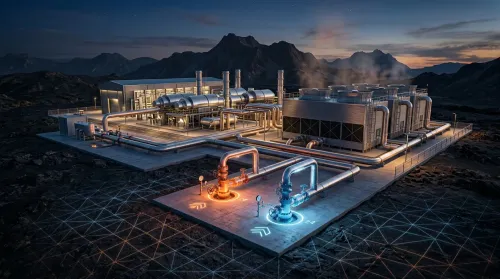
Integrating thermal storage is largely an exercise in complex mechanical engineering. Unlike containerized batteries that tie into an electrical panel, TES requires deep integration into an industrial facility's central plant. This involves physically routing large-diameter piping to connect new storage tanks with existing industrial chillers, boilers, or cooling towers. Retrofit costs can escalate quickly if the existing HVAC or process heating loops lack the necessary pressure ratings or require significant modification to accept varying flow rates from the TES dispatch. According to the U.S. Department of Energy, proper system integration is the primary determinant of a thermal system's long-term viability, emphasizing the need for robust hydraulic modeling prior to installation (Source: energy.gov). Careful planning surrounding heat exchangers, pumps, and sophisticated valve manifolds is required to synthesize the new storage asset with legacy industrial infrastructure.
Operational Expenditure (OPEX), Degradation, and Asset Lifespan
While CAPEX initiates the project, Operational Expenditure (OPEX) and lifecycle degradation ultimately define the project's long-term profitability. For BESS, OPEX includes continuous HVAC operation to regulate cell temperatures, inverter preventative maintenance, software licensing for the EMS, and periodic capacity testing. More critically, lithium-ion assets experience non-linear electrochemical degradation, limiting their primary lifespan to roughly 10 to 15 years depending on cycling intensity. By stark contrast, thermal energy storage benefits from remarkably low OPEX and near-zero capacity degradation over time. The primary maintenance requirements for a TES system involve standard servicing of mechanical pumps, valve actuators, and periodic water treatment to prevent scaling or corrosion. Consequently, the mechanical simplicity of TES often results in a rugged asset lifespan extending beyond 25 to 30 years, deeply altering the long-term technoeconomic calculus in its favor.
Cycle Life, Capacity Fade, and Augmentation in Lithium-Ion Architectures
To accurately model BESS financials, engineers must account for the reality of capacity fade. Over thousands of charge-discharge cycles, lithium-ion cells suffer from Solid Electrolyte Interphase (SEI) layer thickening and cathode micro-cracking, inevitably reducing the amount of energy the system can hold. If an industrial facility relies on a strict megawatt-hour rating to hit peak-shaving targets, this capacity fade represents a major financial risk. To counter this, developers employ "augmentation strategies." This involves over-sizing the initial system or reserving physical rack space to install fresh battery modules in years five, seven, or ten. Factoring these future augmentation costs into the initial financial model is a stringent requirement for ESCOs, ensuring the battery system maintains its contracted operational parameters without unexpected capital calls midway through its lifecycle.
Longevity, Cycling Stability, and Maintenance Profiles of Thermal Storage Media
Conversely, the longevity profile of thermal storage media dictates an entirely different economic model. Water, concrete, and most stable Phase Change Materials (PCMs) do not degrade chemically over multiple thermal cycles. An ice-storage system or a molten salt tank can be frozen, melted, heated, and cooled daily for decades without losing a single kilowatt-hour of its total thermal capacity. This infinite cycling stability removes the need for costly mid-life augmentation. The maintenance profile shifts from managing delicate electrochemistry to sustaining heavy mechanical integrity. Facilities must focus on preventing tank corrosion, maintaining insulation integrity, and servicing the rotating mechanical equipment that drives the heat transfer fluids. Because these are standard practices for industrial maintenance teams, TES OPEX fits seamlessly into existing operational budgets without requiring highly specialized electrical contractors.
In-Depth Thermal Energy Storage Cost Comparison vs. Lithium-Ion
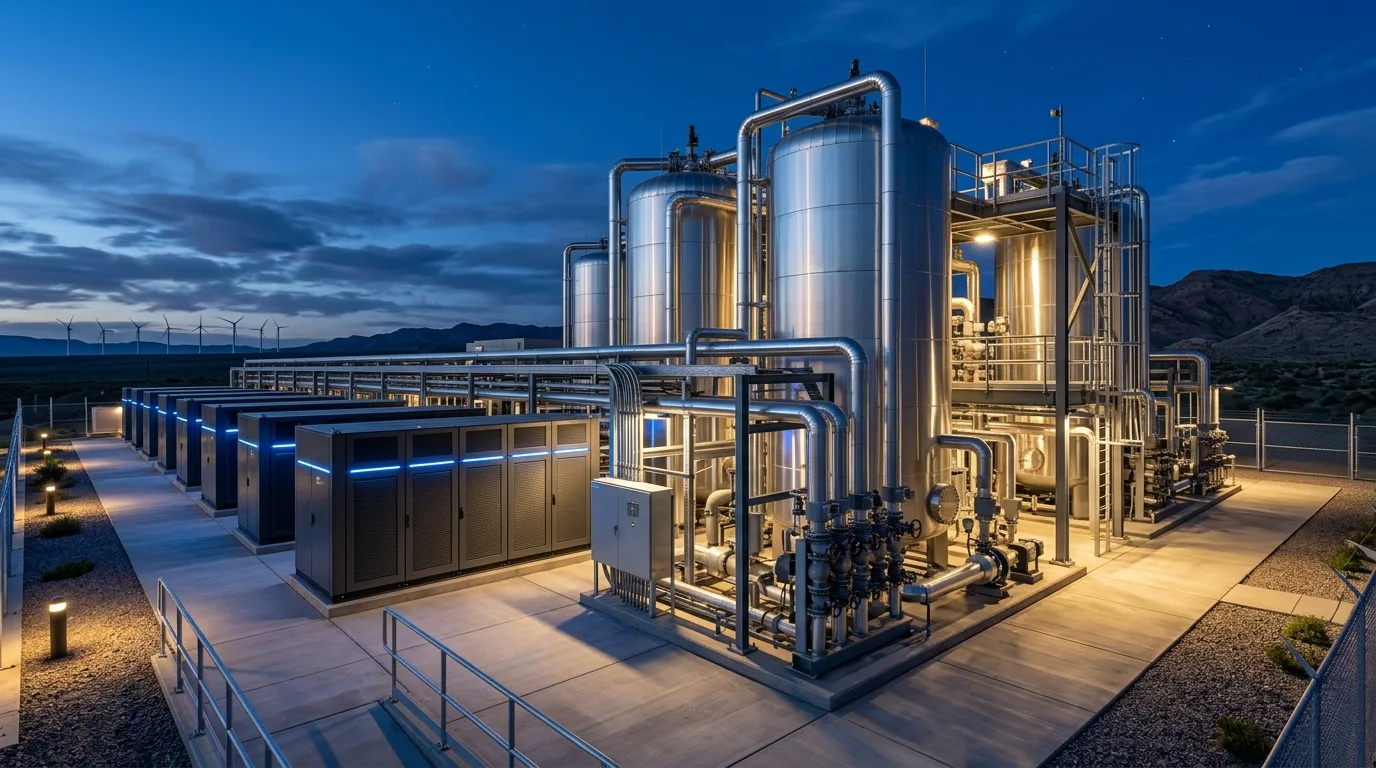
When strictly analyzing cost per unit of energy stored, Thermal Energy Storage generally possesses a significant advantage over lithium-ion—provided the end-use is thermal. Depending on scale, a fully integrated utility-scale BESS currently runs between $300 and $500 per kilowatt-hour installed. In contrast, massive sensible thermal storage systems, like stratified chilled water, can be deployed for as little as $20 to $50 per thermal kilowatt-hour (kWh_th). Even advanced latent heat systems using encapsulated PCMs rarely exceed $100 per kWh_th. This massive cost differential highlights a critical technoeconomic rule: if an industrial facility's primary energy spike is driven by refrigeration, cooling towers, or boiler operations, utilizing expensive lithium-ion batteries to offset that load is often financially inefficient compared to directly shifting the thermal load via TES.
Levelized Cost of Storage (LCOS) Methodologies for Industrial Loads
To standardize these disparate cost profiles, financial analysts utilize the Levelized Cost of Storage (LCOS) metric. LCOS calculates the total lifetime cost of the storage asset—encompassing CAPEX, continuous OPEX, charging costs, and eventual decommissioning—divided by the total cumulative energy the system will discharge over its useful life, all discounted to present value. For industrial loads, LCOS allows developers to directly compare the true cost of pulling energy from a battery versus a thermal tank. While BESS LCOS curves are highly sensitive to discount rates and battery degradation curves, TES LCOS curves are heavily dependent on initial construction costs and system longevity. By running LCOS models, engineers can empirically demonstrate whether the premium paid for electrochemical versatility is justified over the cheaper, bulk capacity provided by thermal media.
Net Present Value (NPV) and Internal Rate of Return (IRR) Benchmarks
Translating LCOS into corporate decision-making requires benchmarking against Net Present Value (NPV) and Internal Rate of Return (IRR). An industrial CFO requires a positive NPV—confirming the cash flows generated from utility bill savings and grid services exceed the cost of capital. IRR provides the percentage return expected, which must clear the corporation's internal hurdle rate. In industrial energy efficiency, a blended IRR of 12% to 18% is frequently targeted to compete with core production investments. Because TES boasts lower initial CAPEX and longer asset life, it often yields a highly stable, albeit sometimes slower, IRR. BESS projects, armed with the ability to chase lucrative, fast-acting grid services, can sometimes project higher IRRs, but these are accompanied by higher risk profiles linked to market saturation and battery degradation.
Sensitivity Analysis: Commodity Pricing, Tariffs, and Supply Chain Volatility
Robust technoeconomic models are heavily subjected to sensitivity analyses to account for market volatility. The financial viability of a BESS project is inherently tied to global macroeconomic factors, particularly the pricing of raw commodities like lithium, cobalt, and copper. Import tariffs and geopolitical supply chain bottlenecks can drastically alter battery procurement costs between the feasibility stage and final execution. Conversely, thermal storage economics are generally insulated from global battery mineral supply chains, relying instead on abundant, localized commodities like steel, concrete, and industrial salts. However, TES models are highly sensitive to local labor rates and civil engineering costs due to their construction-heavy nature. A thorough sensitivity analysis dynamically tests these variables, ensuring the projected NPV remains positive even if steel prices surge or energy tariff structures undergo regulatory changes.
Value Stacking and Revenue Generation Strategies
To clear aggressive corporate IRR hurdles, industrial storage projects must employ "value stacking." This operational strategy involves programming the asset to capture multiple revenue streams simultaneously or sequentially. Instead of purchasing a battery solely for emergency backup, the system is actively dispatched daily. Value stacking might involve using the asset for behind-the-meter utility bill reduction during weekday afternoons, while bidding its capacity into front-of-the-meter wholesale ancillary service markets on weekends. The software algorithms driving the EMS are critical here, as they must co-optimize these dispatch schedules without voiding manufacturer warranties or violating operational limits. Effectively stacking these cash flows transforms the storage system from a static infrastructure cost into an active, revenue-generating center for the industrial facility.
Electrical Peak Shaving, Demand Charge Management, and Grid Services
For lithium-ion BESS, the most lucrative behind-the-meter value stream is typically demand charge management. Industrial utility bills are often dominated by demand charges—penalties based on the facility's highest 15-minute spike in electrical consumption (measured in kilowatts). By rapidly discharging during these peak events, the BESS "shaves" the peak, drastically reducing the monthly utility bill. Furthermore, because of its instantaneous sub-second response time, lithium-ion is perfectly suited for high-value, front-of-the-meter grid services like frequency regulation. The utility pays the facility to inject or absorb small amounts of power to maintain the grid's 60 Hz frequency. This electrical agility gives BESS a distinct edge in markets with sophisticated utility tariff structures and deregulated energy markets.
Thermal Load Shifting, Electrification of Heat, and Time-of-Use (TOU) Arbitrage
Thermal Energy Storage value stacking revolves primarily around shifting massive, predictable loads. The core strategy is Time-of-Use (TOU) arbitrage: running industrial chillers or electric boilers overnight when electricity rates are lowest to fully "charge" the thermal media. During peak afternoon pricing hours, the energy-intensive HVAC or process equipment is shut down, and the facility runs entirely off the stored thermal energy. This not only avoids peak energy rates but also drives deep electrical peak shaving. Furthermore, as industries push to decarbonize, TES facilitates the "electrification of heat." By pairing massive industrial heat pumps with high-temperature thermal storage, facilities can completely eliminate natural gas boilers, utilizing cheap renewable electricity to generate and store process heat for daytime manufacturing.
Facility Integration: Engineering, Mechanical, and Spatial Constraints
Moving from spreadsheet economics to physical deployment uncovers a labyrinth of facility integration constraints. The technoeconomic viability of a project can collapse if site-specific engineering barriers are not identified early. For BESS, the challenges are often regulatory and electrical: finding adequate real estate that complies with fire setbacks, or discovering that the facility's existing switchgear cannot accommodate the bidirectional fault currents required. For TES, the constraints are primarily spatial and structural. Integrating large-scale thermal tanks may require deep excavation, rerouting of underground utilities, or reinforcing concrete foundations to bear immense weight. Facility engineers must conduct exhaustive spatial planning to ensure these massive assets do not impede daily logistics, trucking routes, or future manufacturing line expansions.
Footprint, Weight, and Energy Density Considerations for Facility Engineers
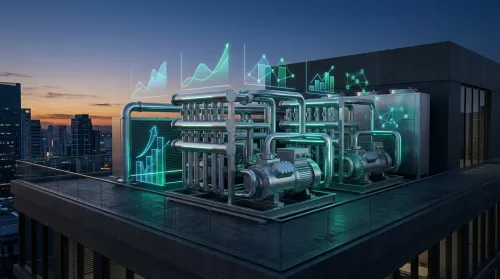
Energy density directly dictates the physical footprint and structural loading of the storage system. Lithium-ion batteries boast superior volumetric energy density, enabling developers to cram several megawatt-hours of storage into a standard 40-foot shipping container. While dense, these containers are extremely heavy, necessitating specialized concrete pads. Sensible thermal storage (like chilled water) suffers from low volumetric density, meaning comparable megawatt-hour capacities require massive, multi-story tanks. Phase Change Materials (PCMs) bridge this gap somewhat; by utilizing the latent heat of fusion, PCM tanks can be up to five times smaller than water tanks holding equivalent thermal energy. Facility engineers must carefully calculate load-bearing capacities—especially for roof-mounted systems—and evaluate whether the site can physically host the required volume without disrupting operations.
Electrical Switchgear vs. Mechanical HVAC and Chiller Plant Tie-Ins
The point of interconnection represents one of the highest risk phases during construction. For a BESS, the tie-in is fundamentally electrical. It requires landing high-amperage cables from the storage inverter into the facility’s main distribution panel or a dedicated medium-voltage substation. This work demands brief, scheduled plant outages and strict adherence to arc-flash safety protocols. In contrast, TES integration requires tying into the beating mechanical heart of the facility—the central chiller or boiler plant. This involves "hot-tapping" or draining major fluid headers, installing complex bypass manifolds, and calibrating secondary variable frequency drive (VFD) pumps. Both integration points require highly specialized engineering to ensure that if the storage system fails or goes offline for maintenance, the industrial facility seamlessly reverts to grid power or legacy chillers without interruption.
Fire Safety, Thermal Runaway, and Compliance with Building Codes
Safety profiles diverge sharply between electrochemical and thermal technologies, dramatically impacting permitting. Lithium-ion batteries carry the inherent risk of thermal runaway—an uncontrollable, cascading exothermic reaction that can lead to intense fires. Consequently, BESS deployments face stringent oversight under codes like NFPA 855 and UL 9540. Facilities must invest heavily in blast-resistant enclosures, sophisticated off-gas detection, deflagration venting, and maintain wide spatial setbacks from critical plant infrastructure. The Pacific Northwest National Laboratory frequently publishes updated guidance on mitigating these BESS risks for commercial deployments (Source: pnnl.gov). Thermal storage, conversely, poses zero risk of thermal runaway. While TES systems must comply with standard boiler and pressure vessel codes—and manage potential freezing or expansion risks—they do not encounter the immense regulatory scrutiny or high insurance premiums associated with high-density electrochemical systems.
Case Study: Technoeconomic Analysis in a Large-Scale Food Processing Plant
To crystallize these technoeconomic principles, consider a case study involving a large-scale, 500,000-square-foot food processing plant. The corporate mandate was to reduce overall energy expenditure by 20% and lower Scope 2 carbon emissions over a 15-year horizon. The facility faced exorbitant peak utility tariffs during summer afternoons, threatening operational margins. An independent engineering firm was contracted to model two distinct pathways to achieve these sustainability and economic targets. Scenario A evaluated the procurement and integration of a utility-scale lithium-ion BESS to manage total facility electrical demand. Scenario B analyzed the deployment of a latent Phase Change Material (PCM) thermal storage system targeted specifically at the facility's massive refrigeration load.
Facility Profile, Baseline Electrical Load, and Process Heating/Cooling Demands
The first step in the analysis was defining the baseline profile. Interval meter data revealed the facility had a steep afternoon peak electrical demand of 8 Megawatts (MW), incurring a severe $20/kW monthly demand charge. Crucially, a sub-metering audit identified that 5 MW—representing over 60% of the facility’s total peak power—was driven entirely by the central ammonia refrigeration plant required to freeze and store products. The remaining 3 MW comprised lighting, packaging lines, and administrative operations. The technoeconomic challenge was clear: the massive utility penalty was inherently a thermal problem masking itself as an electrical peak. Any proposed storage solution had to address this aggressive 5 MW refrigeration spike effectively while clearing an internal corporate IRR hurdle of 12%.
Scenario A: Deploying a Utility-Scale Lithium-Ion BESS
Scenario A proposed a 4 MW / 16 MWh lithium-ion BESS to tackle the entire facility's demand spikes holistically. Modeled at an installed cost of $400/kWh, the initial CAPEX stood at $6.4 million. The system would charge overnight and discharge 4 MW for four hours every afternoon, successfully halving the peak demand. The BESS offered excellent electrical flexibility, capable of supporting both the ammonia compressors and the packaging lines. It also provided a secondary revenue stream through local frequency regulation markets. However, the financial model highlighted significant headwinds: a mid-life augmentation cost of $1.2 million was required in year seven to offset capacity fade. Additionally, strict fire code setbacks meant the system had to be installed in a distant parking lot, increasing trenching and medium-voltage electrical tie-in costs.
Scenario B: Integrating Latent Phase Change Material (PCM) Thermal Storage
Scenario B took a targeted approach, recognizing that the bulk of the load was thermal. Engineers proposed a latent Phase Change Material (PCM) system integrated directly into the ammonia refrigeration loop. During off-peak night hours, the chillers would freeze large tanks filled with a specialized -10°C salt hydrate PCM. During the afternoon peak, the energy-intensive compressors would power down, and the facility's cooling loop would circulate through the melting PCM to maintain freezing temperatures. The CAPEX for this 16 MWh-equivalent thermal asset was modeled at just $175/kWh_th, totaling $2.8 million. While the system offered zero backup power for the electrical packaging lines, it successfully shifted 4 MW of the thermal load. The model projected negligible OPEX and a robust 25-year lifespan with no mid-life augmentation necessary.
Comparative Results: ROI, Payback Period, and Total Cost of Ownership
The comparative results strongly favored the targeted approach due to the specific load profile. Scenario A (BESS) yielded a payback period of 6.5 years and an IRR of 11%, falling slightly short of the corporate hurdle rate primarily due to the heavy CAPEX and the year-seven augmentation burden. The Total Cost of Ownership (TCO) escalated significantly over 15 years due to continuous HVAC cooling for the batteries and inverter maintenance. Scenario B (TES) produced a payback period of just 3.2 years with an impressive IRR of 18%. Because the primary load was cooling, storing cold energy mechanically proved vastly more cost-effective than storing electrons to run compressors later. By accurately mapping the storage medium to the end-use energy vector, the facility minimized TCO and maximized long-term ROI.
Conclusion: Strategic Decision-Making for Industrial Storage Projects
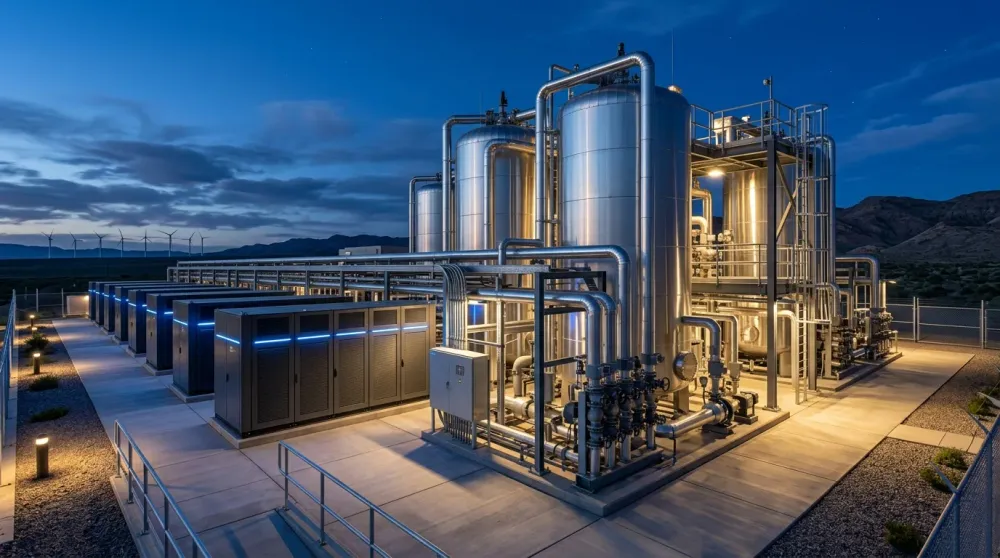
Strategic decision-making for industrial storage requires moving beyond generic technology hype to rigorous, site-specific technoeconomic realities. There is no universally superior technology; rather, there are optimal architectures for specific load geometries. If an industrial facility requires highly responsive, facility-wide electrical backup, or if it intends to participate aggressively in deregulated wholesale ancillary markets, a lithium-ion BESS remains the undisputed choice. However, if the facility's electrical peaks are heavily dictated by thermodynamic processes—such as refrigeration, industrial baking, or massive HVAC demands—Thermal Energy Storage will almost always present a superior LCOS and a higher, more stable IRR. Decarbonization is best achieved when developers precisely align the storage medium with the exact physical nature of the industrial load.
Future Outlook on Industrial Energy Storage Technologies
Looking forward, the industrial storage landscape is poised for rapid diversification. While lithium-ion currently dominates, its electrochemical limitations are driving massive R&D into long-duration alternatives. Solid-state battery technologies promise to eliminate the liquid electrolytes that cause thermal runaway, potentially easing strict fire codes and lowering BESS integration costs. Concurrently, thermal storage is advancing rapidly in the high-temperature spectrum. Novel systems utilizing super-heated sand or carbon blocks are being developed to store heat at over 1,000°C. These thermal batteries aim to completely displace natural gas consumption in heavy industries like cement and steel manufacturing. As grid volatility increases with higher renewable penetration, multi-technology hybrid systems—pairing quick-response BESS for power quality with massive TES for thermal base-loading—will likely become the gold standard for net-zero industrial facilities.
Final Recommendations for ESCOs, Engineers, and General Contractors
For EPCs, ESCOs, and engineers navigating this transition, success hinges on rigorous upfront auditing. Never assume an electrical storage solution is the default answer for an electrical utility bill problem. Always deploy sub-metering to dissect the facility’s load profile into electrical and thermal components. Build comprehensive financial models that account for total lifecycle costs, specifically penalizing battery LCOS for capacity fade and augmentation while heavily scrutinizing the mechanical retrofit costs of thermal systems. Establish deep vendor relationships to ensure interoperability of EMS software, and engage early with local Authority Having Jurisdiction (AHJ) officials regarding fire and building codes. By adopting this holistic, load-specific approach to technoeconomic analysis, project developers can confidently deliver resilient, high-ROI decarbonization solutions that will anchor the future of industrial manufacturing.