206 GWh
Fluence & Eve Energy
Supply Framework
$1.4 Billion
Jupiter Power
10-Project BESS Financing
225 GW Target
U.S. Storage Market
Deployment by 2032
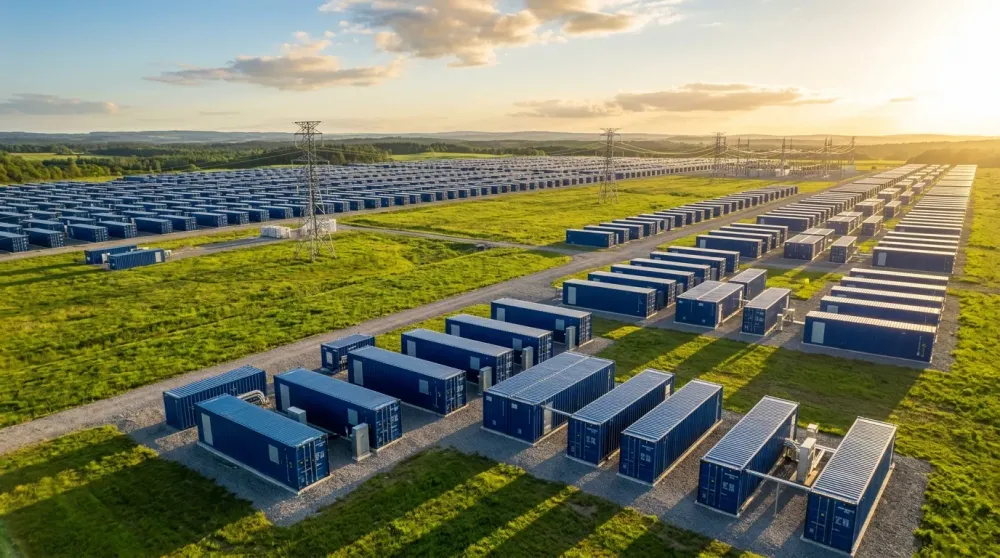
Battery energy storage systems are entering a distinct phase of capital maturity. Procurement is migrating from scattered, project-by-project bidding into multi-year, gigawatt-scale framework agreements. The recent 206 GWh supply deal between system integrator Fluence and OEM Eve Energy illustrates this evolution. Securing cell capacity through 2031 guarantees delivery schedules and insulates developers from spot market volatility.
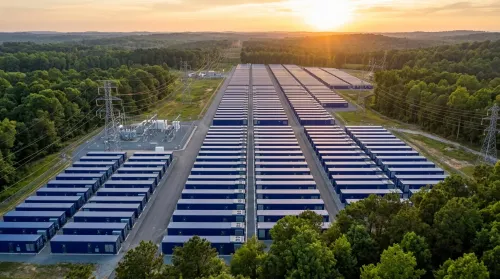
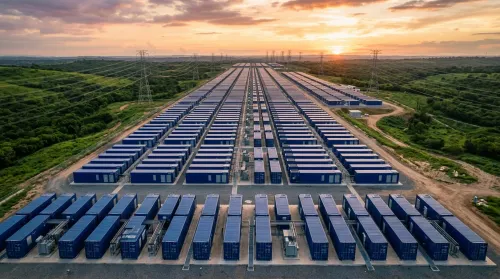
Simultaneously, institutional capital is fully committing to programmatic storage deployment. Jupiter Power just closed a $1.4 billion financing package to build out 3.8 GWh across ten separate U.S. projects. Investors are pricing the revenue stacks of merchant batteries with greater confidence, allowing developers to aggregate assets and lower their blended cost of capital. This structural financial shift underpins the U.S. Energy Storage Coalition's newly stated target of 225 GW of deployed capacity by 2032.
Revenue strategies are also becoming more granular. A Google-sponsored pilot recently demonstrated hourly carbon accounting for a U.S. BESS using granular certificates. This allows grid batteries to capture premium value by discharging specifically during hours with marginal fossil fuel generation. Advanced tracking transforms storage from a simple energy arbitrage asset into a verifiable decarbonization tool for corporate off-takers. You can find detailed emissions tracking frameworks through the National Renewable Energy Laboratory (NREL).
Developers must rethink their technoeconomic models to stay competitive. When sizing a multi-gigawatt portfolio, the sensitivity of cell degradation, cycling limits, and long-term warranty conditions profoundly impacts the internal rate of return. A fractional difference in round-trip efficiency across a 3.8 GWh fleet translates into millions of dollars in lost market opportunity. Relying on static spreadsheet models limits a developer's ability to optimize these dynamic dispatch profiles. The U.S. Energy Information Administration (EIA) continues to track this unprecedented deployment pace, noting rapid regional changes in wholesale electricity market arbitrage opportunities.
This Week's Top 5 Energy News Items
- Fluence and Eve Energy agree 206GWh battery supply deal
- Jupiter Power closes US$1.4 billion financing for 10 US BESS projects totalling 3.8GWh
- Google-backed pilot demonstrates hourly carbon accounting for US BESS using granular certificates
- US energy storage industry targets 225GW/1TWh deployment by end of 2032
- EPA announces repeal of greenhouse gas rules for coal- and gas-fired plants
For deeper technoeconomic analysis on this trend, try CogenS free.