Alternative BESS Chemistries Scale Up
Data: Recent industry capacity expansion announcements
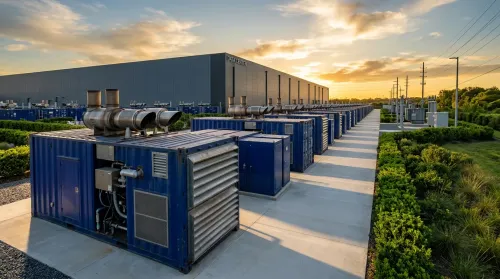
The energy storage sector reached a critical commercialization milestone this week, characterized by both unprecedented lithium-ion scale and the factory-level maturation of alternative chemistries. Developers are actively recalibrating their technoeconomic models as non-lithium technologies move from pilot phases to gigawatt-scale manufacturing and deployment.
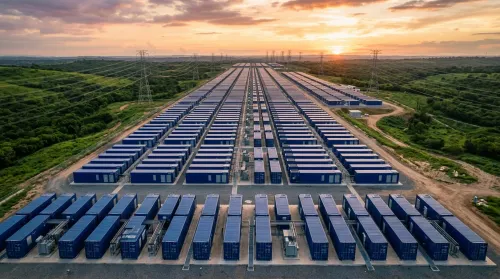
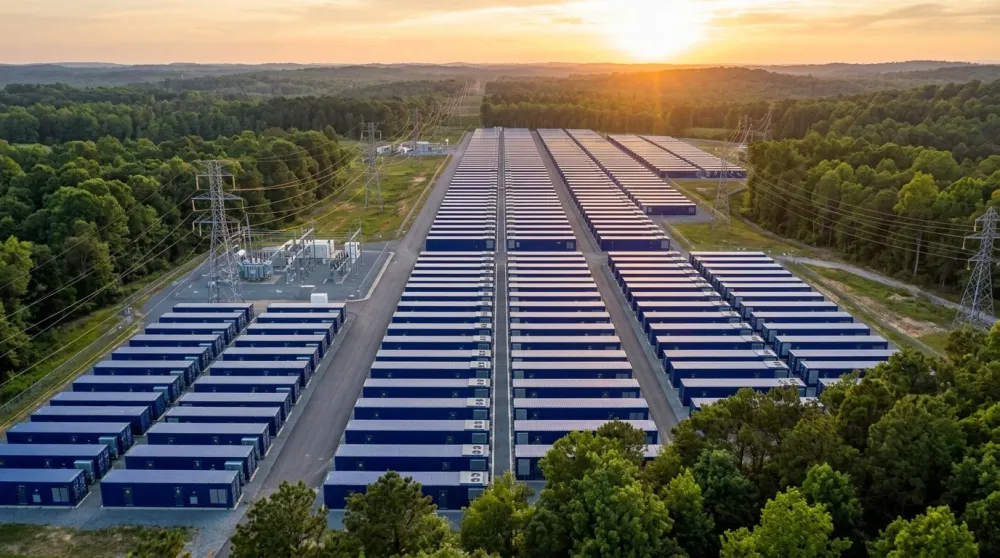
In the traditional lithium-ion space, project sizes continue to break previous boundaries. Origin Energy announced plans to expand its Eraring battery in Australia to 1,200 MW and 8,600 MWh. Simultaneously, India's Union Cabinet approved a $19.3 billion Green Energy Corridor scheme that includes 50 GWh of battery storage capacity by 2032. These massive deployments require complex financial structuring, where cycling degradation and augmentation strategies heavily influence long-term net present value.
Alternative storage technologies are now securing the necessary capital to compete directly for industrial and grid-scale applications. Antora Energy and Pratt Energy announced a 5.8 GWh thermal battery project in Kansas, backed by Copenhagen Infrastructure Partners. This system will supply continuous heat and power to an ethanol biorefinery. The ability to output high-temperature industrial heat directly from renewable electricity alters the financial calculus for heavy industrial facilities exploring decarbonization options, expanding upon NREL's advanced thermal storage models.
Manufacturing capacity for alternative chemistries is also expanding rapidly. EnerVenue officially launched high-volume production of its aqueous metal cell—a nickel-hydrogen technology—at a new facility in China. Nickel-hydrogen batteries offer distinct advantages in environments with extreme temperatures and high cycling demands, as they avoid the rapid degradation typical of lithium-ion systems under deep discharge conditions. When modeling these assets, engineers must weigh higher initial capital expenditures against substantially lower replacement costs over a 20-year project lifecycle, a dynamic closely tracked in the EIA's utility-scale battery cost metrics.
Federal permitting reform efforts, particularly the newly introduced bipartisan Senate permitting bill, could further accelerate these deployments by streamlining transmission interconnections. As grid queues remain congested, the ability to collocate massive storage assets with industrial loads or existing generation infrastructure provides a reliable pathway to commercial operation.
This Week's Top 5 Energy News Items
- Origin wants to supersize the Eraring battery to 1,200 MW
- Antora and Pratt Energy to build 5.8 GWh thermal battery in Kansas
- EnerVenue opens production line for its nickel-hydrogen Aqueous Metal Cell in China
- India approves US$19.3 billion Green Energy Corridor Phase III with 50GWh BESS
- Senate introduces landmark permitting bill as industry groups clash over reforms
For deeper technoeconomic analysis on this trend, try CogenS free.