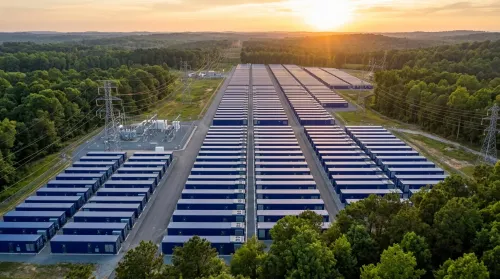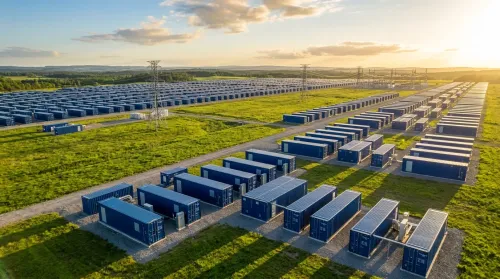
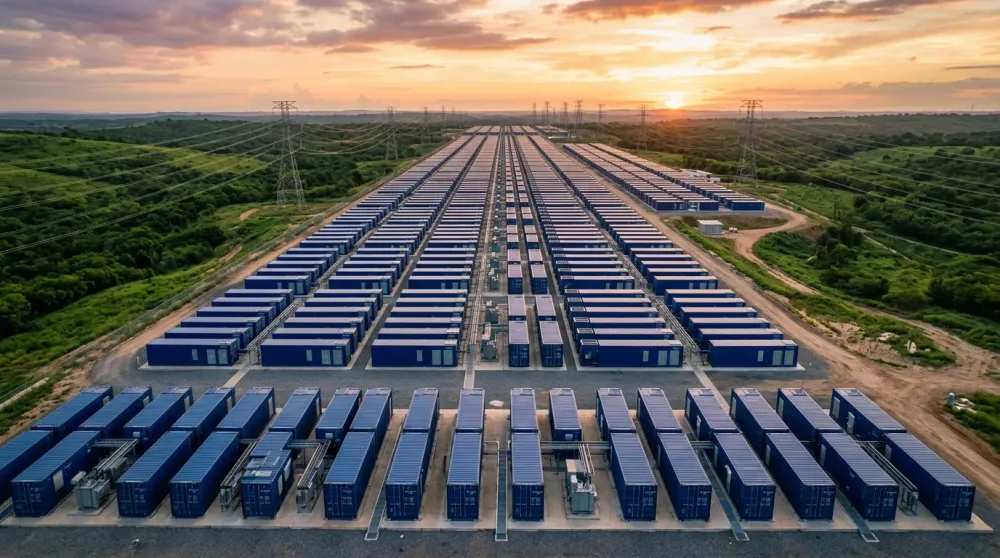
The New BESS Procurement Paradigm
Spot market cell pricing, volatile hardware queues, and fragmented debt structuring.
Multi-year 200+ GWh guarantees, firm equipment pricing, and billion-dollar portfolio debt.
The battery energy storage system (BESS) market just entered a radically different era of procurement and capitalization. This week, Fluence and EVE Energy signed a massive 206 GWh framework agreement, securing committed component deliveries through 2031. Simultaneously, Jupiter Power closed a $1.4 billion financing package for ten U.S. BESS projects totaling 3.8 GWh. These parallel developments signal that developers are abandoning short-term procurement cycles and locking in multi-year supply chains to satisfy explosive grid demand.
The U.S. energy storage sector is openly targeting 225 GW of cumulative deployment by the end of 2032. Achieving this monumental scale requires unprecedented capital liquidity and ironclad equipment guarantees. Project finance metrics are adapting rapidly as debt providers see the operational reliability of newer thermal management systems and advanced lithium-iron-phosphate (LFP) cell chemistries. Lenders are actively underwriting merchant revenues at a scale that was unthinkable just three years ago.
Securing hardware is now the dominant critical-path variable for utility-scale developers. A 206 GWh capacity reservation allows a system integrator to offer firm pricing and delivery schedules to engineering, procurement, and construction (EPC) contractors. This stability trickles down to the project finance models, lowering the risk premium on debt pricing. With U.S. Energy Information Administration (EIA) data consistently showing battery storage as one of the fastest-growing segments of new grid additions, equipment bottlenecks have severely penalized undercapitalized developers. Master supply agreements neutralize that volatility.
Institutional investors backing portfolios like Jupiter Power's $1.4 billion tranche are focusing heavily on lifecycle degradation and cycling performance. They require rigorous technoeconomic validation of the specific battery modules deployed. By aligning long-term hardware availability with robust debt facilities, tier-one developers are establishing an insurmountable lead over regional players relying on spot-market procurement. According to research from the National Renewable Energy Laboratory (NREL), standardizing these large-scale deployments reduces soft costs and accelerates grid integration timelines.
Furthermore, the North American Electric Reliability Corporation (NERC) has begun implementing stricter large-load interconnection mandates, heavily influenced by incoming data center demands. BESS assets provide the exact dynamic flexibility required to buffer these massive localized loads. A master supply framework guarantees that developers can site, permit, and deploy storage precisely when these loads materialize, avoiding the typical multi-year procurement drag.
This week's milestones mark the permanent industrialization of battery storage. Capital flow is directly tracking hardware certainty. The alignment of guaranteed manufacturing output with billion-dollar debt facilities establishes a highly mature infrastructure asset class. Developers operating outside of these massive framework agreements face severe deployment risks and structurally higher capital costs through the end of the decade.
This Week's Top 5 Energy News Items
- Fluence and Eve Energy agree 206GWh battery supply deal
- Jupiter Power closes US$1.4 billion financing for 10 US BESS projects totalling 3.8GWh
- US energy storage industry targets 225GW/1TWh deployment by end of 2032
- Federal judge restores $7B Solar for All program, says EPA illegally axed it
- Bringing a Power Plant's Worth of Load Onto the Grid: NERC's Interconnection Reckoning
For deeper technoeconomic analysis on this trend, try CogenS free.