The New Industrial Power Play: Thermal Storage
⚡
Excess Renewables
Low-cost wind & solar generation
🔥
GWh-Scale Heat Battery
Stores energy as >1,000°C thermal mass
5 GWh Online
🏭
24/7 Process Heat
Replaces fossil fuels for industrial steam
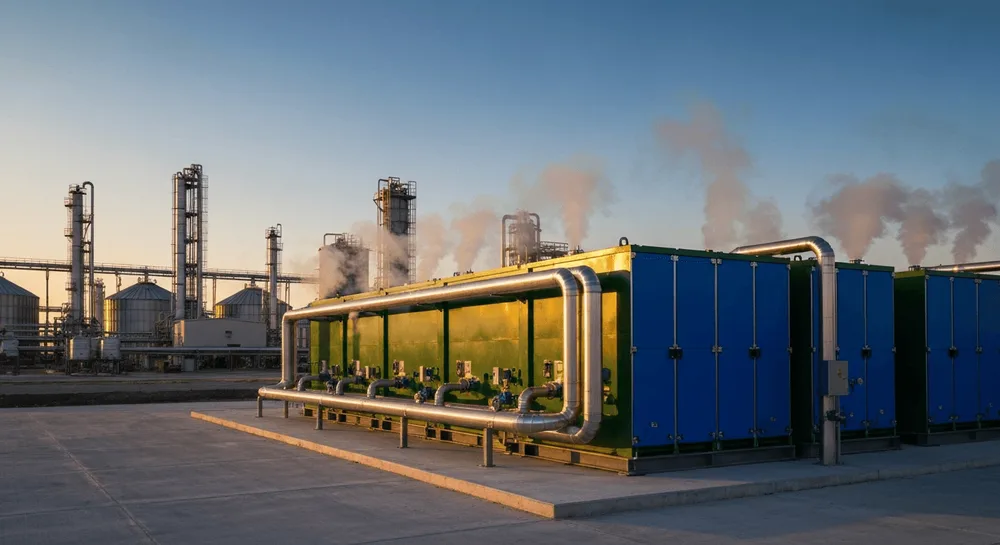
The conversation around long-duration energy storage has expanded significantly this week with the commissioning of a landmark project. Antora Energy brought a 5 GWh thermal energy storage system online at a POET biofuels facility in South Dakota. This system converts cheap wind energy into industrial-grade process heat, supplying clean steam and displacing the facility's reliance on natural gas. The development signals a pivotal moment for industrial decarbonization, demonstrating a commercially viable pathway to electrify a sector responsible for a massive share of global emissions and energy consumption. This application moves storage from a grid-balancing asset to a direct co-located power source for manufacturing.
The technoeconomic model is compelling: absorb intermittent, often negative-priced renewable electricity and convert it into a stable, high-temperature heat source available 24/7. This directly addresses the challenge of electrifying processes that require sustained, intense heat—a difficult task for direct electrification or even green hydrogen in some contexts. The Antora system stores energy in solid carbon blocks heated to over 1,000°C, a fundamentally different approach than lithium-ion BESS, which are geared for shorter-duration electricity discharge. While massive BESS projects continue to secure financing, such as Spearmint Energy's new $450 million package for a project in Texas, thermal storage is carving out a distinct and critical niche. The industrial sector's immense energy demand has long been a decarbonization roadblock.
This advancement arrives as grid operators and utilities grapple with unprecedented load growth, largely from data centers. News from MISO shows Entergy's proposed gas-fired plants, intended to serve data centers, comprise a third of the grid's fast-track interconnection queue. In parallel, regulators are beginning to act, with Oregon's PUC approving a new large-load tariff framework that shifts infrastructure costs to hyperscale customers. These pressures create a powerful incentive for large energy users to seek alternative, co-located generation and storage solutions. Technologies like Antora's thermal battery provide a new tool for industrial facilities to manage energy costs, improve resilience, and meet sustainability goals, representing a significant front in the overall effort of industrial decarbonization.
This Week's Top 5 Energy News Items
- A huge 5 GWh thermal energy storage system is now delivering power to a South Dakota biofuels facility
- Spearmint Energy Secures $450 Million in Financing for Texas BESS Project
- Entergy’s gas projects are one-third of MISO’s fast-track interconnection process
- Oregon PUC approves PGE’s large-load tariff framework for data centers
- NextEra and Dominion are merging. Here’s what you need to know
For deeper technoeconomic analysis on this trend, try CogenS free.