Microreactor LCOE Breakdown
Technoeconomic parameters for 1-20 MWe industrial microgrid deployments
CAPEX Variables
Modular Factory Fabrication
Minimal Civil Works
BOP & Switchgear Integration
OPEX Stability
HALEU Long-Term Fuel Cycle
Autonomous Ops & Low Staffing
Decommissioning Escrow
Financial Modeling
Energy-as-a-Service (EaaS)
Cogeneration Monetization
Tax Credits & Risk Insurance
1.0 Introduction: The Shift Toward Nuclear Microreactors in Heavy Industry
Heavy industry has historically relied on fossil fuels to meet its immense, uninterrupted energy demands. However, the global imperative to decarbonize is forcing a monumental shift in how industrial facilities procure power. Enter nuclear microreactors: a transformative technology offering zero-carbon, baseload electricity and high-quality process heat. Unlike intermittent renewables, microreactors provide the steady energy profile required by chemical plants, steel mills, and data centers. As carbon pricing mechanisms become more aggressive, the levelized cost of energy (LCOE) for traditional fossil generation is rising. Consequently, facility engineers and project developers are increasingly evaluating microreactors as a centralized solution for industrial microgrids, prioritizing energy security and environmental compliance in one streamlined package.
1.1 Defining Commercial Nuclear Microreactors (1-20 MWe) for Facility Engineers
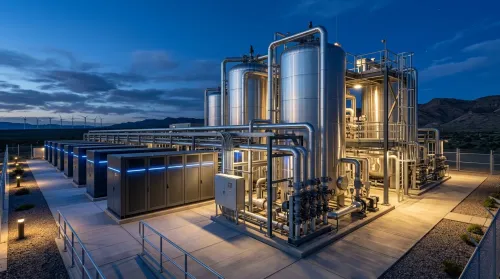
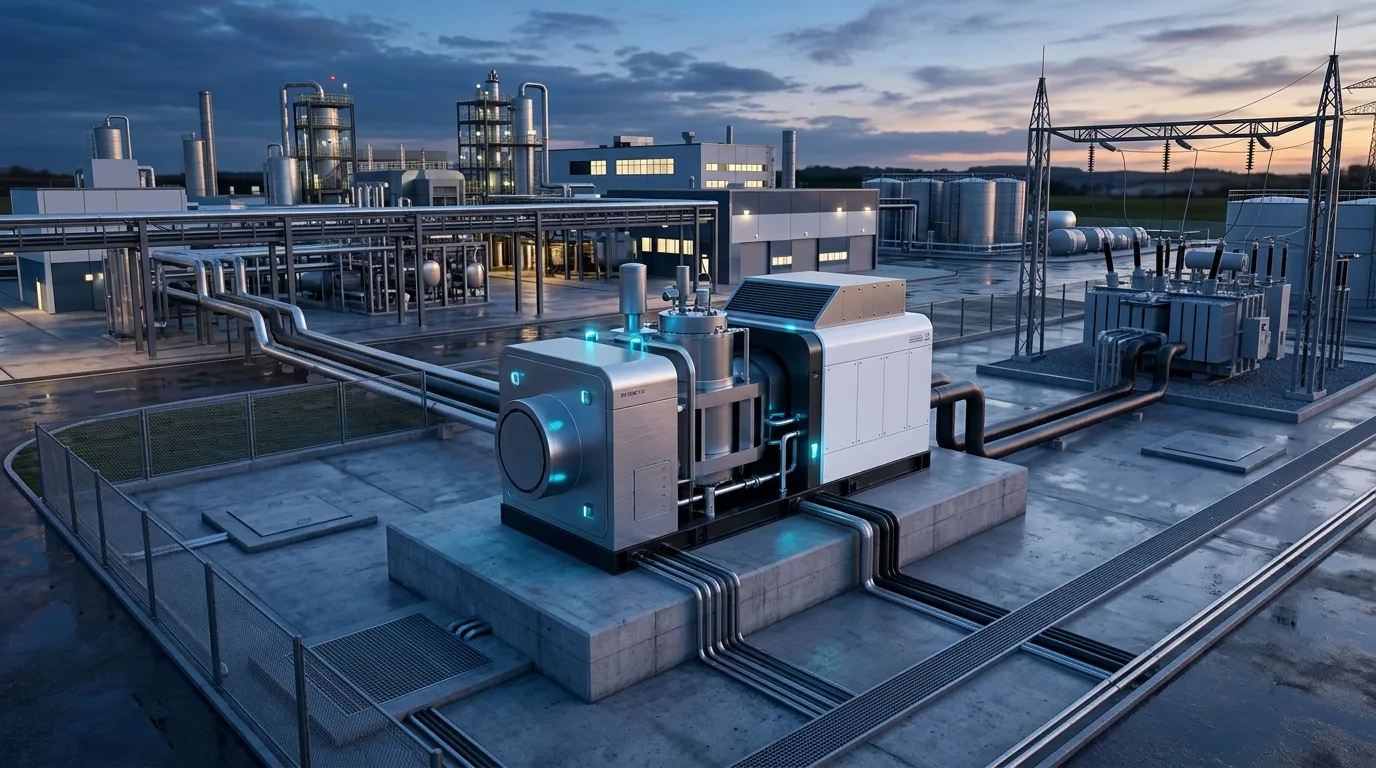
For facility engineers, commercial nuclear microreactors represent a paradigm shift from traditional, gigawatt-scale nuclear plants. Defined typically by an electrical output of 1 to 20 Megawatts electric (MWe), these advanced reactors are compact, modular, and heavily standardized. They are designed for factory fabrication, easily transported to site via standard shipping containers, and capable of rapid deployment. Most designs employ advanced coolants like liquid metals, molten salts, or high-temperature gas, operating at lower pressures and inherent safety margins. This “plug-and-play” nature allows microreactors to seamlessly integrate into existing industrial microgrids, offering a scalable energy source that aligns with the specialized baseload demands of modern manufacturing facilities. (Source: energy.gov)
1.2 The Role of EPCs, ESCOs, and Developers in the Nuclear Renaissance
The successful deployment of microreactors hinges on a collaborative ecosystem comprising Engineering, Procurement, and Construction (EPC) firms, Energy Service Companies (ESCOs), and specialized project developers. EPCs are adapting their expertise from large-scale infrastructure to manage the distinct site preparation, balance of plant (BOP) integration, and precise regulatory adherence required for microreactors. Meanwhile, ESCOs are stepping in to structure performance contracts, ensuring that the technology delivers guaranteed energy savings and operational efficiency. Developers act as the vital bridge, securing financing, navigating local zoning laws, and negotiating off-take agreements. Together, these entities are demystifying nuclear energy, transforming it into an accessible, turnkey utility solution for commercial off-takers.
1.3 Why LCOE Matters for Industrial Microgrid Integration
The Levelized Cost of Energy (LCOE) is the ultimate metric for determining the financial viability of microreactor integration within industrial microgrids. For heavy industry, energy is a dominant operational expense; thus, assessing the per-megawatt-hour cost over a reactor’s 20- to 40-year lifespan is critical. LCOE allows project financiers and engineers to compare microreactors objectively against alternatives like natural gas cogeneration or solar-plus-storage. By encapsulating upfront capital, fuel procurement, operational overhead, and decommissioning into a single discounted metric, LCOE strips away the complexity of nuclear project finance. A competitive LCOE proves that microreactors are not merely a technological novelty, but a fiscally sound cornerstone for sustainable industrial operations.
2.0 Deconstructing the Capital Expenditures (CAPEX) of Microreactor Projects
Capital Expenditures (CAPEX) in microreactor projects diverge sharply from traditional nuclear infrastructure. Historically, custom on-site construction drove nuclear costs into the billions, plagued by schedule overruns. Microreactors flip this model by shifting the bulk of CAPEX into a controlled manufacturing environment. The total capital investment encompasses the reactor module itself, specialized logistics for transport, site preparation, and the balance of plant (BOP) systems. Understanding this CAPEX breakdown is vital for project finance, as the reduced construction timeline significantly lowers capitalized interest. By deconstructing these upfront costs, investors can better model debt-to-equity ratios and evaluate the timeline to commercial operation.
2.1 Factory Fabrication vs. On-Site Construction Costs
The defining economic advantage of microreactors is the shift from bespoke on-site construction to serial factory fabrication. In traditional nuclear builds, labor and site-specific engineering account for massive cost uncertainties. Factory fabrication leverages economies of scale, precision robotics, and standardized supply chains to dramatically lower the cost per kilowatt. Reactors are fully assembled and tested before shipping, reducing on-site work to simple installation and grid connection. This modularization shrinks the construction schedule from a decade to mere months. Consequently, factory fabrication limits financial risk, mitigating the multi-billion-dollar cost overruns that have historically paralyzed nuclear financing, making microreactors highly attractive to private capital.
2.2 Siting, Site Preparation, and Civil Engineering Requirements
Despite their plug-and-play design, microreactors still require rigorous civil engineering and site preparation, albeit on a micro-scale. Siting involves geotechnical surveys to ensure seismic stability, hydrological assessments, and security perimeter planning. Civil works typically include pouring specialized reinforced concrete pads or subterranean silos to house the reactor module securely. However, the physical footprint is profoundly smaller than conventional generation—often requiring less than an acre. This minimal land use reduces real estate acquisition costs and limits environmental disruption. Accurate forecasting of these civil engineering requirements is essential for EPCs, as site-specific anomalies can unexpectedly inflate the localized CAPEX of an otherwise standardized product.
2.3 Electrical and Mechanical Balance of Plant (BOP) Equipment
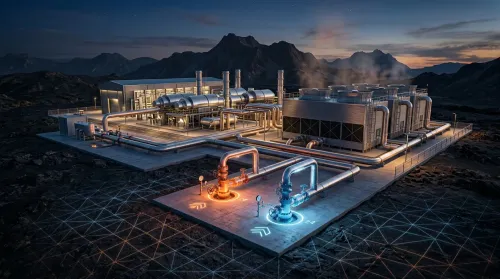
The Balance of Plant (BOP) encompasses all the mechanical and electrical infrastructure required to convert the microreactor’s thermal energy into usable industrial power. This includes heat exchangers, steam or supercritical CO2 turbines, cooling towers, electrical switchgear, and transformers. While the reactor module is standardized, the BOP is often customized to the specific off-taker’s needs—such as prioritizing high-temperature process heat versus maximum electrical output. Procuring and installing BOP equipment constitutes a significant portion of the total CAPEX. Efficient engineering of the BOP ensures optimal thermal efficiency, directly influencing the capacity factor and, ultimately, driving down the overall levelized cost of energy for the microgrid.
3.0 Operational Expenditures (OPEX) and Fuel Cycle Economics
Operational Expenditures (OPEX) for microreactors dictate the long-term cash flow profile of an industrial microgrid. Unlike fossil fuel plants, where fuel costs dominate OPEX and are subject to extreme market volatility, nuclear OPEX is weighted heavily toward fixed costs like specialized maintenance, security, and staffing. The fuel cycle—encompassing procurement, utilization, and eventual disposal—is highly predictable, effectively locking in energy costs for decades. Analyzing these operational parameters is crucial for ESCOs and facility managers aiming to accurately forecast annual budgets. By understanding the nuances of nuclear OPEX, developers can structure robust Power Purchase Agreements (PPAs) that protect off-takers from localized energy market inflation.
3.1 HALEU Fuel Procurement and Supply Chain Realities
Most next-generation microreactors rely on High-Assay Low-Enriched Uranium (HALEU), enriched between 5% and 20% uranium-235. This higher enrichment allows for longer core life and more compact reactor geometries. However, HALEU procurement presents a distinct supply chain reality; currently, commercial enrichment capacity for HALEU is severely limited outside of Russia, prompting intense domestic investment in North American and European fuel cycle infrastructure. The cost of securing HALEU directly impacts the OPEX and the overall LCOE. Establishing robust, domestic supply chains is a critical hurdle for the nuclear renaissance, requiring long-term fuel contracts to guarantee price stability and unhindered operation for industrial end-users. (Source: inl.gov)
3.2 Autonomous Operation and Reduced Staffing Models
Traditional nuclear facilities require hundreds of operators, engineers, and security personnel, making staffing a massive OPEX burden. Microreactors leverage advanced sensors, artificial intelligence, and passive safety systems to enable semi-autonomous or fully autonomous operation. These reduced staffing models drastically cut annual labor costs. Operators can remotely monitor multiple microreactors from a centralized control room, dispatching physical maintenance crews only when necessary. This paradigm shift requires regulatory approval, but the economic impact is undeniable. By replacing continuous manual oversight with digital twins and automated diagnostics, project developers can significantly suppress long-term OPEX, further enhancing the financial competitiveness of microreactors in remote industrial applications.
3.3 Security, Maintenance, and HVAC/Thermal Management Overhead
Even with autonomous operations, physical security, routine maintenance, and thermal management present ongoing OPEX overhead. Security paradigms are evolving; rather than relying solely on large guard forces, microreactors utilize "security-by-design," embedding the reactor in subterranean silos and utilizing advanced intrusion detection systems. Maintenance is typically handled through periodic, specialized vendor contracts rather than in-house staff. Furthermore, HVAC and thermal management systems require continuous power and upkeep to regulate the balance of plant and control rooms. Meticulously calculating these ongoing costs is vital for facility engineers, as underestimating the unique security and thermal management needs of a nuclear asset can severely skew the projected LCOE.
3.4 End-of-Life Decommissioning and Spent Fuel Escrow
A unique financial reality of nuclear energy is the legal requirement to pre-fund end-of-life obligations. Decommissioning a microreactor involves safe removal of the core, site remediation, and long-term spent fuel management. To satisfy regulatory mandates, developers must establish a decommissioning trust fund or escrow account, contributing a portion of annual revenues throughout the reactor’s operational life. While this adds to the overall LCOE, the modular nature of microreactors simplifies decommissioning; often, the entire module is extracted and transported back to a central processing facility, avoiding complex on-site demolition. Accurately modeling these escrow contributions is a non-negotiable component of microreactor project finance.
4.0 The Mathematics of Nuclear Microreactor LCOE
The Levelized Cost of Energy (LCOE) is the mathematical bedrock upon which microreactor project finance is built. It represents the per-unit cost of electricity (typically $/MWh) required for a generation asset to break even over its entire lifecycle. For nuclear microreactors, the math must elegantly balance high initial CAPEX against extremely low and stable OPEX over an extended timeframe. This mathematical synthesis allows investors to compare microreactors directly against natural gas, solar, and wind technologies. By mastering the LCOE calculation, financial analysts and EPCs can identify the exact tipping points where microreactors become the most economically viable choice for industrial energy consumers.
4.1 Formulating the LCOE Equation for Long-Duration Assets
The standard LCOE equation divides the sum of the present value of all lifecycle costs (CAPEX, OPEX, fuel, and decommissioning) by the sum of the present value of all electricity generated over the asset's life. For long-duration assets like microreactors, this formulation is highly sensitive to the temporal distribution of costs. Because the bulk of the expense is incurred at Year 0, while the energy generation spans 20 to 40 years, accurate discounting is critical. Financial models must meticulously capture capitalized interest during construction, periodic fuel reloading costs, and annual escrow contributions to provide a true, unvarnished reflection of the energy's cost over time.
4.2 Impact of Capacity Factor and Design Life (20-40 Years)
Two variables heavily dictate the denominator of the LCOE equation: capacity factor and design life. Microreactors are designed to operate at capacity factors exceeding 95%, meaning they run continuously, minimizing downtime for maintenance. This massive output over a 20- to 40-year design life results in a substantial lifetime energy generation figure, which drives down the per-MWh cost. In contrast, renewables like solar PV may only achieve capacity factors of 20-30%, requiring massive overbuilding to match total energy output. The extended, uninterrupted generation profile of microreactors is their strongest financial asset, allowing high initial capital costs to be amortized efficiently over decades.
4.3 Discount Rates, Inflation, and the Cost of Capital
Because microreactor economics are CAPEX-heavy, they are extraordinarily sensitive to the Weighted Average Cost of Capital (WACC) and discount rates. The discount rate reflects the perceived risk of the project; a higher rate disproportionately penalizes technologies with high upfront costs. Securing low-cost debt and favorable equity terms is therefore vital. Inflation also plays a dual role: while it drives up the nominal cost of future OPEX and decommissioning, it can also increase the nominal revenues if power is sold at market rates. Navigating these macroeconomic factors requires sophisticated financial structuring. Ultimately, driving down the cost of capital is as important as driving down manufacturing costs.
5.0 Navigating Nuclear Microreactor LCOE Project Finance and Delivery Models
Deploying a microreactor requires robust project finance structuring to mitigate risk and attract capital. The sheer novelty of commercial microreactors means traditional corporate finance models often fall short, necessitating innovative delivery models tailored to industrial off-takers. Financiers must untangle complex risk allocations, balancing construction, operational, and regulatory uncertainties. By leveraging modern frameworks—such as Energy-as-a-Service and customized power purchase structures—developers can insulate industrial clients from upfront capital burdens. Successfully navigating this financial landscape is the primary catalyst that will transition nuclear microreactors from pilot projects to ubiquitous energy solutions across heavy industry and remote manufacturing hubs.
5.1 Traditional EPC Contracts vs. Energy-as-a-Service (EaaS)
Historically, large industrial facilities procured power generation assets via traditional EPC contracts, taking direct ownership and bearing the operational risk. For microreactors, the Energy-as-a-Service (EaaS) model is proving far more attractive. Under EaaS, a third-party developer or ESCO owns, operates, and maintains the microreactor, while the industrial facility simply pays a fixed rate for the energy consumed. This shifts the massive CAPEX and specialized nuclear regulatory liabilities off the off-taker’s balance sheet. By adopting EaaS, facility engineers can secure reliable, zero-carbon power without needing to become nuclear operators, thereby drastically accelerating the commercial adoption curve for advanced nuclear technology.
5.2 The Role of ESCOs in Packaging Thermal and Electrical Offtake
Energy Service Companies (ESCOs) play a pivotal role in maximizing the financial return of microreactors by packaging both electrical and thermal offtake. Microreactors naturally produce immense amounts of high-quality process heat. Rather than venting this heat, ESCOs engineer cogeneration systems to capture it for industrial processes, district heating, or absorption chilling. By monetizing both the megawatt-hours of electricity and the MMBtus of thermal energy, ESCOs drastically improve the overall system efficiency and project economics. To explore project finance models and cogeneration potential further, professionals can sign up or log in to access specialized energy integration platforms and customized engineering tools.
5.3 Risk Allocation, Insurance, and Power Purchase Agreements (PPAs)
Bankability rests on meticulous risk allocation, formalized through Power Purchase Agreements (PPAs) and comprehensive insurance wraps. In a microreactor PPA, the industrial off-taker agrees to purchase power at a stipulated rate, providing the revenue certainty required by lenders. However, developers must allocate construction delays, fuel supply bottlenecks, and performance shortfalls to the parties best equipped to handle them. Nuclear-specific liability insurance—often backstopped by government frameworks like the Price-Anderson Act in the U.S.—is also mandatory to cover catastrophic risks. Structuring these contracts ensures that if the reactor underperforms, the financial fallout is managed smoothly without derailing the industrial facility's operational budget.
5.4 Tax Credits, Government Grants, and Incentive Structures
Government incentives are crucial for bridging the financial gap for early commercial microreactor deployments. In many jurisdictions, carbon-free nuclear energy qualifies for substantial production tax credits (PTCs) or investment tax credits (ITCs). Additionally, sovereign grants aimed at advanced reactor demonstration or rural energy resilience can directly offset early-stage engineering and licensing CAPEX. These financial levers significantly depress the LCOE, allowing microreactors to compete with heavily subsidized renewables and cheap natural gas. Project developers must rigorously monitor legislative landscapes to capture these incentives, as integrating tax equity into the capital stack is often the deciding factor in pushing a project to a final investment decision.
6.0 Engineering Integration: Connecting Microreactors to Industrial Microgrids
The physical integration of a microreactor into an industrial microgrid represents a complex convergence of nuclear physics, electrical engineering, and mechanical systems. It is not enough to simply place a reactor on-site; the energy must be conditioned, synchronized, and distributed flawlessly to meet intense industrial demand profiles. Facility engineers are tasked with upgrading legacy grid infrastructure to handle massive, localized baseload generation. This encompasses advanced switchgear, thermal management routing, and resilient islanding controls. Flawless engineering integration is critical, as any mismatch between the reactor’s output and the microgrid’s load dynamics can degrade system efficiency and jeopardize the economic assumptions underpinning the project.
6.1 Electrical Synchronization and Switchgear Upgrades
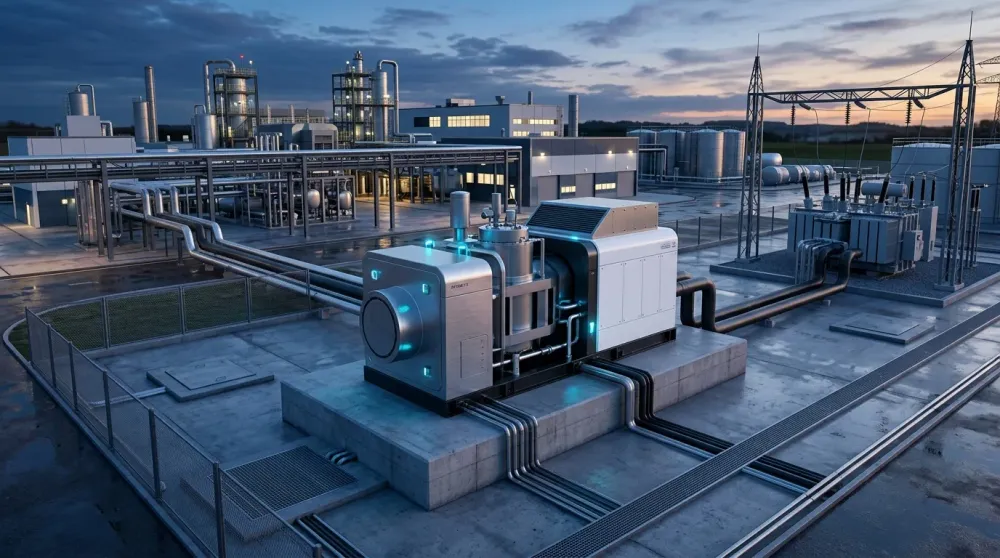
Connecting a 20 MWe microreactor to an existing industrial facility requires rigorous electrical synchronization. The generated power must precisely match the phase, frequency, and voltage of the facility's internal microgrid or the broader macro-grid. This often necessitates substantial upgrades to legacy electrical switchgear, transformers, and protection relays. Modern smart inverters and sophisticated control systems are deployed to manage load steps, ensuring the microreactor can smoothly track the facility's demand fluctuations without tripping offline. For electrical engineers, scoping these switchgear upgrades early in the project lifecycle is vital, as under-engineered interconnection hardware can lead to costly operational bottlenecks and equipment damage.
6.2 Cogeneration (CHP) Opportunities for HVAC and Mechanical Engineers
Microreactors are exceptionally well-suited for Combined Heat and Power (CHP) applications, presenting a massive opportunity for mechanical and HVAC engineers. Because reactors generate electricity by producing heat, tapping into the secondary cooling loop allows facilities to utilize high-grade steam for chemical processing, paper milling, or large-scale space heating. This cogeneration drastically elevates the overall thermal efficiency of the plant from around 35% (electrical only) to upwards of 80%. By displacing natural gas boilers previously used for process heat, industrial facilities multiply their carbon reduction efforts. Engineering this thermal integration requires meticulous piping, heat exchanger design, and thermodynamic modeling to ensure reactor stability.
6.3 Thermal Energy Storage and Process Heat Utilization
To further optimize CHP integration, developers are increasingly coupling microreactors with Thermal Energy Storage (TES) systems. Industrial load profiles can be highly variable, but nuclear reactors operate most efficiently at a constant steady-state. TES systems, such as molten salt tanks or sensible heat storage in solid media, act as a buffer. During periods of low electrical demand, excess thermal energy is diverted to the storage system. When demand spikes, the stored heat can be dispatched for process use or run through secondary turbines to generate peak electricity. This decoupling of generation from consumption maximizes resource utilization, enhancing the microgrid’s flexibility and economic returns.
6.4 Grid-Islanding Capabilities and Resiliency Valuation
For critical industrial operations, power outages result in catastrophic financial losses and supply chain disruptions. Microreactors inherently provide superior grid-islanding capabilities. In the event of a macro-grid failure, the microreactor and its associated microgrid controller can seamlessly decouple from the utility, providing autonomous, uninterrupted baseload power to the facility. Valuing this resiliency is a critical component of the technoeconomic analysis. While the raw LCOE of a microreactor might appear higher than grid power in some markets, factoring in the "Value of Lost Load" (VOLL) avoided during blackouts often tilts the economic scales heavily in favor of the localized, hyper-resilient nuclear asset.
7.0 Regulatory Compliance and Permitting Costs
Navigating the regulatory landscape is traditionally the most daunting and opaque aspect of nuclear project development. For microreactors, regulatory compliance spans federal safety licensing, local environmental impact assessments, and municipal zoning approvals. These permitting processes carry significant upfront costs and schedule risks, directly impacting capitalization timelines. However, modern regulatory frameworks are slowly adapting to the reduced risk profile of modular, factory-built reactors. Understanding and proactively managing these compliance hurdles is essential for developers, as delays in permitting translate directly into increased capitalized interest and delayed revenue, which can severely compromise the overarching financial viability of the industrial microgrid project.
7.1 NRC Licensing Pathways and Cost Implications
In the United States, obtaining a license from the Nuclear Regulatory Commission (NRC) is a rigorous, multi-year process. Traditionally designed for gigawatt-scale light-water reactors, the standard Part 50/52 licensing pathways are incredibly cost-prohibitive for small microreactors. Consequently, the industry is transitioning toward more flexible, risk-informed, and performance-based frameworks, such as Part 53. EPCs and developers must budget millions of dollars strictly for regulatory engineering, safety analysis reports, and NRC review fees. Selecting the correct licensing pathway and pre-engaging with regulators is vital to cap these soft costs. An unpredictable licensing timeline remains the primary variable threatening the LCOE of early-adopter microreactor projects.
7.2 Environmental Impact Assessments and Local Zoning
Beyond federal nuclear safety regulations, microreactor projects must satisfy rigorous environmental and local municipal standards. This involves comprehensive Environmental Impact Assessments (EIAs) under statutes like the National Environmental Policy Act (NEPA). Assessors evaluate potential impacts on local hydrology, wildlife, and community resources. Additionally, local zoning boards must approve the site, which can be contentious given public perception of nuclear energy. Developers must invest heavily in community engagement and transparent environmental planning. Because microreactors have a minuscule physical footprint and utilize closed-loop cooling, they generally present a negligible environmental impact, yet the administrative cost of proving this compliance must still be factored into the CAPEX.
7.3 Streamlining Approvals for Factory-Built Designs
To unlock the true economic potential of microreactors, the regulatory paradigm is shifting toward design certification for factory-built models. Instead of licensing each individual site from scratch, regulators evaluate and certify the reactor design once at the manufacturer's level. Subsequent deployments then only require a localized site permit, drastically streamlining the approval process. The International Atomic Energy Agency (IAEA) is also working to harmonize these standards globally, enabling standardized reactors to cross borders with minimal regulatory friction. This streamlined approach minimizes redundant engineering and legal fees, ensuring that regulatory costs do not cripple the LCOE for serialized industrial deployments. (Source: iaea.org)
8.0 Technoeconomic Comparison: Microreactors vs. Conventional Distributed Generation
To justify the integration of a microreactor, facility planners must conduct a rigorous technoeconomic comparison against conventional distributed generation technologies. This competitive landscape typically features diesel generators, natural gas turbines, and renewable energy paired with battery storage. Each technology possesses distinct advantages regarding CAPEX, OPEX, emission profiles, and reliability. The analysis must look beyond simple LCOE, factoring in energy density, physical footprint, and supply chain vulnerabilities. By pitting microreactors against incumbent technologies in varied operational scenarios, engineers and financial analysts can isolate the specific industrial use-cases where advanced nuclear transitions from an alternative option to the definitively superior economic choice.
8.1 Microreactors vs. Diesel and Natural Gas Gensets
Diesel and natural gas generators are the historical stalwarts of industrial microgrids, boasting exceptionally low CAPEX and ubiquitous supply chains. However, their OPEX is highly volatile, tethered to global commodity fuel prices and complex logistical supply lines. In remote mining or off-grid manufacturing, transporting diesel can double or triple the effective cost of electricity. Furthermore, these fossil assets face increasing regulatory scrutiny and phase-outs. Microreactors, conversely, have high CAPEX but negligible fuel logistics, operating for up to a decade on a single core. Over a 20-year horizon, especially in remote regions, the stabilized OPEX of microreactors heavily outcompetes the volatile lifecycle costs of fossil gensets.
8.2 Microreactors vs. Solar PV Plus Battery Energy Storage Systems (BESS)
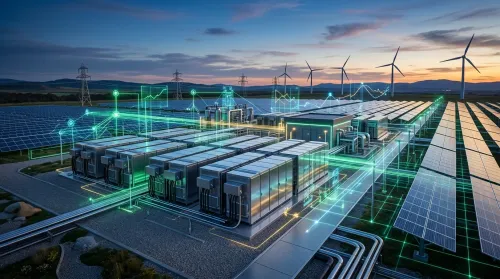
Solar PV combined with Battery Energy Storage Systems (BESS) is rapidly dominating the low-carbon microgrid sector. Solar boasts the lowest LCOE for raw generation, but it is inherently intermittent. To provide the 24/7 baseload power heavy industry demands, a solar microgrid requires massive over-sizing and prohibitive battery storage capacities. A typical industrial facility might require hundreds of acres of solar panels and massive lithium-ion banks to survive multi-day weather events, resulting in immense land acquisition costs and battery degradation OPEX. Microreactors offer absolute dispatchability on less than an acre of land, providing a much higher energy density and superior lifecycle economics for continuous industrial loads.
8.3 Carbon Pricing and its Impact on Fossil Fuel Parity
The technoeconomic calculus is being fundamentally rewritten by the global proliferation of carbon pricing, emissions trading systems, and carbon taxes. When the cost of emitting CO2 is internalized into the OPEX of natural gas and diesel generators, their LCOE escalates dramatically. For heavy industry, future-proofing against punitive carbon taxes is a fiscal imperative. Microreactors emit zero greenhouse gases during operation, entirely sidestepping carbon compliance costs. As carbon pricing mechanisms tighten, the economic parity point shifts; what once required government subsidy for nuclear now becomes the most rational, market-driven financial decision for industries seeking to shelter their balance sheets from emission penalties.
9.0 Practical Application Case Study: Powering a Remote Mining and Mineral Processing Facility
To synthesize the technoeconomic principles of microreactors, examining a practical case study is essential. Consider a remote mining and mineral processing facility located far from robust grid infrastructure. Such operations are characterized by intense energy demands, operating heavy crushing machinery, chemical refining processes, and massive HVAC systems around the clock. Historically reliant on a constant convoy of diesel trucks to fuel its generators, the mine faces exorbitant OPEX and significant supply chain fragility. Integrating a 15 MWe microreactor presents a transformative solution. By modeling this real-world scenario, we can tangibly observe how CAPEX, OPEX, and specialized financing converge to deliver superior long-term industrial profitability.
9.1 Facility Energy Profile and Baseload Requirements
The energy profile of a remote mineral processing facility is notoriously demanding. It requires a constant, unwavering baseload to power conveyors, ball mills, and electrolysis circuits. Any power interruption results in jammed equipment, spoiled batches, and millions in lost revenue. The facility analyzed requires a steady 12 MWe of electrical load and a continuous demand for medium-grade process heat for mineral drying. A 15 MWe microreactor configured for cogeneration is ideally matched to this profile. Unlike solar installations that would struggle with winter irradiance drops, or diesel generators requiring constant refueling, the microreactor provides the absolute power density and reliability required to sustain unbroken operations.
9.2 CAPEX/OPEX Breakdown and Financial Modeling
Financing this remote integration involves dissecting the CAPEX and OPEX. The upfront CAPEX includes the factory-built reactor, heavy-haul transport across rugged terrain, and the specialized civil works for a subterranean installation. While this initial outlay is substantial, the financial modeling reveals its strengths in OPEX. The mine eliminates the need to transport thousands of gallons of diesel daily, crashing their localized fuel costs. The microreactor's autonomous features minimize on-site staffing requirements. Through an Energy-as-a-Service model, an ESCO shoulders the upfront CAPEX, charging the mining company a flat rate for electricity and heat, thereby optimizing the mine's operational cash flows.
9.3 LCOE Results and Return on Investment (ROI) Analysis
The culmination of the financial model reveals a compelling LCOE advantage. When factoring in the elimination of diesel transport, avoided carbon taxes, and the monetization of cogeneration heat, the microreactor yields an LCOE of approximately $85/MWh over a 20-year span. In contrast, the legacy diesel microgrid operates at an effective LCOE of $160/MWh due to inflated logistical costs and projected carbon penalties. The Return on Investment (ROI) for the ESCO is secured through a 20-year PPA, while the mine experiences an immediate reduction in operational overhead. This case study conclusively demonstrates that for high-demand, remote applications, microreactors offer unparalleled economic viability.
10.0 Conclusion: Strategic Imperatives for Project Developers and Engineering Firms
The integration of nuclear microreactors into industrial microgrids represents the next great frontier in energy infrastructure. As demonstrated through rigorous technoeconomic analysis, the technology is moving rapidly from theoretical physics to actionable project finance. For EPCs, ESCOs, and project developers, this transition demands a strategic pivot. Firms must cultivate specialized nuclear regulatory expertise, adapt financial modeling to accommodate long-duration EaaS structures, and innovate within thermal and electrical integration engineering. The early adopters who master the complexities of microreactor LCOE and project delivery will position themselves at the vanguard of a multi-billion-dollar market, providing the definitive solution for industrial decarbonization.
10.1 Summary of Technoeconomic Viability
The technoeconomic viability of microreactors hinges on their ability to trade high initial capital costs for unparalleled operational stability and longevity. Factory fabrication and modularity are driving down CAPEX, while autonomous operations and zero-carbon fuel cycles ensure historically low OPEX. When mathematically synthesized into an LCOE metric, microreactors are highly competitive against carbon-taxed fossil fuels and land-intensive renewable-plus-storage systems. Their ability to simultaneously provide firm electrical baseload and high-grade industrial process heat maximizes their economic utility, solidifying their status as a financially sound, future-proof asset class for heavy industry.
10.2 Next Steps for EPCs, ESCOs, and Facility Planners
To capitalize on the microreactor renaissance, industry stakeholders must take immediate, actionable steps. EPCs should invest in modular construction training and partner with advanced reactor vendors to develop standardized deployment templates. ESCOs must refine their Energy-as-a-Service financial models, designing long-term PPAs that appeal to industrial boards of directors. Facility planners need to conduct thorough site feasibility studies, analyzing their baseload profiles and cogeneration potential to prepare for future microreactor integration. Collaborative engagement with regulatory bodies like the NRC will also be critical to smooth the permitting pathway, ensuring that ambitious project timelines translate into successful commercial deployments.
10.3 The Future of Industrial Energy Independence
Ultimately, nuclear microreactors offer heavy industry something profoundly valuable: true energy independence. By severing ties to volatile fossil fuel markets, vulnerable macro-grid infrastructure, and the whims of weather-dependent renewables, industrial facilities can achieve total sovereignty over their operational lifeblood. As economies of scale accelerate manufacturing, the LCOE of microreactors will continue its downward trajectory. We are standing on the precipice of an era where steel mills, data centers, and remote mines power themselves securely, cleanly, and economically for decades at a time. The commercial microreactor is not just a triumph of nuclear engineering; it is the definitive catalyst for sustainable industrial growth.