Nuclear's Resurgence: From Criticality to Capital
ADVANCED FISSION
Antares Mark-0 Achieves First Criticality Under DOE Pilot Program
MILESTONE
Urenco to Expand U.S. Uranium Enrichment Capacity by ~50%
+$2 BILLION
FUSION CAPITAL
Helion Secures New Funding to Advance Fusion Power Plant Development
$465 MILLION
CFS, Xcimer & Pacific Fusion Report Technical & Funding Progress
VALIDATION
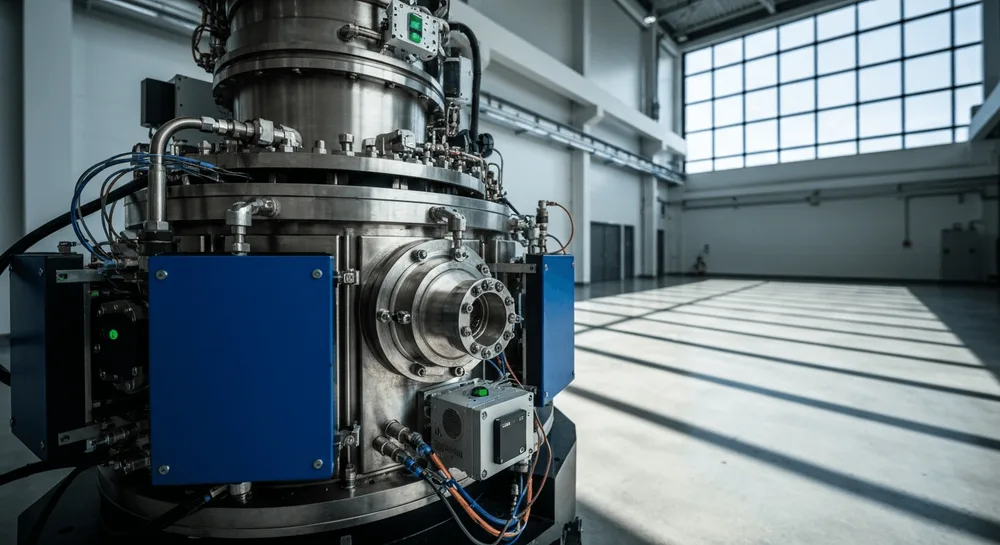
While data center load growth continues to dominate headlines, a significant undercurrent of progress in nuclear technology marked the week's most important long-term development. A series of milestones in advanced fission and a surge of capital into fusion ventures signal a renewed, serious push for firm, zero-carbon power. The most concrete achievement came from Antares Nuclear, whose Mark-0 microreactor reached zero-power criticality at Idaho National Laboratory. This is the first advanced reactor to hit this milestone under the Department of Energy’s Reactor Pilot Program, representing a crucial step in validating a new generation of smaller, potentially more flexible nuclear assets for both grid and industrial applications.
The announcement from Urenco USA addresses a critical vulnerability in the nuclear value chain: fuel supply. The company, which operates America's only commercial uranium enrichment facility, will privately fund a multi-billion dollar expansion to increase its low-enriched uranium (LEU) capacity by nearly 50%. This move is a direct market response to the widening supply gap and geopolitical risks, aiming to bolster domestic energy security for the existing reactor fleet and future advanced reactors. The U.S. Department of Energy has identified a secure fuel pipeline as essential for the successful deployment of next-generation nuclear technology.
Simultaneously, the fusion energy sector demonstrated significant commercial momentum. Helion announced a $465 million funding round, increasing its valuation to over $15 billion. This large capital injection follows technical progress reports from several other players, including Commonwealth Fusion Systems (CFS), which published five papers validating the physics of its ARC power plant, and Xcimer Energy, which began operations of its prototype laser system. While commercial fusion remains a long-term prospect, the scale of private investment highlights growing confidence that the immense technical challenges are solvable. The International Atomic Energy Agency tracks dozens of such public and private efforts globally.
These parallel developments in advanced fission and fusion are reshaping the long-term outlook for 24/7 clean energy. The tangible progress in microreactor technology, backed by substantial private investment in the domestic fuel cycle, provides a medium-term pathway to decarbonize hard-to-abate sectors. The continued flow of capital into fusion, once the domain of government labs, shows that serious investors are underwriting the high-risk, high-reward quest for the ultimate clean energy source.
This Week's Top 5 Energy News Items
- Antares Mark-0 Becomes First Advanced Nuclear Reactor to Achieve Criticality Under DOE Pilot Program
- America’s Only Commercial Uranium Enricher Is Privately Building a New Plant Amid a Widening Nuclear Fuel Supply Gap
- Helion Announces $465-Million Funding Round to Support Fusion Energy
- FERC waiver cuts years off Three Mile Island nuclear plant restart timeline
- Google Launches 1-GW-Plus Co-Located Data Center and Generation Complex in Texas Panhandle
For deeper technoeconomic analysis on this trend, try CogenS free.