Advanced Nuclear Commercialization Pipeline
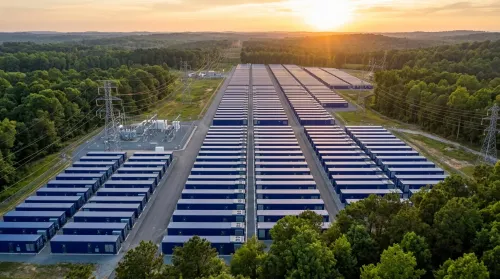
U.S. Army Microreactor Awards
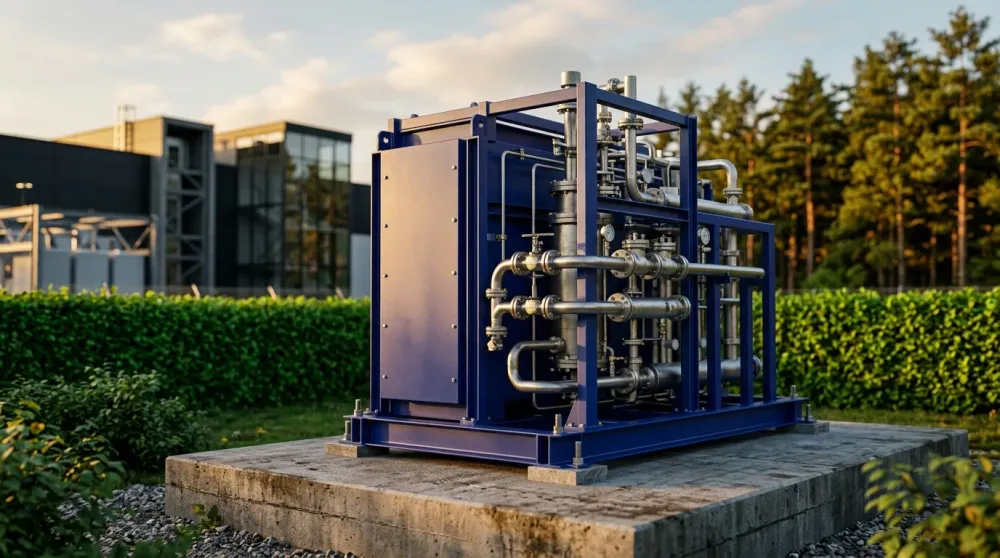
Studsvik SMR Build (Sweden)
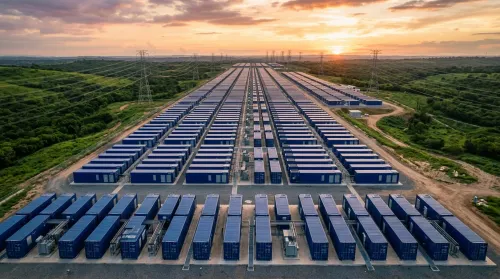
Data Center Target Pipeline
The advanced nuclear sector crossed a critical threshold this week, transitioning from pilot demonstrations to firm commercial procurement. The U.S. Army awarded $2.2 billion in contracts to five companies to deploy microreactors across multiple domestic bases, prioritizing localized resilience and continuous generation capabilities. These units represent a fundamental shift in defense power architecture, moving away from diesel dependency toward high-density, carbon-free generation.
Simultaneously, the commercial small modular reactor (SMR) market is solidifying its engineering and construction frameworks. Studsvik selected GE Vernova Hitachi and Samsung C&T to build a 1,200 MW BWRX-300 project in Sweden. Engaging Tier-1 EPC firms at this early stage indicates that developers are prioritizing constructability and supply chain de-risking over conceptual design tweaks. Utilities and hyperscalers are driving this urgency. Data center developers are actively exploring SMRs to bypass lengthy transmission interconnection queues, with new collaborations targeting up to 6 GW of nuclear capacity explicitly for artificial intelligence industrial zones.
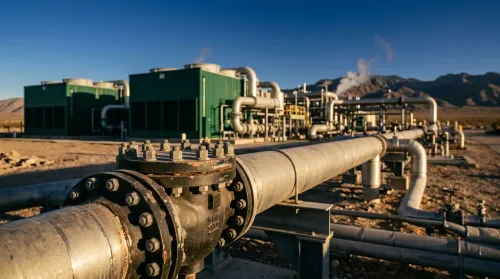
These deployments highlight the evolving definition of firm capacity in grid planning. As intermittent renewables dominate new capacity additions, the grid requires dispatchable, high-capacity-factor assets to maintain frequency stability and meet continuous load profiles. Next-generation geothermal is capitalizing on this exact requirement, evidenced by Fervo Energy executing a landmark 396 MW power purchase agreement with Google. Both advanced nuclear and enhanced geothermal systems are proving that off-takers are willing to pay a premium for clean, continuous power.
Financial modeling for these capital-intensive projects relies heavily on accurate levelized cost of energy (LCOE) projections. Developers must carefully balance the high initial overnight capital costs of SMRs against their extended 60-year operational lifespans and low marginal fuel expenses. The U.S. Energy Information Administration continues to monitor these shifting capital cost dynamics in its long-term capacity expansion models. Furthermore, site-specific safety analyses and regulatory licensing remain the primary schedule drivers, requiring early integration with bodies like the Nuclear Regulatory Commission to avoid costly rework. As modular reactor designs standardize, the industry anticipates a steep cost-reduction curve driven by factory fabrication rather than traditional stick-built construction.
This Week's Top 5 Energy News Items
- Inside the U.S. Army’s $2.2B plan to build microreactors at five bases
- Studsvik Selects GE Vernova Hitachi, Samsung C&T for 1.2-GW Swedish BWRX-300 Project
- Fervo Energy and Google ink largest-ever geothermal PPA to power data centers
- Utilities eye small modular nuclear reactors for reliability as hyperscalers drive demand
- New collaboration targets up to 6 GW of new nuclear for data centers
For deeper technoeconomic analysis on this trend, try CogenS free.