Data Center Interconnection Pivot: 2026
Grid interconnection delays are forcing hyperscale data center developers to rewrite their power procurement strategies. Facilities are abandoning standard utility queue timelines in favor of gigawatt-scale behind-the-meter (BTM) generation and microgrids. This week's capital deployments illustrate a definitive pivot toward onsite natural gas and fuel cells to meet near-term energization targets.
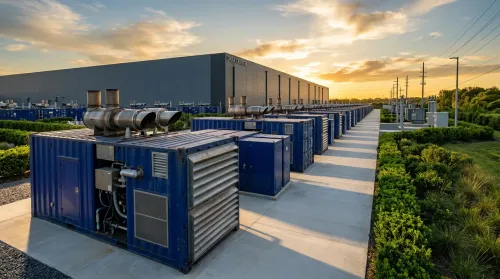
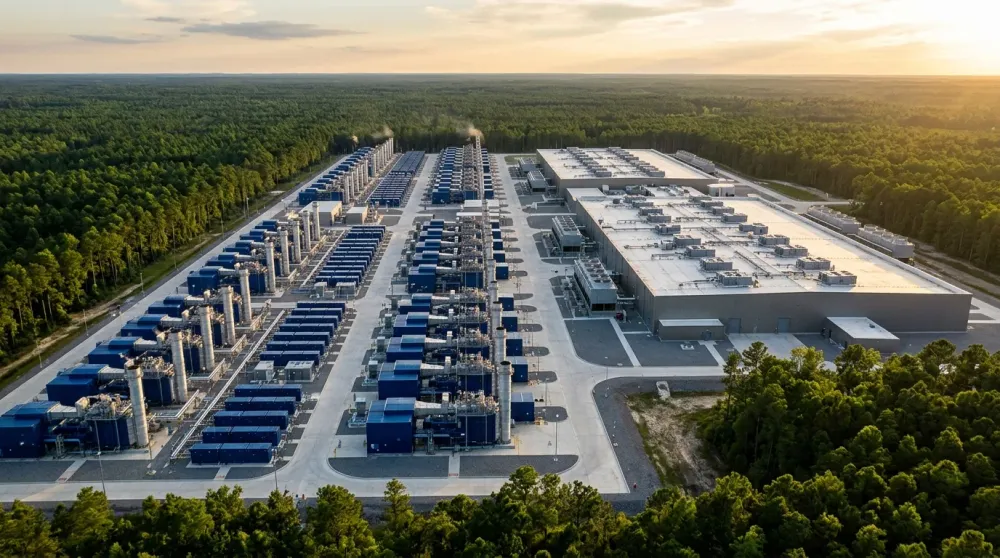
The physical scale of these private generation assets rivals traditional utility central plants. Black Hills Corporation will manage a 2.1 GW microgrid for a planned Google data center in Cheyenne, Wyoming, supported by a $1.8 billion investment in 564 MW of new natural gas capacity. Simultaneously, Brookfield and Bloom Energy expanded their financing partnership from $5 billion to $25 billion to fund AI infrastructure projects and onsite fuel cell deployment. These prime power installations are engineered to operate continuously, carrying the facility base load while bypassing transmission bottlenecks.
Equipment manufacturers are capturing the resulting surge in BTM procurement. Baker Hughes finalized a multi-year agreement with Kodiak Gas Services to supply gas turbines targeting 1 GW of BTM capacity by 2030, with a framework for up to 1.8 GW. In West Texas, a new co-located gas plant featuring GE Vernova and Solar Turbines equipment will directly power a Microsoft data center. By moving generation behind the meter, developers trade the localized CAPEX burden for expedited energization and long-term control over their levelized cost of energy (LCOE).
This rapid buildout of onsite fossil generation introduces complex regulatory variables. Operating multi-megawatt prime power and backup generators triggers intense air permitting scrutiny under the Clean Air Act. Facilities circumventing the grid must now internalize the environmental compliance costs and timeline risks that centralized utilities typically absorb. According to the Environmental Protection Agency, major source air permitting frequently requires extensive atmospheric dispersion modeling and best available control technology (BACT) reviews.
While new gas and fuel cells dominate the physical capacity additions, operators are simultaneously leveraging virtual power plants (VPPs) and energy storage to manage load profiles. Google expanded its existing agreement with Voltus to aggregate 1 GW of VPP capacity within the PJM Interconnection. Grid operators across the country are facing intense pressure; PJM, ERCOT, and SWPP all set peak hourly load records this summer, as detailed in recent data from the Energy Information Administration.
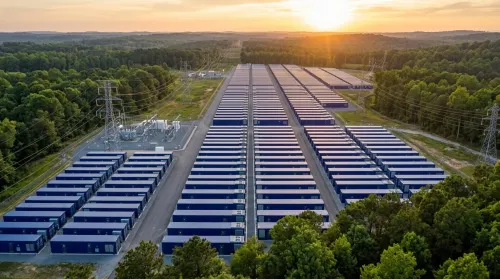
Battery energy storage systems (BESS) are also maturing rapidly to support these localized grids. A new white paper from the Electric Power Research Institute notes that the annual failure rate for lithium-ion BESS plummeted 98 percent between 2018 and 2025, even as global deployment skyrocketed. The capital markets have delivered a clear verdict: data center operators will finance and build onsite infrastructure at utility scale rather than wait for public transmission upgrades.
This Week's Top 5 Energy News Items
- Brookfield, Bloom Energy expand partnership to $25 billion framework for onsite data center power
- Black Hills to build 564 MW of new gas, manage 2.1 GW microgrid for Google data center in Wyoming
- Baker Hughes gas turbines to support up to 1.8 GW of behind-the-meter data center power
- Battery storage failure rates plunge 98% as global deployment soars
- Google and Voltus expand PJM virtual power plant agreement to 1GW
For deeper technoeconomic analysis on this trend, try CogenS free.