
Advanced Data Center Microgrid Technoeconomic Analysis and Design
Introduction: The Gigawatt Era and the Need for Energy Autonomy
The data center industry has definitively entered the gigawatt era. Infrastructure requirements for hyperscale facilities and artificial intelligence (AI) training clusters now rival the electrical demand of medium-sized cities. The global data center fleet consumed an estimated 460 TWh in 2022 (Source: iea.org). Traditional utility interconnections frequently face transmission bottlenecks and interconnection queue delays that can stretch into the 2030s. Consequently, developers are turning to extensive, behind-the-meter self-generation strategies. Proper data center microgrid design requires engineering power plants that operate autonomously, ensuring 99.999% uptime. This scale of generation demands utility-grade infrastructure, shifting the focus from standard backup diesel generators to continuous-duty prime movers. Navigating this transition requires moving beyond basic electrical models to fully optimize the capital and operational economics through a comprehensive data center microgrid technoeconomic analysis.
Defining Data Center Microgrid Technoeconomic Analysis
Technoeconomic analysis bridges the gap between thermodynamic simulation and financial performance. A robust data center microgrid technoeconomic analysis evaluates the technical feasibility of physical assets—such as power output, thermal efficiency, and transient response—against strict financial metrics, including Net Present Value (NPV) and Internal Rate of Return (IRR). Engineers execute these models to determine the exact equipment sizing necessary to meet the facility's instantaneous electrical and cooling loads without overcapitalizing the design. Each megawatt of installed capacity typically carries significant infrastructure costs, often ranging between $6 million and $12 million per megawatt for new capacity (Source: datacenterfrontier.com). By quantifying the lifecycle cost implications of various generation and storage configurations, developers can confidently select architectures that mitigate exposure to fluctuating utility energy charges and grid unreliability.
Technical Section 1: Architectural Topologies for Gigawatt-Scale Generation
Designing a 1 GW power system means evaluating generation architectures that function as standalone utility nodes. Architectural topologies for gigawatt-scale microgrids dictate whether the site operates in a grid-parallel configuration—relying on the utility for baseload and managing peaks locally—or fully islanded, where self-generation handles the entire load profile. Substation topology often transitions from a traditional double-ended radial feed to complex ring bus or breaker-and-a-half configurations, ensuring that a single fault does not cascade through the hyperscale campus. The analysis must model step-load impacts on the microgrid bus to guarantee transient voltage stability during server spin-ups. Selecting the right topology governs the short-circuit rating requirements for switchgear and establishes the foundational layout for all primary generation assets.
Primary Prime Movers: Advanced Gas Turbines, Fuel Cells, and Small Modular Reactors (SMRs)
Selecting the primary prime mover dictates the emissions profile, CAPEX, and footprint of the facility. Advanced combined-cycle gas turbines (CCGTs) are frequently selected for gigawatt-scale sites because they offer high energy density and proven reliability. Solid oxide fuel cells present a highly efficient, lower-emission alternative for continuous operation, though they require more physical space per megawatt. Small modular reactors (SMRs) represent a premier solution for carbon-free, 24/7 baseload power. The nuclear option is gaining immediate market traction; in 2024, Amazon Web Services (AWS) secured an agreement for a targeted 960 MW of capacity from Talen Energy’s Susquehanna nuclear power plant. These baseload assets must be modeled precisely for their net output rather than standard nameplate capacity, accounting for the parasitic loads required to run their auxiliary systems.
Utility-Scale BESS and Renewable Energy Interconnection
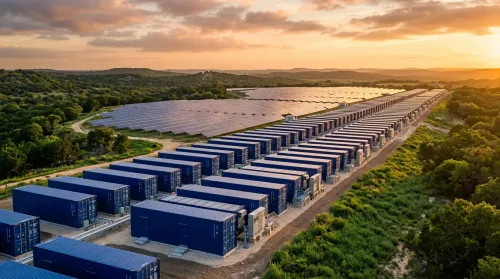
Integrating intermittent renewables into a data center microgrid requires utility-scale Battery Energy Storage Systems (BESS) to firm the power delivery. Since data center electricity demand does not fluctuate during the day in the same way as residential demand (Source: eia.gov), solar arrays and wind farms cannot serve hyperscale loads directly without extensive buffering. Grid-forming inverters paired with lithium-ion or long-duration storage technologies manage transient stability and provide the necessary frequency response when renewable generation drops. Technoeconomic modeling must size the BESS energy capacity (MWh) appropriately to bridge the gap between renewable shortfalls and the start-up times of dispatchable gas turbines, avoiding a catastrophic facility shutdown during sudden cloud cover or wind loss.
Technical Section 2: Rigorous CAPEX and OPEX Modeling Frameworks

A technoeconomic analysis is only as valid as its financial inputs. Rigorous CAPEX and OPEX modeling frameworks separate one-time capital expenditures from recurring operational costs to generate a true lifecycle assessment. Upfront CAPEX includes prime movers, switchgear, step-up transformers, and the physical real estate required for a 1 GW footprint, which typically spans 500 to over 2000 acres. OPEX models capture ongoing fuel consumption, routine maintenance labor, major equipment overhauls, and software licensing. Misclassifying an OPEX item as CAPEX artificially inflates the Year-0 debt requirement, while underestimating OPEX artificially improves the projected Internal Rate of Return (IRR). Accurate modeling demands exact vendor quotes and regional labor rate adjustments.
Estimating Equipment, EPC Labor, and Substation Capital Costs
Capital costs at the gigawatt scale are dominated by the balance of plant and specialized labor. Estimating equipment, Engineering, Procurement, and Construction (EPC) labor, and substation capital costs requires highly granular modeling. Gas turbines and BESS enclosures constitute the core generation CAPEX, but EPC and balance of plant costs routinely account for 30% to 40% of the total installed cost due to the complexity of piping, cabling, and site preparation. Gigawatt sites also require constructing massive 345 kV to 765 kV transmission substations if they intertie with the bulk power grid. Technoeconomic analysts must model these infrastructure costs explicitly, recognizing that supply chain constraints for high-voltage transformers and specialized grid-forming inverters can escalate CAPEX well beyond initial baseline estimates.
Fuel Supply Volatility and Predictive Maintenance OPEX Forecasting
For gas-fired and hybrid microgrids, long-term financial viability hinges on operational expenditures. Fuel supply volatility heavily dictates the OPEX of combustion assets, requiring models to ingest historical natural gas pricing curves and project future commodity costs using forward markets. Beyond fuel, predictive maintenance forecasting replaces outdated, flat-rate O&M assumptions. By monitoring turbine operating hours and thermal cycling, operators schedule overhauls based on actual equipment degradation rather than fixed calendar dates. Technoeconomic models must capture these dynamic OPEX profiles, demonstrating how running a gas turbine constantly at partial load may incur a higher maintenance penalty than running fewer turbines at their peak Lower Heating Value (LHV) efficiency.
Levelized Cost of Energy (LCOE) vs. Levelized Cost of Reliability (LCOR)
Traditional utility projects rely on the Levelized Cost of Energy (LCOE) to measure the lifetime cost per MWh generated. However, mission-critical hyperscale facilities require evaluating the Levelized Cost of Reliability (LCOR). While a pure LCOE calculation might favor a highly intermittent solar and wind layout, data centers crash if power drops for even a few cycles. LCOR quantifies the capital premium required to build redundant generation layers, double-conversion UPS systems, and N+1 prime movers to maintain absolute continuous operation during extended grid outages. A microgrid with a higher LCOE but a flawless LCOR is usually the correct engineering choice for a data center, as the financial damage of a single dropped AI compute workload eclipses minor fuel savings.
Technical Section 3: Dynamic Load Characterization and Dispatch Optimization
Microgrid technoeconomic models traditionally assumed data centers exhibited flat, predictable 24/7 loads. The integration of massive GPU clusters has fundamentally shifted this assumption. Dynamic load characterization now requires tracking sub-hourly power fluctuations as workloads spin up. Dispatch optimization algorithms ingest these transient profiles to determine exactly when a battery should discharge versus when an additional gas turbine should synchronize to the bus. An effective dispatch optimization strategy evaluates fuel costs, battery degradation penalties, and equipment start-up times to continuously select the most cost-effective generation mix. Proper dispatch modeling ensures that transient spikes are managed by fast-responding inverter-based resources rather than forcing mechanical turbines to ramp inefficiently.
Modeling AI Compute Spikes and Hyperscale Power Profiles
AI model training and inference workloads shift rack densities drastically, directly altering facility power profiles. While standard enterprise racks typically draw 7 kW to 10 kW, dedicated AI clusters often demand 30 kW to over 100 kW per rack. Technoeconomic models must capture these intense power profiles, as AI compute induces dynamic spikes that traditional flat baseload modeling misses. When tens of thousands of GPUs process a synchronized training epoch, the immediate step-load on the microgrid requires rapid primary frequency response to prevent voltage sag. Accurately modeling these compute spikes dictates the necessary ramp rate for prime movers and the requisite BESS sizing.
Mixed-Integer Linear Programming (MILP) for Optimal Asset Dispatch
Determining exactly which generator or battery to utilize in a multi-asset gigawatt microgrid requires advanced mathematical solvers. Mixed-Integer Linear Programming (MILP) is deployed within technoeconomic software to establish the optimal asset dispatch schedule across 8,760 hours of the year. The "integer" variables dictate binary on/off decisions for gas turbines, while continuous linear variables set the exact kW output levels. MILP algorithms solve an objective function—typically minimizing total operating costs—while adhering to strict physical constraints, such as minimum runtime requirements, equipment minimum turn-down ratios, and BESS state-of-charge limits. Without MILP, dispatch models rely on simple heuristic rules, frequently resulting in underutilized generation assets, excessive fuel burn, and heavily skewed financial projections.
Technical Section 4: Thermal-Electrical Co-Simulation for HVAC and Facility Engineers
Electrical loads cannot be analyzed in a vacuum, particularly when cooling systems consume a massive proportion of a data center's total energy footprint. Thermal-electrical co-simulation integrates the facility's HVAC dynamics directly into the microgrid modeling environment. As ambient temperatures rise, centrifugal chillers and cooling towers draw significantly more power, elevating the overall facility demand just when gas turbine efficiency and capacity naturally degrade due to hot intake air. Co-simulation aligns the hourly thermal loads with electrical generation performance, ensuring the microgrid remains capable of serving the peak compute load and the peak cooling load simultaneously without breaching capacity constraints or degrading the facility's Power Usage Effectiveness (PUE).
Coupling Electrical Generation with Chiller Plant and Cooling Dynamics
When modeling gigawatt data centers, the chiller plant is often the second-largest electrical consumer behind the IT equipment itself. Coupling electrical generation with chiller plant dynamics ensures that the microgrid accurately provisions power for the facility’s cooling demand. High-density liquid cooling for AI servers alters this profile by shifting away from traditional air handlers to direct-to-chip pumped loops, which exhibit distinct electrical draw characteristics. Technoeconomic models must apply the correct kW/ton efficiency curves for the specific cooling hardware chosen. If the prime movers are undersized relative to the combined IT and chiller loads during peak summer temperatures, the facility faces immediate thermal throttling, severely compromising the data center’s computational output and operational integrity.
Technoeconomics of Waste Heat Recovery (WHR) and Absorption Chilling
Waste heat recovery (WHR) substantially improves the system's overall higher heating value (HHV) efficiency and financial returns. Diverting advanced gas turbine exhaust to a heat recovery steam generator (HRSG) or directly to absorption chillers reduces the electrical demand on conventional centrifugal chillers. Technoeconomic analysis weighs the significant CAPEX of adding absorption chillers and extensive insulated piping against the OPEX savings generated by avoiding grid electricity purchases for cooling. While absorption chilling typically features a lower Coefficient of Performance (COP) than electric chillers, utilizing "free" waste heat drastically curtails the facility’s peak electrical load. This synergistic design directly reduces the required sizing of prime movers, optimizing the gigawatt microgrid's total lifecycle cost.
Technical Section 5: Revenue Stacking and Grid-Interactive Modeling
Data center microgrids configured in a grid-parallel topology possess massive, highly flexible generation capacity that can interact with wholesale energy markets. Revenue stacking and grid-interactive modeling evaluate the financial upside of exporting excess power or providing grid support during utility shortfalls. By utilizing the microgrid's dispatchable assets to support the regional grid, developers transform the power plant from a pure cost center into an active revenue-generating asset. The technoeconomic model assesses whether the monetary compensation from market participation outweighs the associated equipment wear, fuel consumption, and battery cycle degradation. Accurate modeling ensures that pursuing external grid revenues does not jeopardize the primary mission of serving the hyperscale server load.
Ancillary Services, Frequency Regulation, and Demand Response
Regional transmission organizations (RTOs) pay a premium for fast-responding assets capable of stabilizing the grid. Gigawatt-scale microgrids equipped with large-scale BESS can readily bid into ancillary services and frequency regulation markets. When the grid frequency drops, inverter-based storage can inject power in sub-seconds, well before mechanical turbines can spin up. Additionally, participating in demand response programs by intentionally shifting the facility's load to behind-the-meter generation during grid emergencies yields substantial capacity payments. Technoeconomic analysis must isolate the rules of the local independent system operator (ISO) to confirm that the microgrid meets telemetry requirements and can capture these revenue streams without violating the site's own N+1 redundancy constraints.
Wholesale Market Arbitrage and Peak Shaving Economics
When tied to wholesale markets, data centers face highly volatile locational marginal pricing (LMP). Wholesale market arbitrage involves buying utility energy when LMPs are negative or near zero, storing it in the BESS, and discharging it to offset data center load during expensive peak hours. Concurrently, peak shaving economics focus on reducing exorbitant utility demand charges (billed per kW). By dispatching gas turbines and storage specifically to cap the facility's maximum draw from the utility, operators save millions annually. The technoeconomic model calculates exactly when the marginal cost to produce a self-generated megawatt-hour is cheaper than purchasing it from the grid, ensuring optimal financial dispatch throughout all seasonal pricing variations.
Technical Section 6: Probabilistic Risk Assessment and Sensitivity Analysis
Gigawatt-scale infrastructure projects carry inherent, massive financial risk due to a 20- to 30-year operating horizon. Probabilistic risk assessment and sensitivity analysis move beyond a deterministic "base case" to evaluate how deviations in inputs impact the project's bottom line. Sensitivity analysis alters one variable at a time—such as a 20% spike in natural gas prices or a 15% overrun in EPC labor costs—to identify which metric most severely damages the Internal Rate of Return (IRR). By actively modeling these stress scenarios, developers can secure fixed-price fuel contracts, lock in long-term maintenance agreements, and size generation redundancy adequately to defend the facility against uncontrollable market forces.
Monte Carlo Simulations for Financial Risk Mitigation
Unlike simple sensitivity analyses, Monte Carlo simulations test thousands of input combinations simultaneously to map the complete risk profile of a gigawatt microgrid. By assigning probability distributions to variables like utility tariff escalation, renewable intermittency, and AI compute load growth, the engine calculates the statistical likelihood of achieving specific financial returns. For example, the simulation might reveal a 95% probability of hitting a positive NPV, but a 10% chance that simultaneous extreme weather and gas price spikes crash the expected operational budget. These insights allow project financiers to price debt accurately and mandate necessary design contingencies before finalizing the data center’s long-term power purchase agreements (PPAs).
Evaluating Carbon Tax Scenarios and Regulatory Uncertainty
Regulatory uncertainty is currently one of the largest obstacles in gigawatt-scale planning. In November 2024, FERC rejected an amended interconnection service agreement that would have increased a co-located data center's behind-the-meter capacity from 300 MW to 480 MW at the Susquehanna nuclear plant. This event highlights the severe interconnection risks facing developers. Concurrently, evaluating carbon tax scenarios ensures that fossil-based microgrids do not become stranded assets. Technoeconomic models apply varying $/ton CO2 penalties across the project's lifespan to verify if advanced gas turbines remain financially viable under stricter future legislation. If high carbon taxes destroy project economics, the model typically shifts the optimal design toward heavier reliance on nuclear SMRs or large-scale renewables.
Technical Section 7: Decarbonization and 24/7 Carbon-Free Energy (CFE) Matching
Hyperscalers are increasingly committing to decarbonization mandates that move beyond annual net-zero averages. Achieving 24/7 Carbon-Free Energy (CFE) matching requires the microgrid to generate or procure clean energy at the exact hour the data center consumes it. Technoeconomic modeling of 24/7 CFE is intensely rigorous because solar overproduction at noon cannot offset gas-fired generation at midnight. Models must perfectly align the hourly load profile with intermittent renewable curves, massive BESS dispatch, and clean baseload sources like SMRs. If the local grid is relied upon, the model must ingest the utility's specific hourly clean energy mix. This strict chronological matching forces developers to engineer sophisticated generation portfolios rather than simply buying unbundled Renewable Energy Certificates (RECs).
Integrating Hourly Carbon Accounting into Financial Models
Tracking emissions accurately requires integrating hourly carbon accounting directly into the financial optimization engine. Because the regional grid's carbon intensity fluctuates throughout the day—often peaking in the evening when solar drops off and peaker plants fire up—the true emission impact of importing grid power is dynamic. Technoeconomic software multiplies the data center's hourly utility import by the local grid’s marginal emission rate for that specific hour, while simultaneously tracking the exact fuel burned by on-site gas turbines. By embedding this logic, developers can monetize dispatch decisions that actively avoid grid usage during the dirtiest hours, ensuring the microgrid meets stringent corporate ESG reporting standards and avoids regulatory scrutiny.
The Capital Premium of Achieving True Net-Zero Microgrids
While reaching an 80% renewable fraction is generally feasible, achieving a true 100% net-zero islanded microgrid imposes an exponential capital premium. Modeling a 24/7 carbon-free gigawatt facility without nuclear assets requires massively oversizing solar and wind arrays to compensate for worst-case seasonal weather patterns. The excess generation must be captured by deploying extensive long-duration energy storage systems, which carry astronomical CAPEX compared to standard natural gas turbines. Technoeconomic analysis reveals this steep cost curve, proving that the final 20% of decarbonization often doubles or triples the project's Levelized Cost of Energy (LCOE). Consequently, most developers rely on advanced gas turbines as a bridge technology until commercial SMRs mature.
Case Study: Technoeconomic Optimization of a 1.2 GW Hyperscale Microgrid
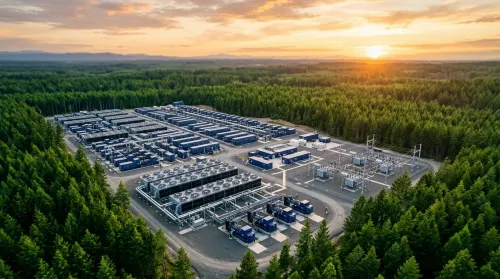
Applying these principles, consider a theoretical case study for a 1.2 GW hyperscale campus designed to host high-density AI inference clusters. The facility requires uninterrupted power to maintain cooling loops and active GPU operations. A rigorous technoeconomic optimization scopes the campus layout, balancing capital constraints against strict 99.999% uptime requirements. The analysis ingests local natural gas tariffs, wholesale electricity pricing curves, and localized weather data to model both thermal and electrical loads over a 25-year lifecycle. By utilizing MILP algorithms to iterate through hundreds of equipment combinations, the model identifies the precise mix of advanced prime movers, BESS capacity, and thermal recovery infrastructure needed to meet the massive 1.2 GW threshold economically.
Baseline Scenario: Overcoming Capacity Limits in a Grid-Constrained Region
In the baseline scenario, the local utility caps the physical interconnection at a hard 300 MW, denying any further capacity upgrades for the next eight years due to regional transmission bottlenecks. To bridge the 900 MW shortfall and fully power the 1.2 GW campus, the developer must deploy an extensive behind-the-meter microgrid. The technoeconomic model tests a grid-parallel topology where the utility provides the base 300 MW, while an array of advanced combined-cycle gas turbines, supported by a 400 MWh utility-scale BESS, actively follows the remaining hyperscale load. This architecture bypasses the grid constraints entirely, allowing the facility to scale its AI operations immediately rather than waiting a decade for external transmission line construction.
Simulation Results: Asset Sizing, NPV, IRR, and ROI Breakdown
The simulation results provide the precise blueprint required for financial approval. The MILP engine sizes the local generation at 1.05 GW to ensure N+1 redundancy, factoring in the ambient temperature derating of the gas turbines during summer peaks. The model returns a highly favorable Internal Rate of Return (IRR) because the self-generated LCOE significantly undercuts the utility’s exorbitant demand charges and on-peak energy rates. The massive upfront CAPEX—approaching $10 billion for the energy infrastructure alone—is justified by a robust Net Present Value (NPV) and an accelerated ROI breakdown. Furthermore, the inclusion of waste heat recovery absorption chilling reduces the electrical cooling load, directly improving the facility's Power Usage Effectiveness (PUE) and boosting overall lifecycle profitability.
Actionable Takeaways for Project Developers, ESCOs, and General Contractors
Project developers must initiate detailed technoeconomic analysis before finalizing site selection or breaking ground. Rigorously evaluating capital costs, LCOR, and optimal dispatch algorithms prevents expensive mid-design architectural alterations.
For engineers tackling these complex hyperscale architectures, utilizing a dedicated microgrid design software platform streamlines the evaluation of primary generation, battery storage, and thermal recovery assets. You can read more about deploying these advanced analytical frameworks in the Microgrid DER Optimization & Resilience Guide to establish a true financial baseline for your upcoming projects.
Try CogenS free today to model your next gigawatt campus accurately and efficiently.
Conclusion: Next-Generation Engineering for Data Center Power Sovereignty
As hyperscale data centers breach the gigawatt mark, reliance on aging utility infrastructure is no longer a viable engineering strategy. True power sovereignty demands an integrated approach where prime movers, thermal loops, and energy storage operate as a singular, optimized organism. Technoeconomic analysis provides the indispensable mathematical foundation required to design, finance, and operate these massive energy ecosystems. By accurately simulating AI compute spikes, forecasting fuel volatility, and implementing rigorous MILP dispatch algorithms, developers can deploy robust architectures that guarantee 99.999% uptime. The future of the digital economy rests on the successful execution of these next-generation microgrids, ensuring that unprecedented computational demand is met with equally advanced, resilient, and financially viable power solutions.