BTM Capacity Surge in Data Center Microgrid Design
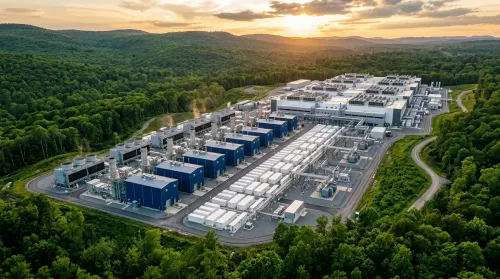
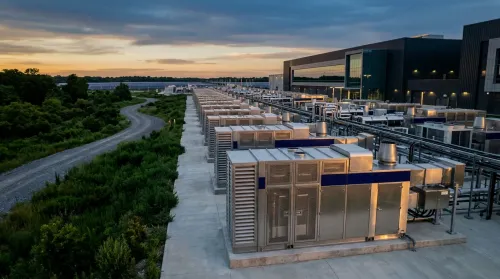
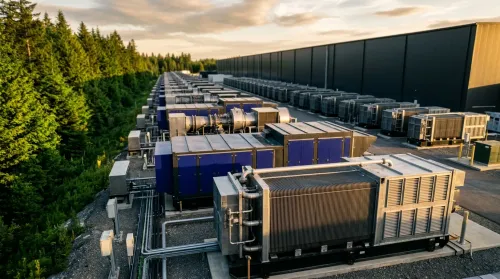
Interconnection delays are prompting hyperscalers to alter data center microgrid design. Some developers are bypassing utility queues by deploying gigawatts of behind-the-meter (BTM) natural gas generation. The timeline to energize a facility through traditional transmission upgrades can take longer than planned, pushing some site owners to construct dedicated baseload plants co-located with their IT loads.
Economic Drivers of Data Center Microgrid Design
The scale of these private generation assets often matches utility-grade infrastructure. Black Hills Corp. recently announced a $1.8 billion plan to construct 564 MW of new natural gas generation and manage a 2.1-GW microgrid to power Google's planned facility in Cheyenne, Wyoming. In the equipment supply chain, Kodiak Gas Services and Baker Hughes finalized a multi-year agreement to support up to 1.8 GW of BTM capacity by 2030. Microsoft is similarly relying on large GE Vernova and Solar Turbines equipment for a new co-located gas plant in West Texas.
This shift toward fossil-fueled on-site power requires strict alignment with fuel supply chains and regulatory frameworks. Localized demand spikes from data centers are leading grid operators to adjust their long-term resource adequacy planning. Five U.S. regional grid operators submitted tariff reforms to the Federal Energy Regulatory Commission (FERC) this week to manage large-load integration, seeking to clarify how these sites secure capacity and pay for infrastructure.
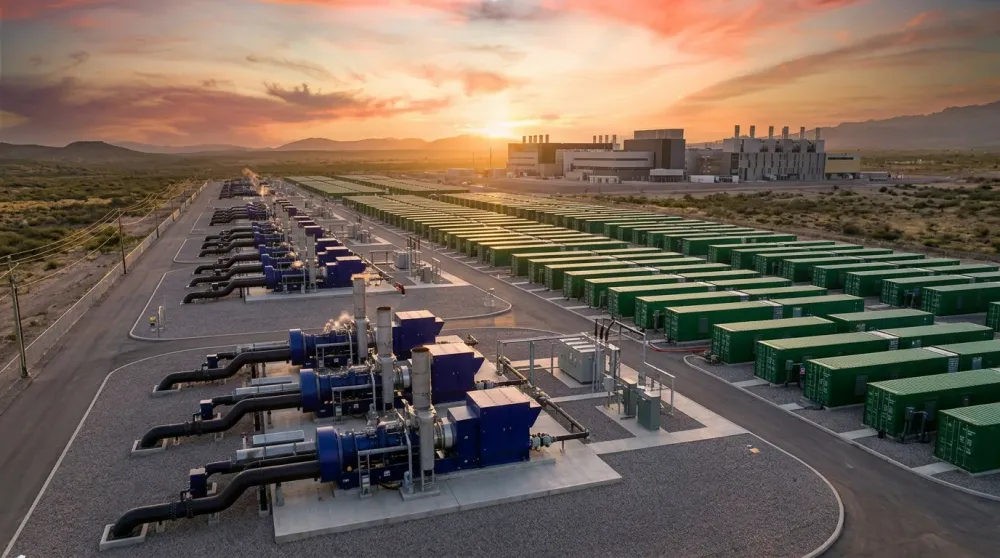
Battery energy storage is also scaling to meet localized demands and provide spinning reserve equivalent. The Solar Energy Industries Association (SEIA) and Benchmark Mineral Intelligence reported this week that the United States has officially surpassed 200 GWh of installed energy storage capacity. When incorporated into data center microgrid design, large-scale storage allows operators to smooth the highly variable loads of artificial intelligence training clusters while maximizing the efficiency of their BTM gas turbines.
The technical challenge centers on transient response. AI loads can exhibit spiky power draws that require rapid support from localized generation. Engineers typically size on-site battery storage to provide immediate power delivery and bridge the gap during gas turbine ramp-up phases. Evaluating the financial viability of these hybrid gas-and-storage assets requires precision modeling of capital expenditures, fuel costs, and maintenance schedules over a 20-year lifecycle.
This Week's Top 5 Energy News Items
- Black Hills to build 564 MW of new gas, manage 2.1 GW microgrid for Google data center in Wyoming
- Baker Hughes gas turbines to support up to 1.8 GW of behind-the-meter data center power
- Five Grid Operators Respond to FERC With Distinct Plans for Large-Load Integration
- U.S. Exceeds 200 GWh of Installed Energy Storage Capacity
- New co-located gas plant to power Microsoft data center in West Texas
Engineers sizing hybrid behind-the-meter generation rely on our microgrid design software to evaluate capacity, dispatch logic, and lifecycle costs. For detailed methodology, consult the Microgrid Module Guide before you set up your model.
For deeper technoeconomic analysis on this trend, try CogenS free.